October 30, 2026
How to Winterize Your Home Checklist: Tasks to Book Now
Most winter damage starts with a job that was put off. A furnace that ran fine through the mild weeks can fail on the first cold night, and a pipe in an unheated garage can crack long before anyone notices.
This winterize your home checklist is built as a booking list. It sorts the work by risk, so the jobs that cause the most damage get scheduled first, and it shows where each task connects to a verified local pro on Find-A-Pro. Find-A-Pro is an online marketplace that connects homeowners with verified local professionals for plumbing, HVAC, electrical, cleaning, landscaping, and roofing work.
Home Winterizing Checklist: Book the Riskiest Tasks First
Heating and frozen-pipe protection come first because they fail in the most expensive ways. A home without heat becomes unsafe and uncomfortable within hours, and a burst pipe can flood a house before anyone finds it. Both problems also get harder to fix once every neighbor is calling for the same help.
Gutters and the roof come second. Water that backs up or leaks in is serious, but it usually builds over weeks rather than overnight. Drafts and safety checks come third, since they are quick to do and rarely need a long wait for an appointment.
A workable order for the next few weeks looks like this:
- Week one: request an HVAC tune-up and a plumber's look at freeze-prone pipes.
- Week two: book gutter cleaning and a roof and flashing check.
- Weeks three and four: handle drafts, attic insulation, and the safety checks.
Not every item applies everywhere. Pipe draining, heat tape, and ice-dam prevention matter only where temperatures drop below freezing, so homeowners in mild climates can skip those and keep the heating, gutter, and safety items.
Prepare Your Home for Winter: Heating and HVAC
The heating system gets the most room on this fall home maintenance checklist because everything else in the house depends on it. A tune-up is cheap protection against a no-heat call on the coldest night, when technicians are busiest.
HVAC Tune-Up Before Winter: What to Ask For
An HVAC tune-up before winter is a set of checks, and homeowners can ask a technician to confirm each one before the visit. A typical scope covers:
- Airflow: filter condition, blower operation, and any blocked or weak vents.
- Safety controls: limit switches, shutoffs, and other devices that stop the system if it overheats.
- Gas furnaces: burner, ignition parts, flame behavior, and the venting.
- Heat pumps: indoor and outdoor coils, refrigerant levels, and the defrost cycle.
- Thermostat: calibration, scheduling, and whether it calls for heat when it should.
The reason to book early is simple. A worn ignition part or a clogged filter gives no warning in mild weather, and the first cold night is when it shows.
A homeowner can book a verified HVAC technician for a tune-up through Find-A-Pro, compare the pros who serve the area, and ask each one for the written scope before agreeing to a visit.
Cost depends on the system, not just the visit. System age, the type of equipment, and how easy it is to reach the furnace or outdoor unit all change the quote.
Filters, Vents, and Thermostat Checks You Can Do Yourself
A few heating checks need no tools and no appointment. Replacing the furnace filter is the main one, since a clogged filter restricts airflow and strains the blower. Supply and return vents should be open and clear of furniture, rugs, and boxes. The thermostat should be set to heat mode and tested by raising the temperature a few degrees to confirm the system starts.
These steps support a tune-up and do not replace it. Anything that sounds, smells, or behaves wrong, and any failure to heat at all, belongs with a technician and goes straight into a service request.
Prevent Frozen Pipes Before the First Hard Freeze
Frozen pipes rank among the costliest winter failures, and the damage is often hidden. A pipe run in an unheated garage or crawlspace can freeze on the first hard cold night, and the crack often shows up only after the thaw, when water starts spraying inside a wall or ceiling.
Protection is mostly about insulation, and it is best finished before the first hard freeze rather than during it.
Insulate Pipes: Checklist for Garages, Crawlspaces, and Exterior Walls
This insulate pipes checklist starts with finding the runs that are most exposed. Those are usually the ones the heating system does not reach.
- Garages: supply lines along walls, especially near the garage door.
- Crawlspaces: any pipe run under the floor, and the spots where lines enter or leave the space.
- Exterior walls: kitchen and bath lines on the outside of the house, and pipes near gaps or vents.
- Basements and utility areas: lines close to windows, rim joists, or uninsulated corners.
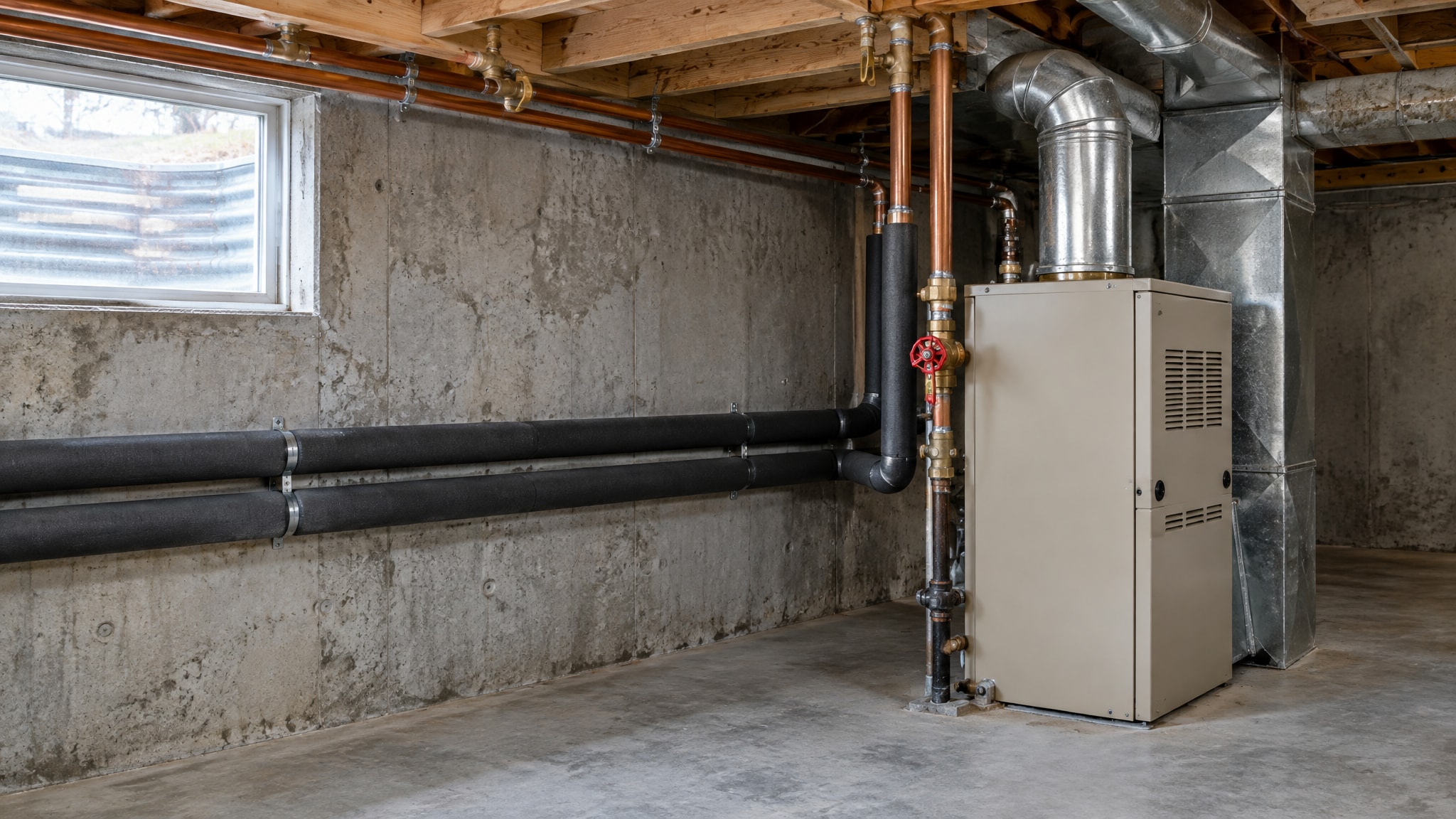
Foam pipe sleeves are the basic fix. They slip over the pipe, fit snugly at the joints, and cost little compared with a repair. Heat tape or heat cable suits the hardest spots, but it should be used only as the label directs, on the pipe types it lists, and never layered over itself or buried under insulation that the instructions do not allow.
During a hard freeze, a slow drip from a faucet on an exterior wall can keep water moving and relieve pressure. It helps in a pinch, but it does not replace insulation, and a dripping tap on an unprotected pipe can still freeze.
Opening the cabinet doors under sinks on exterior walls also lets warm air reach the pipes behind them.
Homeowners who find bare pipe in hard-to-reach places, or who are unsure which lines are at risk, can compare plumbers before you book pipe work and request an assessment of the freeze-prone runs.
Shut Off and Drain Outdoor Water Lines
Outdoor lines need different handling, since they cannot be kept warm. Hoses come off the spigots and get stored. If the house has an interior shutoff valve for an exterior spigot, closing it and opening the outdoor tap lets the remaining water drain out.
A long absence changes the calculation. A drip only works while someone is home and the water keeps running, so a house left empty for several days in freezing weather is better protected by shutting off the main water supply and draining the lines. That means opening faucets at the lowest and highest points so the water can leave the system. A plumber can advise on the water heater and any other equipment in the house before a long trip.
Draining is also the answer for sprinkler systems. Irrigation lines hold water in buried pipes and valves, and clearing them takes compressed air at the right pressure. Irrigation blowouts are a job for a pro, and they go into a request rather than a weekend project.
Outdoor Winter Home Prep: Gutters, Downspouts, and Roof
Outdoor winter home prep is about moving water away from the house. When gutters and the roof edge work, rain and snowmelt leave the building. When they do not, that water finds its way into the walls, the attic, and the foundation.
Clean Gutters and Check Downspouts Before Freezing Weather
Clogged gutters can overflow during late-fall rain and send water toward the foundation, where meltwater can refreeze at the roof edge. Leaves, shingle grit, and small debris are the usual cause. Once the weather turns cold, a full gutter holds ice that adds weight and pulls on the fasteners.
A cleaning visit usually covers clearing the gutters, flushing the downspouts, and noting loose sections or sagging runs. Downspouts should discharge away from the foundation, and a pro can point out any that dump water right at the wall.
Gutter cleaning is a service worth pricing locally. Home height, roof pitch, gutter length, and the amount of debris all affect the quote, so homeowners can compare local gutter cleaning quotes before choosing a pro. Climbing a ladder to scoop wet leaves is not a task this checklist asks anyone to take on if it feels unsafe.
Roof and Flashing Check Before Snow Arrives
A roof check looks for missing or lifted shingles, damaged flashing around chimneys and vents, and any spot where water could get under the surface. Flashing is the thin metal that seals those joints, and it is a common place for leaks to start once snow sits against it.
Homeowners can start from the ground, using binoculars to look for obvious damage. Walking a steep or icy roof is not part of the plan, since that is where falls happen. The better route is to find a roofer for a pre-winter roof check and let a pro look up close. Inspection pricing varies by roofer, so the linked page is the place to see how it works locally.
Seal Drafts and Check Attic Insulation
Drafts and thin insulation raise heating bills and make a house feel colder, and the attic does the most work. Homeowners can look for insulation that is thin, compressed, damp, or missing in the attic and crawlspace, particularly around the edges and over exterior walls.
Attic insulation and ventilation also affect ice dams at the eaves. When heat escapes into the attic, it warms the roof and melts snow that then refreezes at the colder edge. That is why insulation and gutter work belong on the same list.
Small gaps around doors and windows are simple to close. Weatherstripping and caulk handle most of them, and a handyman for weatherstripping and small sealing jobs can cover several in one visit. Air sealing in the attic, damp or missing insulation, and any signs of moisture go into a service request, because they need a closer look than a sealed door frame.
This work does not heat a house on its own. Sealing drafts cuts wasted heat, but it does nothing for a furnace that is failing.
Safety Checks That Belong on the Winter List
Houses stay shut and heating equipment runs for months, so this is when alarms, chimneys, and space heaters matter most.
Smoke and carbon monoxide alarms should be tested now, with fresh batteries where the model uses them and replacement for any unit past its marked service life. Carbon monoxide alarms matter most near sleeping areas and on each level of the home.
A fireplace or chimney needs a check before the first fire of the season. Creosote buildup, blockages, and damaged liners are not visible from the living room, so a chimney inspection is a job for a pro.
Space heaters should sit well clear of bedding, curtains, and furniture, and plug directly into a wall outlet rather than an extension cord. Anything a homeowner cannot inspect safely, including wiring, flues, and heating equipment that smells or sounds wrong, goes into a request instead of a guess.
Book Verified Pros Before the Cold Arrives
The booking path on Find-A-Pro is short. A homeowner can request service from a verified local pro, browse and compare the pros who respond, and message them directly to confirm details and timing. Each task above can lead to its own request, so heating, pipe, and roof work can be scheduled in the order the checklist sets.
Costs vary from house to house, and a local quote says more than a national average. The main drivers are:
- System age: older equipment takes longer to service and may need parts.
- Home size: more rooms, more pipe runs, and more roof mean more time.
- Access: tight crawlspaces, steep roofs, and tall gutters raise the effort.
- Local labor rates: these differ by region and by trade.
Check Licenses and Compare Written Quotes
Before agreeing to any job, a homeowner can confirm three things: the license, the written scope, and a quote that compares fairly with others. Licensing rules differ by state and trade, so it helps to check a contractor license before you book with the issuing authority.
The written scope should name the tasks, the equipment or materials, and the visit timing. Two quotes only compare when they cover the same work, so it pays to compare written quotes side by side and ask about any line that appears in one and not the other.
The next step is to open a request for the heating, pipe, or roof work first, before the first hard freeze, and let the rest of the list follow in the weeks after.
Frequently asked questions
Do you leave faucets open after winterizing?
Yes, when the water supply has been shut off and the lines are being drained. Open faucets at the lowest and highest points so the water can leave the system, and leave them open until the water is turned back on. This differs from the slow drip used during a cold snap, which works only while water is still running.
What is the average cost to winterize a house?
No single figure fits every house, because the total depends on which tasks are booked. System age, home size, access to equipment, and local labor rates drive each quote. A written quote from a local pro is more useful than a national average.
How do I get ready for winter if I only have a few weeks?
Start with heating and frozen-pipe protection, since those failures cost the most. Book gutter cleaning and a roof check next, then handle drafts, attic insulation, and safety checks. Requesting the first two jobs this week leaves room for scheduling.
Is a slow drip enough to protect pipes in a hard freeze?
No. A drip keeps water moving and can help during the coldest nights, but it does not replace insulation on exposed pipes. For a long absence, shutting off and draining the lines is the safer choice.
