October 16, 2026
Landscaping Contractor Cost Estimate: What to Expect
Landscaping projects rarely fit into neat pricing categories. Every yard presents its own physical challenges and material requirements. A reliable landscaping contractor cost estimate depends on site-specific variables, not national averages or online calculators. Homeowners who understand these variables before requesting landscaping quotes can evaluate proposals with confidence and avoid budget surprises later.
Why Landscaping Contractor Cost Estimates Vary So Widely
Landscaping isn't a commodity where one provider's price should match another's for identical work. Site accessibility, soil composition, and local material availability create real price differences between contractors even when the project scope looks similar on paper. You can't accurately gauge how much landscaping costs without a professional walking your property and assessing conditions that photos can't reveal.
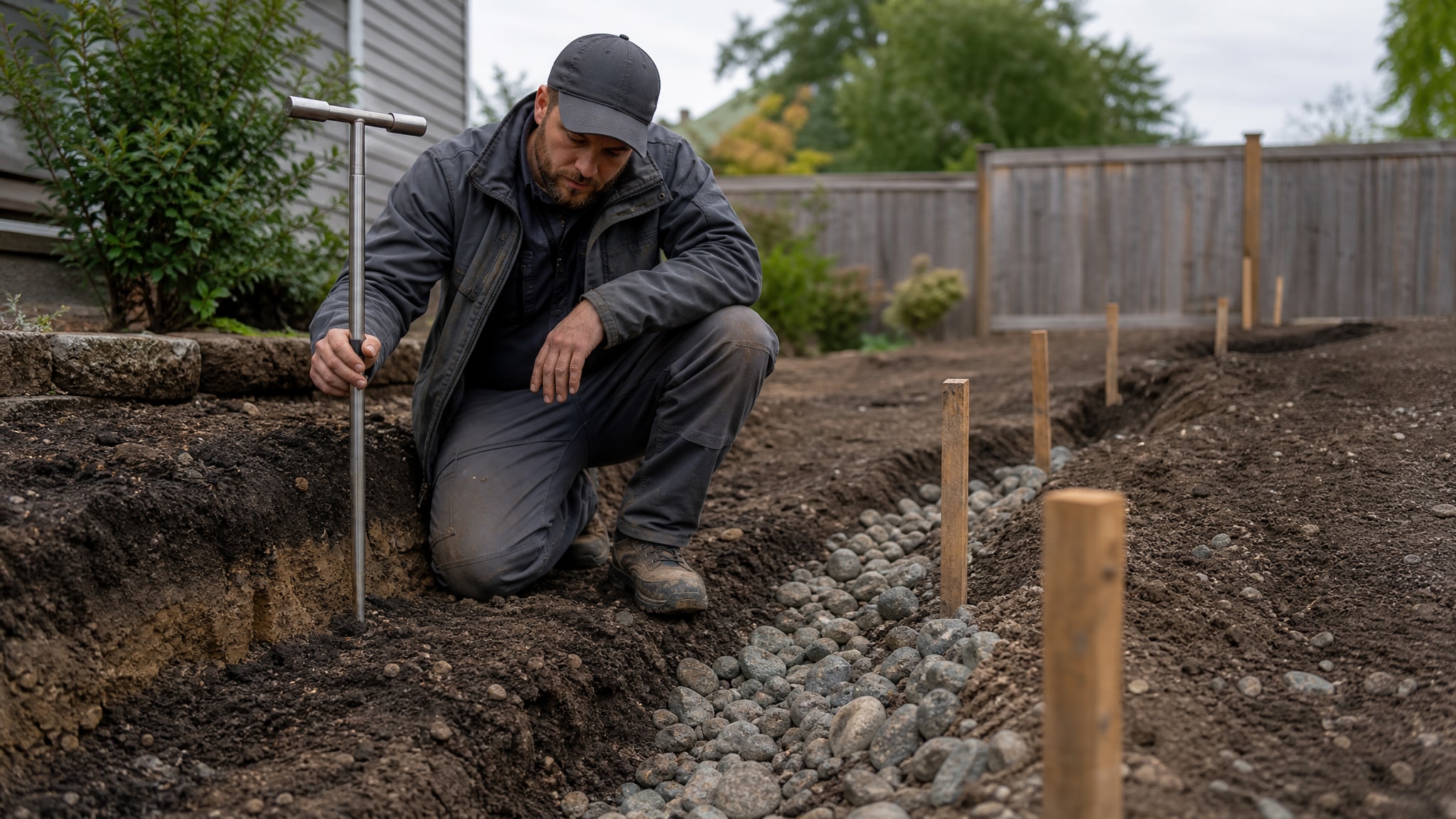
A backyard renovation involving regrading and French drain installation typically needs specialized equipment and permits that generic per-square-foot pricing can't capture. Online estimators miss these complexities because they don't have access to your specific terrain, utility layouts, or municipal requirements. Professional landscapers say soil testing and drainage analysis should come before any final cost estimate, to avoid mid-project surcharges.
This assessment phase separates detailed professional estimates from rough ballpark figures. A contractor who gives you a firm number without visiting your property is guessing at labor hours, equipment needs, and potential complications. Accurate yard renovation cost projections need boots on the ground, not just square footage multiplied by a regional rate.
Key Factors That Influence Yard Renovation Cost
Slope grading and drainage requirements often drive landscaping budgets more than plant selection or decorative features do. Moving earth to correct poor drainage or create usable flat space takes heavy machinery and skilled operators, and that pushes labor costs up well past what a simple planting bed would cost. Removing existing vegetation adds another layer of expense when mature trees, invasive species, or old hardscape have to come out before new work begins.
The ratio of hardscape to softscape in your design decides whether material costs or labor intensity dominates your budget. Patios, retaining walls, and walkways carry higher material expenses but predictable installation timelines. Extensive planting schemes, on the other hand, require ongoing soil amendment and careful placement that stretches out labor hours. Complex residential projects frequently see labor outweigh materials, because skilled craftsmanship takes time regardless of what's being installed.
Soil condition is the hidden variable most homeowners overlook until excavation begins. Rocky soil, compacted clay, or contaminated fill from previous construction can double the time needed for digging and bed preparation. Contractors build this uncertainty into their landscaping contractor cost estimate, either through higher base pricing or contingency line items. Neither approach is wrong if it's communicated upfront.
Understanding the Components of a Landscaping Quote Request
Professional contractors look at far more than aesthetic preferences during an initial consultation. Utility line locations, permit requirements, and long-term maintenance access all shape the feasibility and true cost of a design. A thorough quote request process catches these constraints early, so you get proposals that reflect buildable plans instead of aspirational sketches that need expensive revisions later.
Check that every landscaping quote request includes line items for site preparation, waste disposal, and post-installation cleanup. Low bids sometimes leave these foundational tasks out to make the bottom line look competitive, and they surface later as change orders once work starts. Detailed proposals also specify plant sizes, material grades, and warranty terms, so you know exactly what you're buying beyond the general description.
Clear documentation at this stage prevents misunderstandings that erode trust mid-project. When both parties agree on scope, materials, and exclusions in writing before breaking ground, disputes become far less likely. This level of detail is what separates verified professionals from casual operators who rely on verbal agreements and handwritten notes.
How to Compare Landscaping Quotes Side by Side Safely
Evaluating multiple bids means looking past the total price to examine scope alignment and material specifications. The lowest bid often excludes critical prep work, substitutes cheaper plant stock, or skips warranty coverage that reputable contractors include as standard. Make sure each proposal addresses the same deliverables before you compare numbers.
Find-A-Pro's verification process checks that quoted prices come from licensed contractors who have been screened for reliability and proper insurance coverage. That baseline screening removes unqualified bidders from consideration, so your comparison focuses on legitimate professionals rather than risky outliers. When you compare contractor quotes side by side, consistent scope across proposals makes the real value differences visible.
Warranty terms and post-completion support deserve as much weight as installation pricing. A contractor who stands behind their work for multiple years offers protection a cheaper bid without guarantees can't match. Material warranties from suppliers should also transfer to you, and the contract should state that transfer explicitly rather than leave it assumed.
Seasonal Timing and Its Impact on Landscaping Pricing
Peak spring and fall demand creates scheduling bottlenecks that affect both availability and price. Contractors working at full capacity during these seasons may charge more or push out your timeline, simply because they can't take on extra work without hurting quality elsewhere. Planning non-urgent projects outside these windows can get you better rates and faster start dates.
Homeowners who request quotes in late winter often get more detailed proposals, because contractors have more capacity for site visits before the spring rush hits. That extra attention during the estimation phase means more accurate budgets and fewer surprises during execution. Off-season scheduling also gives you leverage to negotiate timeline commitments that peak-season clients rarely get.
Weather-dependent tasks like sod installation or concrete pouring have narrow optimal windows no matter when you book. A contractor who schedules your project during marginal weather just to meet a discounted rate risks outcomes that cost more to fix than the savings were worth. Timing matters, but it should never override the technical requirements of the work itself.
Red Flags in Landscaping Contractor Cost Estimates
Vague line items that bundle multiple tasks under single descriptions prevent any real comparison between bids. Phrases like "site work" or "installation," with no breakdown, hide where the money actually goes and make it impossible to verify you're paying for what was promised. Transparent estimates itemize labor, materials, equipment, and overhead separately, so you understand the cost structure.
Refusal to provide a written contract, or pressure to pay a large deposit upfront, signals financial instability or operational disorganization. Reputable contractors put scope, payment schedules, and change order procedures in writing before accepting any funds. Deposits should cover mobilization costs and material orders, not act as leverage against incomplete work or an abandoned project.
Verbal promises about extras, upgrades, or future discounts carry no legal weight, and they frequently disappear once work begins. Everything discussed during consultations should appear in the written proposal, including any concessions offered to win your business. Documentation protects both parties and sets expectations that survive personnel changes or a bad memory.
Getting Accurate Local Landscaper Near Me Estimates
Finding verified professionals who understand local conditions takes more than a generic search for a local landscaper near me. Find-A-Pro connects homeowners with pre-screened contractors who've demonstrated reliability through license verification and insurance validation. That reduces the risk of hiring someone whose low bid reflects corner-cutting rather than real efficiency.
You can request landscaping quotes through the platform to get multiple comparable estimates tailored to your specific project. Direct messaging lets you clarify details with each contractor before committing, and the centralized dashboard keeps all communications organized in one place. Understanding how the quote request process works helps you give contractors the information they need to put together accurate proposals quickly.
The local landscaper comparison tool streamlines evaluation by presenting vetted options side by side with verified credentials displayed up front. Rather than chasing down references and verifying licenses yourself, you focus on comparing scope, pricing, and communication style among qualified candidates.
Frequently Asked Questions
What specific site conditions cause landscaping estimates to differ between contractors?
Soil composition, slope grading, drainage patterns, and existing vegetation all require different levels of labor and equipment to address properly. Access limitations like narrow gates or overhead obstructions can prevent standard machinery use, forcing manual methods that increase costs. Utility line locations and permit requirements also vary by property and municipality, creating site-specific expenses that generic pricing cannot account for.
Which line items should homeowners verify are included in every landscaping quote request?
Every detailed quote should itemize site preparation, waste disposal, material specifications with grades and sizes, labor hours, equipment rental, and post-installation cleanup. Warranty terms for both workmanship and materials must be stated explicitly rather than implied. Permit fees and utility marking services should also appear as separate line items so nothing surfaces as an unexpected charge later.
How does seasonal demand affect the accuracy and competitiveness of landscaping bids?
During peak spring and fall seasons, contractors may submit rushed estimates or premium pricing due to high demand and limited site visit capacity. Late winter requests often yield more thorough proposals because contractors have time for detailed assessments before their schedules fill. Off-season booking can also provide negotiating leverage on timeline commitments that peak-season clients cannot secure.
What distinguishes a detailed professional estimate from a rough ballpark figure?
Detailed estimates include itemized breakdowns of labor, materials, equipment, and contingencies based on an actual site visit and soil assessment. Ballpark figures typically derive from square footage multipliers or photo reviews without accounting for hidden site conditions. Professional estimates also specify material grades, plant sizes, and warranty terms, while rough quotes leave these critical details undefined.
How can homeowners safely compare multiple landscaping quotes without being misled by low bids?
Verify that each proposal covers identical scope, material specifications, and warranty terms before comparing total prices. Low bids often exclude site preparation, waste disposal, or proper plant sizing to appear competitive, then add these costs as change orders later. Using a platform like Find-A-Pro ensures all bidders are verified professionals, removing unqualified outliers from your comparison pool.