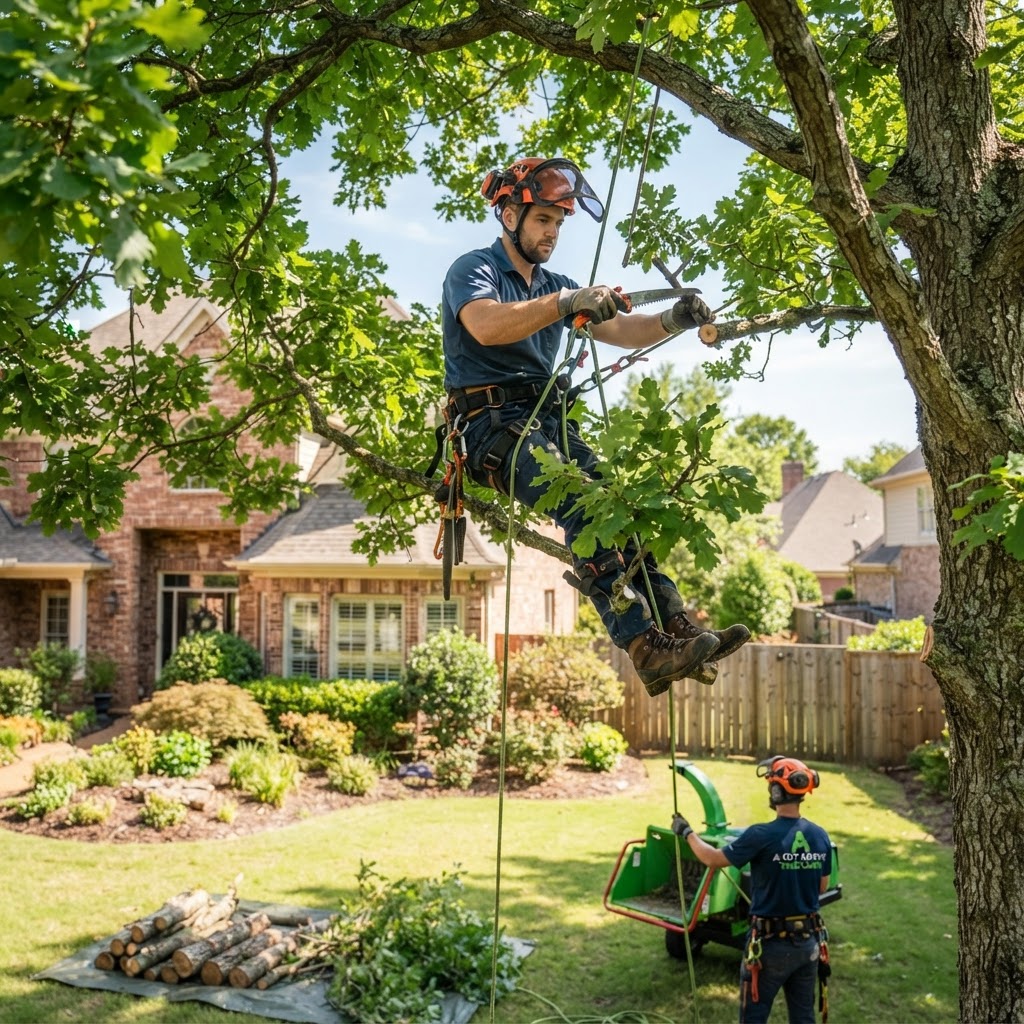
Trees are the silent workhorses of our properties. They provide shade that slashes cooling costs, boost our property value by up to 20%, and create a sanctuary for local wildlife. However, a tree is not a 'set it and forget it' feature of your landscape. Without proper tree care and maintenance, these towering assets can quickly become liabilities, prone to disease, storm damage, or premature death. Whether you are nurturing a newly planted sapling or managing a century-old oak, understanding the nuances of tree biology and seasonal needs is essential. This guide provides actionable, professional-grade advice to help you maintain a vibrant, safe, and beautiful canopy for years to come.
The Foundation: Planting and Early Establishment
Long-term tree health begins long before the first leaf buds. In fact, many of the issues homeowners face with mature trees—such as surface roots lifting sidewalks or trees leaning precariously—can be traced back to poor planting choices. To set your landscape up for success, you must follow the principle of 'Right Tree, Right Place.'
- Analyze Your Site: Before buying a tree, evaluate the soil drainage, sun exposure, and available space. A Willow tree, for example, thrives in wet soil but can destroy plumbing lines with its aggressive roots.
- The Root Flare Rule: The most common planting mistake is burying the tree too deep. The 'root flare'—the area where the trunk expands at the base—should be visible just above the soil line. Burying this flare suffocates the tree and encourages girdling roots.
- Digging the Hole: Your planting hole should be two to three times wider than the root ball, but no deeper. This loose soil allows new roots to push outward easily during the first year.
Proper planting is just one part of a larger home upkeep strategy. For more tips on keeping your property in top shape, check out our essential home maintenance guide.
Watering Strategies: Quality Over Frequency
When it comes to watering, many homeowners treat their trees like their lawns, providing frequent, shallow sprinkles. This is a mistake. Trees require deep, infrequent watering to encourage their roots to grow downward into the cooler, moister layers of the soil.
For newly planted trees, you should provide about 10 to 15 gallons of water per week. The best method is a slow drip; you can use a soaker hose or even a five-gallon bucket with small holes drilled in the bottom. This allows the water to seep in gradually rather than running off the surface.
Mature trees have different needs. During drought periods, focus on watering the 'drip line'—the area directly under the outermost circumference of the tree's branches. This is where the most active feeder roots reside. Avoid spraying the trunk directly, as constant moisture on the bark can lead to fungal infections and rot.
The Science of Mulching: Don'ts and Donuts
Mulching is one of the most beneficial things you can do for a tree, provided it is done correctly. A proper layer of organic mulch (like wood chips or shredded bark) regulates soil temperature, retains moisture, and suppresses weed competition. However, the 'mulch volcano'—piling mulch high against the tree trunk—is a landscape epidemic.
How to mulch like a pro:
- Apply the 3-3-3 Rule: Create a ring of mulch 3 feet wide, 3 inches deep, and keep it 3 inches away from the trunk.
- The Donut Shape: Your mulch should look like a donut, not a volcano. The bare space near the trunk allows the bark to breathe.
- Choose Organic: Avoid dyed mulches or rubber nuggets. Natural wood chips break down over time, adding vital nutrients back into the soil.
Pruning for Strength and Structure
Pruning is both an art and a science. When done correctly, it improves the tree's structural integrity and aesthetic appeal. When done poorly, it can cause permanent damage or 'flush cuts' that never heal. According to International Society of Arboriculture (ISA) standards, you should never remove more than 25% of a tree's canopy in a single season.
Focus your pruning efforts on the 'Three Ds': Dead, Damaged, or Diseased branches. Removing these prevents decay from spreading to the heartwood. For younger trees, 'structural pruning' is vital. This involves identifying a 'central leader' (one main upward-growing trunk) and removing competing branches to prevent weak V-shaped crotches that may split during storms.
Always use sharp, sanitized tools. For branches larger than an inch in diameter, use the three-cut method to prevent the weight of the falling branch from tearing the bark down the side of the trunk. If a branch is too high to reach from the ground, it is time to call in a professional through FIND-A-PRO to ensure the job is handled safely.
Identifying Pest and Disease Red Flags
Early detection is the difference between a simple treatment and a full tree removal. You should perform a 'walk-around' inspection of your trees at least once a season. Look for these common warning signs:
- Leaf Discoloration: Yellowing leaves out of season (chlorosis) often signals a nutrient deficiency or root stress.
- Exit Holes: Small D-shaped or circular holes in the bark are classic signs of boring insects like the Emerald Ash Borer.
- Fungal Conks: Mushrooms growing from the base of the trunk or along the bark are an immediate red flag. This usually indicates internal heartwood rot, meaning the tree may be structurally unstable.
- Dieback: If the very tips of the branches are leafless and brittle while the rest of the tree is green, the tree is struggling to transport water, often due to soil compaction or root damage.
When to DIY vs. When to Hire a Professional
While homeowners can handle basic mulching and low-level pruning, tree work is inherently dangerous. In fact, tree care is consistently ranked as one of the most hazardous industries by OSHA. You should never attempt to climb a tree with a chainsaw or prune branches near power lines.
Hire a certified arborist if:
- The tree is within 10 feet of utility lines.
- You need to remove large, heavy limbs high in the canopy.
- The tree shows signs of significant lean or root heaving.
- The job requires specialized equipment like a bucket truck or stump grinder.
When you're ready to hire, using a platform like FIND-A-PRO ensures you are connected with verified local experts who carry the necessary insurance and certifications. For a deeper dive into vetting contractors, read our guide on how to hire a service professional to protect your investment and your safety.
Tree Care FAQ: Common Homeowner Questions
Q: When is the best time of year to prune my trees?
A: For most species, late winter or early spring (dormant pruning) is ideal. The tree is less susceptible to pests and diseases during this time, and the lack of leaves makes the structure easier to see. However, dead or hazardous branches should be removed immediately, regardless of the season.
Q: Can I save a tree that has been struck by lightning?
A: It depends on the severity. Lightning can vaporize the water in the tree's cells, causing the bark to explode, or it can cause internal damage that isn't immediately visible. A tree can survive a strike, but it needs an immediate assessment by a professional to check for structural stability and potential pest entry points.
Q: How do I know if a tree is 'dead' or just dormant?
A: Use the 'scratch test.' Use your fingernail or a small knife to gently scratch a small twig. If it is green and moist underneath, the branch is alive. If it is brown and brittle, that section is dead. Check multiple areas of the tree before reaching a conclusion.
Key Takeaways
Proper tree care and maintenance is a marathon, not a sprint. By focusing on deep watering, correct mulching, and proactive pruning, you aren't just growing a tree—you're building a legacy for your home. While many tasks are well within the reach of a dedicated homeowner, knowing your limits is key to staying safe. When the job requires heights, heavy machinery, or complex diagnosis, don't hesitate to reach out for expert help. You can easily find and vet local arborists and landscaping specialists through FIND-A-PRO to ensure your landscape remains a source of pride and beauty for decades to come.
