Trees are the silent sentinels of our homes. They provide the shade that cools our houses in the sweltering heat of July, the vibrant colors that signal the arrival of autumn, and a sense of permanence and peace in an ever-changing world. However, many homeowners view trees as static objects that require no more attention than a stone wall or a fence. The truth is that a tree is a complex, living organism that requires consistent care to remain healthy, safe, and beautiful. Neglecting your trees doesn't just hurt the environment; it can lead to massive property damage liabilities and a significant decrease in your home's resale value. In this comprehensive guide, we will walk through the essential pillars of tree care and maintenance, helping you cultivate a landscape that flourishes for generations.
The Foundation of Tree Health: Proper Planting and Soil Management
Long-term tree health begins long before the first leaf sprouts; it starts with the selection and planting process. The most common mistake homeowners make is selecting a tree based solely on aesthetics without considering the site conditions. Before you dig, you must evaluate your soil type, drainage, and sun exposure. Is your soil heavy clay that holds water like a bathtub, or is it sandy and fast-draining? Planting a moisture-loving Willow in sandy soil is a recipe for a high-maintenance disaster.
When you are ready to plant, the 'Right Tree, Right Place' rule is paramount. Consider the mature height and spread of the tree. A small sapling planted three feet from your foundation today could be lifting your concrete and clogging your gutters in fifteen years. Once you have the right spot, focus on the 'root flare'—the area where the trunk expands at the base. This should be slightly visible above the soil line. Planting too deep is a leading cause of premature tree death, as it suffocates the roots and encourages girdling. For more advice on planning your yard projects, check out our essential home maintenance guide.
- Dig a wide hole: The hole should be 2 to 3 times wider than the root ball to allow roots to expand easily into loose soil.
- Avoid soil amendments: In most cases, it is best to backfill with the native soil so the tree adapts to its actual environment immediately.
- Water immediately: This settles the soil and removes air pockets that can dry out roots.
Watering and Mulching: The Lifeblood of Your Trees
While established trees are more resilient than garden flowers, they still require supplemental water during periods of drought. The key to watering trees is 'low and slow.' Frequent, shallow watering encourages roots to stay near the surface, making the tree more vulnerable to heat and wind. Instead, aim for a deep soak that reaches 12 to 18 inches below the surface. A general rule of thumb is to provide 10 gallons of water per inch of trunk diameter once a week during dry spells.
Mulching is perhaps the most cost-effective way to improve tree health. A proper mulch ring acts like a blanket, regulating soil temperature, retaining moisture, and suppressing weeds. However, the 'mulch volcano'—where mulch is piled high against the trunk—is a dangerous practice. This traps moisture against the bark, leading to rot and providing a harbor for pests. According to Energy Star, well-placed trees and proper ground cover like mulch can even assist in local temperature regulation around your home. Apply 2-4 inches of organic mulch (like wood chips or shredded bark) in a wide circle around the tree, keeping the material at least 3 inches away from the trunk itself.
Pruning Techniques for Strength and Structure
Pruning is both an art and a science. When done correctly, it strengthens the tree's structure and encourages fruit or flower production. When done poorly, it can leave the tree permanently disfigured or susceptible to decay. The primary goal of pruning should be the removal of the 'Three Ds': Dead, Damaged, or Diseased branches. Removing these prevents decay from spreading into the main trunk.
For most species, the best time to prune is during the dormant season (late winter). Without leaves, the tree's structure is visible, and the tree can quickly heal the wounds when spring growth begins. Avoid 'topping'—the practice of cutting off the top of a tree to reduce its height. Topping creates weak, 'water sprout' growth and leaves large open wounds that rarely heal. Instead, use 'thinning cuts' to remove entire branches at their point of origin. When removing larger limbs, always use the three-cut method: a notch on the bottom, a main cut further out, and a final clean cut near the branch collar. This prevents the heavy branch from stripping the bark off the trunk as it falls.
Identifying and Managing Common Tree Pests and Diseases
Early detection is the difference between a simple treatment and having to remove a dead tree. Homeowners should perform a 'walk-around' inspection at least once a month. Look for changes in leaf color, premature leaf drop, or holes in the bark. Common pests like Aphids or Spider Mites can often be managed with a strong blast of water or insecticidal soap, but more serious threats like the Emerald Ash Borer or Dutch Elm Disease require professional intervention. Fungus is another common culprit; if you see mushroom-like 'conks' growing on the trunk, it is often a sign of internal heart rot.
If you notice significant dieback in the canopy or sawdust-like 'frass' at the base of the tree, it is time to consult an expert. Identifying the specific pathogen is critical because applying the wrong chemical can do more harm than good. When you aren't sure what's wrong with your landscape, you can use FIND-A-PRO to connect with certified local arborists who can diagnose the issue and provide a treatment plan.
Safety First: When to DIY and When to Call a Pro
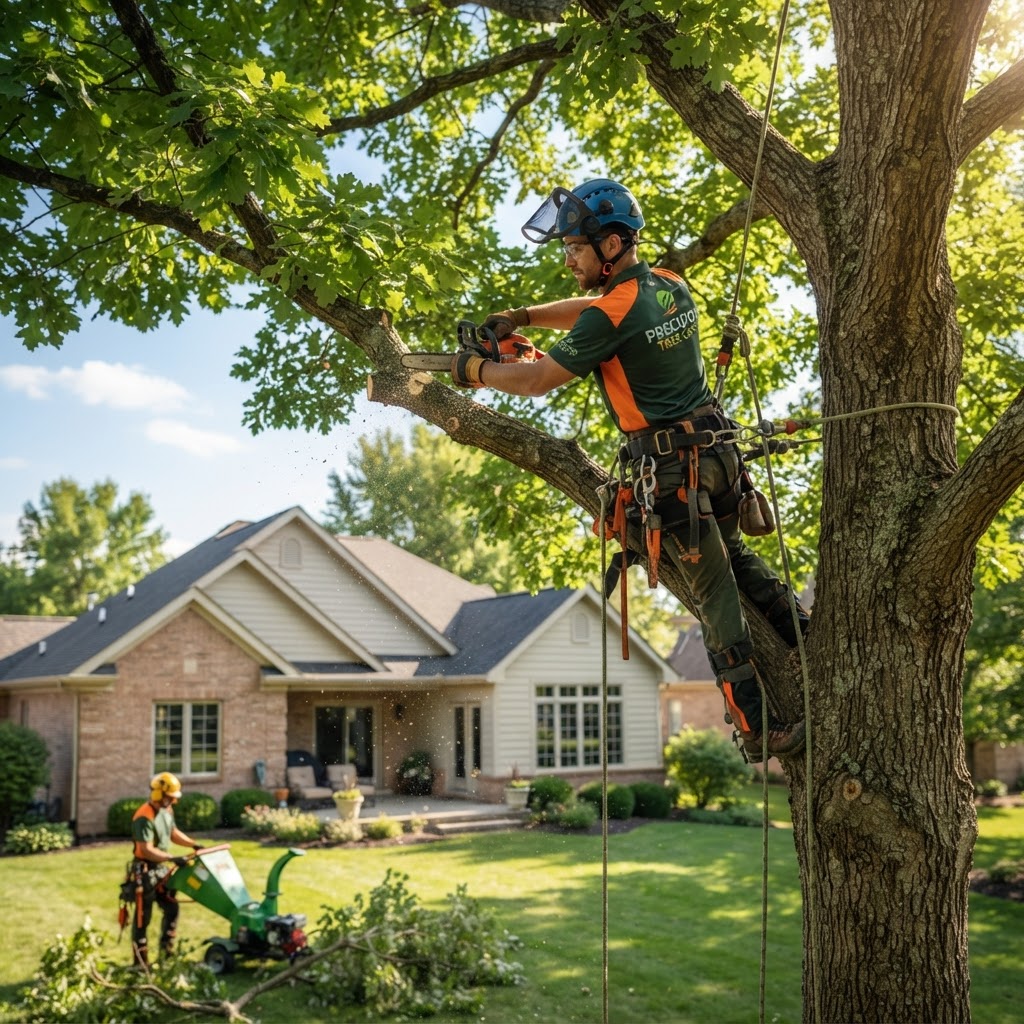
Tree work is inherently dangerous. While homeowners can handle basic pruning of small ornamental trees or ground-level maintenance, anything involving heights, heavy machinery, or power lines is strictly professional territory. According to OSHA safety guidelines, tree trimming is one of the highest-risk occupations in the country due to the risk of falls and falling objects. Never attempt to use a chainsaw on a ladder, and never work on a tree that is within ten feet of a power line.
Hiring a professional ensures the job is done safely and that the tree's health is preserved. Look for an arborist certified by the International Society of Arboriculture (ISA). They carry the proper insurance to protect you from liability if an accident occurs on your property. If you're feeling overwhelmed by the process of finding someone trustworthy, read our guide on how to hire a service professional to ensure you're asking the right questions before signing a contract. FIND-A-PRO simplifies this by providing access to verified, reviewed professionals in your area.
Frequently Asked Questions About Tree Care
Q: How often should my trees be professionally inspected?
A: For most residential properties, a professional inspection every 2 to 3 years is sufficient. However, if you have very old 'legacy' trees or live in an area prone to severe storms, an annual checkup is recommended to identify structural weaknesses before they become hazards.
Q: Is it okay to fertilize my trees every year?
A: Not necessarily. Unlike a lawn, trees in a natural forest thrive without fertilizer. In a suburban setting, you should only fertilize if a soil test shows a specific deficiency. Over-fertilizing, especially with high-nitrogen products, can cause a flush of weak growth that attracts pests.
Q: My tree is leaning; is it an immediate danger?
A: Not all leaning trees are hazardous. If a tree has grown at an angle to find sunlight, it has likely reinforced its root system to compensate. However, if a tree suddenly begins to lean, or if the soil at the base is mounded or 'heaving,' this is an emergency. The tree may be in the process of uprooting and should be inspected immediately.
Key Takeaways
Caring for your trees is a long-term investment that pays dividends in beauty, environmental health, and property value. By following proper planting techniques, maintaining a regular watering and mulching schedule, and knowing when to put down the shears and call in an expert, you can ensure your landscape remains a source of pride for years to come. Remember that you don't have to do it all alone. Whether you need a simple consultation or a major removal, FIND-A-PRO is here to help you find and hire the best local tree care specialists who can get the job done right. Keep an eye on your leafy companions, and they will reward you with decades of shade and splendor.