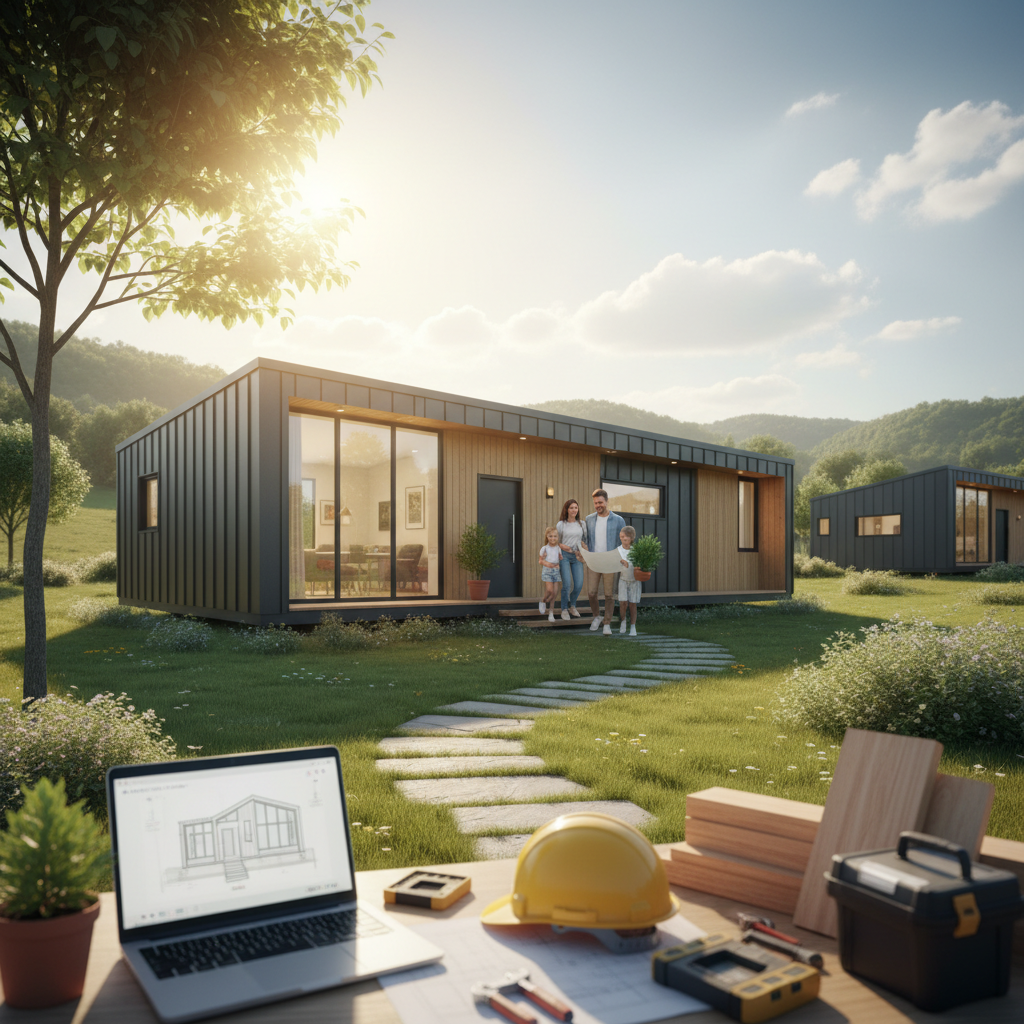
For decades, the mention of a 'prefab' home conjured images of flimsy, cookie-cutter structures or temporary mobile units. But today, the narrative has shifted dramatically. Prefabricated housing has entered a golden age, blending high-end architectural design with sustainable materials and cutting-edge engineering. Whether you are a homeowner looking for a faster, more predictable way to build your dream house, or a service professional looking to understand the logistics of installing these modern marvels, this guide is designed to navigate the complexities of the prefab world. From the precision of factory environments to the excitement of 'Set Day,' we will explore why prefabs are becoming the preferred choice for savvy builders in 2024 and beyond.
What Exactly is a Prefab Home?
At its core, a prefabricated home (or 'prefab') refers to any dwelling that is constructed in sections or components within a factory setting before being transported to a final building site for assembly. Think of it as the difference between a custom-tailored suit and a handcrafted one; both can be high quality, but one is created in a controlled environment designed for efficiency and precision.
The primary appeal of prefab construction lies in its predictability. When you build a traditional 'stick-built' home, you are at the mercy of the weather, local labor shortages, and material delivery delays. In contrast, prefab components are built indoors, shielded from the elements. This not only speeds up the timeline—often by 30% to 50%—but also ensures that materials like wood and drywall are never exposed to rain or snow during the framing process. For homeowners, this means a tighter, more energy-efficient structure with fewer long-term issues like mold or warping.
However, it is a common misconception that prefabs are 'one-size-fits-all.' Modern prefab companies offer everything from ultra-minimalist tiny homes to sprawling, multi-million dollar luxury estates. The level of customization is staggering, allowing you to choose everything from the floor plan to the specific faucet finishes before a single piece of wood is cut.
Understanding the Three Main Types of Prefabricated Homes
Not all prefabs are created equal. Understanding the legal and structural differences between the three main categories is crucial for financing and zoning.
- Modular Homes: These are built in large, three-dimensional sections (modules) that are usually 80% to 95% complete when they leave the factory. They are built to the same local building codes as traditional site-built homes and are placed on a permanent foundation. Because they are held to high standards, they typically appreciate in value just like a regular house.
- Manufactured Homes: Formerly known as mobile homes, these are built according to the federal HUD (Department of Housing and Urban Development) code rather than local codes. They are constructed on a non-removable steel chassis. While they are the most affordable option, they may face stricter zoning laws in certain municipalities. For more on efficiency standards for these units, check out the Energy Star manufactured housing guide.
- Kit or Panelized Homes: These are the 'IKEA' of the housing world. The walls are built as flat panels in a factory (including windows, doors, and wiring) and then shipped to the site. Unlike modular homes, which arrive as boxes, kit homes require more on-site labor to assemble, but they offer the greatest design flexibility.
Featured Snippet Q&A: Is a modular home better than a stick-built home? While 'better' is subjective, modular homes offer superior climate control during construction and often use 20-30% more material to ensure they can withstand the stress of transportation, making them exceptionally durable.
The Real Benefits: Why Homeowners are Making the Switch
The shift toward prefab isn't just a trend; it's a response to a changing economic landscape. Here are the primary advantages:
1. Unmatched Speed: Because the site preparation (foundation, utility trenching) and the home construction happen simultaneously, you can move in months sooner. While a crew is digging your basement, factory workers are already installing your kitchen cabinets miles away.
2. Cost Predictability: Site-built projects are notorious for 'budget creep.' Prefab manufacturers provide a fixed price for the home itself. While land and local labor costs still fluctuate, the bulk of your investment is locked in from day one.
3. Sustainability: Factory construction produces significantly less waste. Off-cuts of lumber or drywall that would normally go into a dumpster on a job site are recycled or used for the next home in the factory line. Furthermore, the precision of factory cuts leads to a much tighter building envelope, which lowers heating and cooling costs. Once you move in, following an essential home maintenance guide will help you maintain that peak energy efficiency for decades.
The Roadmap: 5 Steps to Your Prefab Home
Building a prefab home is a journey of logistics. Here is how to navigate the process successfully:
- Land Acquisition and Zoning: Before you fall in love with a model, ensure your land is 'buildable.' Check for zoning restrictions, setbacks, and whether the local HOA allows modular or manufactured structures.
- Design and Permitting: You will work with the manufacturer to finalize your floor plan. Once finalized, you must submit these plans to your local building department. This can be the most time-consuming phase, as local officials may be less familiar with prefab specs.
- Site Preparation: While the factory builds your home, you must hire a local contractor to clear the land, dig the foundation, and bring in utilities (water, septic, electricity). This is a critical phase where FIND-A-PRO can help you connect with verified local excavators and foundation specialists who understand your region's soil and climate.
- Set Day: This is the most exciting part. Huge cranes lift the modules or panels onto the foundation. A modular home can often be 'set' and weather-tight in a single day.
- The Finish Work: Once the home is on the foundation, local tradespeople must 'button up' the house. This involves joining the modules, finishing the roof, connecting the plumbing, and building any external structures like decks or garages.
Budgeting for the 'Hidden' Costs
One of the biggest mistakes homeowners make is assuming the price tag on the prefab manufacturer’s website is the total cost. Usually, that price only covers the structure itself. To budget accurately, you must account for 'soft costs' and site work:
- Land and Permits: $20,000 to $100,000+ depending on location.
- Site Prep: Excavation, foundation, and utility hookups can easily cost $30,000 to $70,000.
- Delivery and Crane Fees: Transporting oversized modules across state lines requires escort vehicles and heavy machinery, often costing $5,000 to $15,000.
- Sales Tax: Many people forget that they may owe state sales tax on the purchase of the home itself.
A good rule of thumb is to double the 'base price' of the prefab unit to estimate your total finished cost. If the house costs $150,000 from the factory, expect the final 'all-in' cost to be closer to $300,000.
Finding and Managing Your Professional Team
Even though the home is built in a factory, you cannot do this alone. You need a reliable General Contractor (GC) to oversee the site work and the 'button-up' process. Some prefab companies offer in-house crews, but many require you to find your own. Hiring a professional who has experience with modular builds is vital because the tolerances are much tighter than traditional construction.
When vetting potential contractors, always check their references and ensure they are licensed for the specific type of work required. You can use resources like our guide on how to hire a service professional to ensure you are asking the right questions during the interview process. If you are struggling to find local experts, FIND-A-PRO is a premier resource for connecting with verified, high-quality professionals in your area who can handle everything from the initial foundation pour to the final landscaping.
Frequently Asked Questions About Prefab Homes
Q: Can I get a traditional mortgage for a prefab home?
A: Yes, for modular and panelized homes, banks treat them exactly like site-built homes. For manufactured homes, you may need a specialized 'chattel loan' or an FHA Title I loan, though many now qualify for standard 30-year mortgages if they are permanently affixed to land you own.
Q: Are prefab homes safer in storms?
A: In many cases, yes. Modular homes are engineered to withstand the vibrations and wind loads of being transported at 60 mph on a highway. This inherent structural integrity often makes them more resilient to high winds than traditional homes.
Q: How long do prefab homes last?
A: With proper maintenance, a modern modular home will last as long as a site-built home—well over 50 to 100 years. The materials used are identical to those in traditional construction, just assembled with higher precision.
Key Takeaways
The journey to owning a prefab home is an exercise in modern efficiency. By choosing a prefabricated path, you are opting for a build process that prioritizes sustainability, speed, and structural integrity. While the logistics of land prep and local permitting require diligent planning, the result is a high-quality, energy-efficient home that meets the demands of contemporary living. Remember that the success of your project hinges on the quality of your local team. Whether you need a master plumber to connect your new kitchen or a landscaper to finish your lot, use FIND-A-PRO to connect with the verified experts who will turn your prefab house into a forever home.
