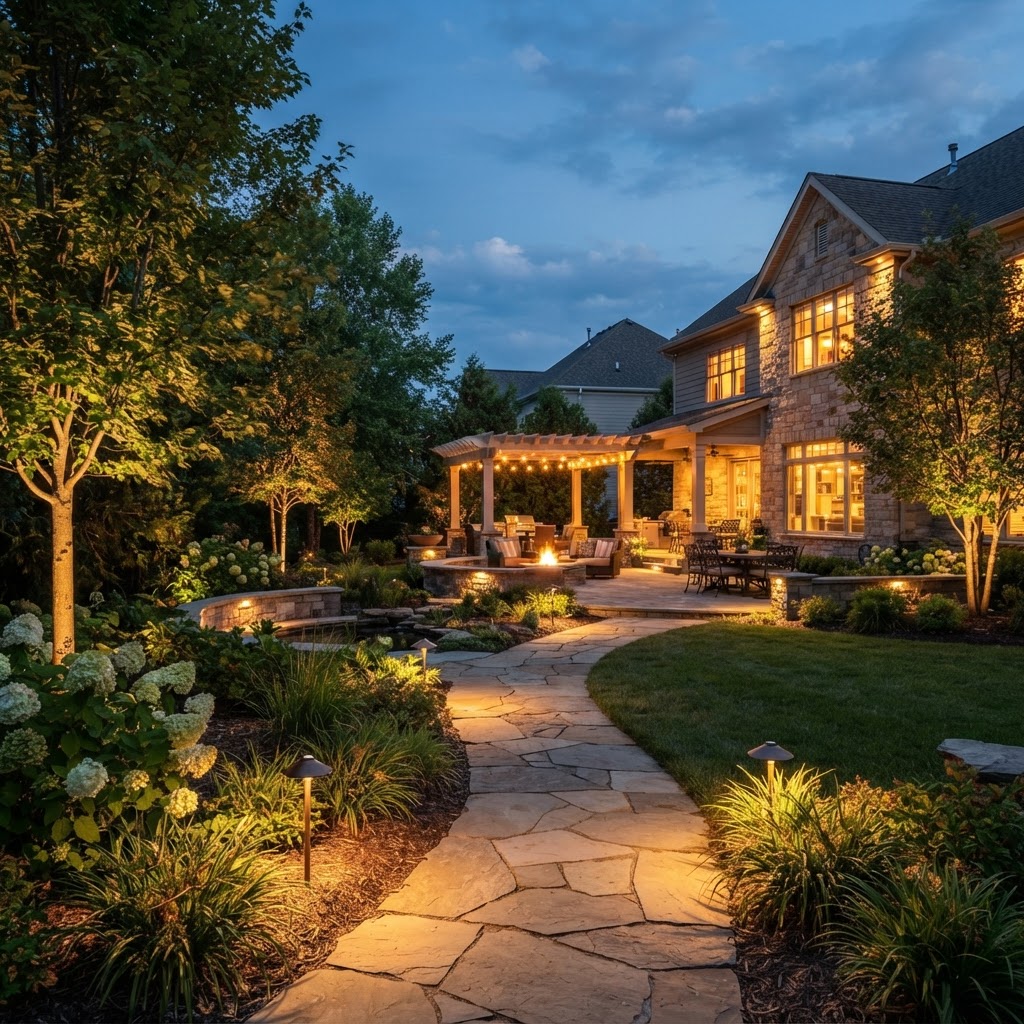
When the sun sets, your home’s beautiful architecture and meticulously manicured gardens shouldn’t simply disappear into the shadows. Landscape lighting design is the secret weapon of professional designers, used to transform a property from a dark silhouette into a warm, inviting, and safe sanctuary. Beyond just sticking a few solar stakes in the ground, true landscape lighting is an art form that balances aesthetics with functionality. It’s about creating depth, highlighting textures, and ensuring your outdoor living spaces are usable long after dusk. In this comprehensive guide, we will walk you through the professional principles of outdoor illumination, from choosing the right LED technology to mastering advanced techniques like moonlighting and silhouetting. Whether you are looking to boost your curb appeal or create a backyard oasis for evening entertaining, understanding the nuances of light and shadow is your first step toward a stunning nighttime transformation.
The Core Philosophy: Reveal, Don't Flood
One of the most common mistakes homeowners make is attempting to light their yard like a sports stadium. The goal of professional landscape lighting design is not to eliminate darkness entirely, but to use light strategically to create interest and safety. The industry mantra is 'reveal, don't flood.' By focusing on specific focal points and leaving other areas in soft shadow, you create a sense of mystery and depth that a single bright floodlight simply cannot achieve.
Think of your landscape as a stage. You want to highlight the lead actors—perhaps a majestic oak tree, a stone waterfall, or the unique texture of a brick facade—while allowing the background to recede. This approach not only looks more sophisticated but also reduces light pollution and glare, which can be harsh on the eyes. When planning your layout, consider the views from both outside and inside your home. A well-lit garden should look just as beautiful through your living room window as it does from the sidewalk. For more tips on managing your home's exterior, check out our essential home maintenance guide.
Essential Landscape Lighting Techniques
To achieve a professional look, you need to move beyond basic path lights. Here are the primary techniques used by experts:
- Uplighting: This is the most popular technique, involving placing fixtures at the base of a feature and aiming them upward. It is perfect for highlighting the structure of large trees or the architectural details of your home's facade.
- Moonlighting: To mimic the soft, natural glow of a full moon, fixtures are placed high up in trees and aimed downward. This creates beautiful dappled shadows on the ground as the light filters through the leaves and branches.
- Wall Washing: By placing a wide-angle light a few feet away from a flat surface, you create a soft, even glow that highlights the texture of stone or wood siding without creating harsh hotspots.
- Silhouetting: Place a light behind an object (like a dense shrub or a decorative statue) and aim it toward a wall. This creates a dark outline of the object against a glowing background, adding a dramatic, artistic flair.
- Path Lighting: While functional, path lighting should be subtle. Avoid the 'runway look' by staggering lights on alternating sides of a walkway rather than placing them in a straight line.
Choosing the Right Equipment: The LED Revolution
In the past, halogen bulbs were the standard for outdoor lighting, but today, LED (Light Emitting Diode) technology is the clear winner for residential applications. According to Energy.gov, LED bulbs use at least 75% less energy and last 25 times longer than incandescent lighting. For a homeowner, this means significantly lower utility bills and far less maintenance, as you won't be climbing ladders to change bulbs every few months.
When selecting LEDs, pay attention to Color Temperature, measured in Kelvins (K). For most residential landscapes, a 'warm white' (2700K to 3000K) is ideal. It provides a cozy, inviting glow that complements natural wood and stone. Avoid 'cool white' (4000K+), which can look bluish and clinical, making your yard feel more like a parking lot than a home. Additionally, consider the Lumen output. For path lights, 100-200 lumens is usually sufficient, while large canopy trees may require 500-700 lumens to be properly illuminated from the ground.
The Technical Foundation: Transformers and Voltage Drop
Most residential landscape lighting systems are low-voltage (12V). This is safer for DIY installation and more energy-efficient than standard 120V household current. The heart of this system is the transformer, which plugs into a standard GFCI outlet and steps the power down to 12 volts. When choosing a transformer, calculate the total wattage of all your fixtures and add a 20% buffer to ensure the unit isn't overloaded.
A critical concept to understand is Voltage Drop. As electricity travels down a wire, it loses power due to resistance. If your wire runs are too long or the wire gauge is too thin, the lights at the end of the line will appear dimmer than those closest to the transformer. To prevent this, professionals often use a 'hub' wiring method or thicker 10-gauge or 12-gauge wire. If this sounds overly technical, it might be time to consult a specialist. You can easily find verified local experts through FIND-A-PRO to ensure your system is engineered for longevity and consistent brightness.
Safety, Security, and Dark Sky Principles
While beauty is a major driver, landscape lighting also serves a vital role in home security. A well-lit home is a less attractive target for intruders, as it eliminates dark hiding spots. However, security lighting doesn't have to be ugly. Motion-activated sensors can be integrated into your aesthetic design so that bright lights only kick in when needed. Furthermore, lighting steps, elevation changes, and pool edges is essential for preventing trips and falls.
We also encourage homeowners to follow Dark Sky Principles. This means using shielded fixtures that direct light downward rather than up into the atmosphere, and using timers or smart controllers to turn lights off when they aren't needed. This protects local wildlife and allows everyone to enjoy the stars. If you're planning a larger renovation that includes lighting, you might want to read our guide on how to hire a service professional to find a contractor who understands these sustainable design practices.
Frequently Asked Questions About Landscape Lighting
Q: How much does professional landscape lighting cost?
A: Costs vary widely based on the number of fixtures and the complexity of the design. A basic professional installation typically starts around $2,000 to $5,000, while high-end custom designs for large estates can exceed $10,000. Remember, quality brass or copper fixtures will last decades, whereas cheap plastic ones often fail within a year.
Q: Can I install landscape lighting myself?
A: Low-voltage systems are generally safe for DIYers, but achieving a professional look requires an eye for design and an understanding of electrical loads. If you want a seamless, high-end result without the trial and error, hiring a pro is recommended.
Q: How do I maintain my lighting system?
A: Maintenance is relatively simple. Once or twice a year, clean the glass lenses of your fixtures to remove dirt and hard water spots, trim back any foliage that has grown over the lights, and check for any exposed wires that may have been unearthed by rain or animals.
Key Takeaways
Landscape lighting design is one of the most impactful investments you can make in your home. It extends your living space into the outdoors, provides peace of mind through enhanced security, and creates a breathtaking visual experience that changes with the seasons. By following the principles of 'reveal, don't flood' and investing in high-quality LED technology, you can create a nighttime environment that is both sustainable and stunning. If you're ready to bring your vision to life but aren't sure where to start, let <strong>FIND-A-PRO</strong> connect you with experienced, vetted landscaping professionals in your area who can design and install a system tailored perfectly to your home.