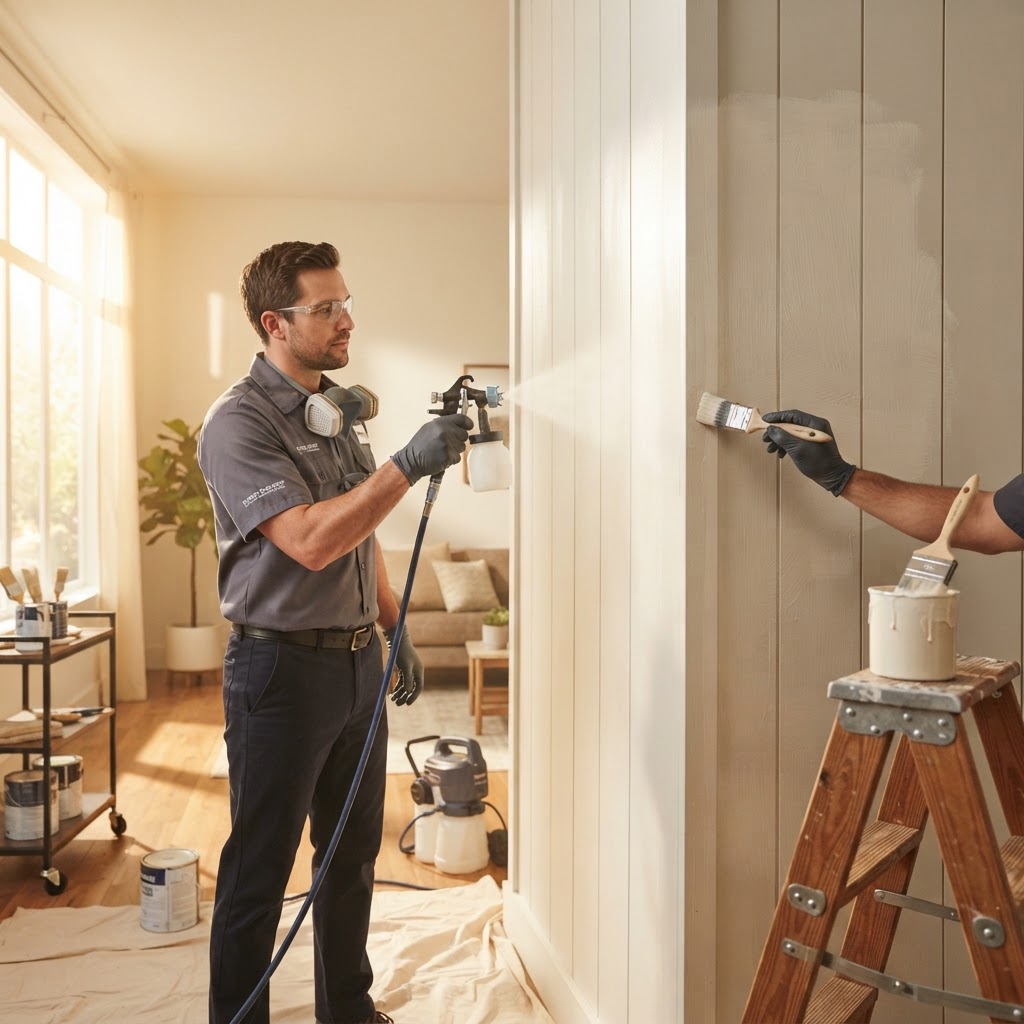
When you decide to refresh your home with a new coat of paint, the aesthetic result is often top of mind. However, the method used to apply that paint—whether by traditional brush and roller or modern spray equipment—can significantly impact the final look, durability, and cost of your project. For many homeowners, the debate between spray vs brush painting feels like a technical mystery. Should you prioritize the speed of a sprayer or the precision of a brush? In this guide, we break down the differences to help you make an informed decision for your next home improvement project.
Understanding the Basics: Brush and Roller Painting
The brush and roller method is the gold standard for most residential interior projects. It is a tried-and-true technique that offers a level of control that is difficult to replicate with mechanical sprayers. When you use a brush, you are physically pushing the paint into the surface, which is particularly beneficial for porous materials like wood or textured drywall.
- Precision: Brushes are unmatched for 'cutting in' around trim, corners, and edges where you need a clean, sharp line.
- Minimal Waste: You use exactly the amount of paint needed, with very little lost to overspray or evaporation.
- Low Fume/Safety: Because there are no airborne particles, it is generally safer for indoor use, especially in smaller or enclosed spaces.
While it is slower than spraying, the brush and roller method is often more forgiving for DIYers. If you are looking for a professional to handle a detailed interior job, you can use FIND-A-PRO to connect with local experts who specialize in high-quality, hand-applied finishes.
The Power of Spray Painting: Speed and Efficiency
Spray painting is the preferred choice for large-scale projects, such as exterior siding, fences, or large, open-concept rooms. The primary advantage here is speed; a professional can cover a wall in minutes that might take hours to roll by hand. However, speed comes with a trade-off in preparation time.
According to the Environmental Protection Agency (EPA), proper safety and containment are vital when working with paint, especially when dealing with potential lead-based paint in older homes. Spraying creates a fine mist that can travel, meaning you must spend significant time masking off windows, floors, and furniture to prevent overspray.
- Smooth Finish: When done correctly, spraying provides a glass-like, professional finish without the texture of roller stipple or brush marks.
- Efficiency: Ideal for complex surfaces like cabinets, shutters, or intricate trim work where a brush would leave unsightly streaks.
- Skill Requirement: Spraying requires a steady hand and knowledge of equipment settings to avoid 'runs' or uneven coverage.
The Hybrid Approach: Back-Brushing for Best Results
Many professional painters don't choose one or the other; they use a combination of both. This technique, often called 'back-brushing,' involves spraying the paint onto the surface to achieve quick, even coverage and then immediately following up with a brush or roller to work the paint into the surface pores.
This hybrid method is often considered the 'best of both worlds.' It ensures that the paint adheres deeply to the substrate—improving longevity—while maintaining the speed and efficiency of the spray rig. If you are planning a major renovation, it is helpful to understand these techniques before you start. For more guidance on managing your home projects, check out our essential home maintenance guide to keep your property in top shape.
Frequently Asked Questions (FAQ)
Q: Is spray painting always faster than brushing?
A: While the actual application of paint is much faster with a sprayer, the total project time is often similar because of the extensive masking and prep work required to protect surrounding areas from overspray.
Q: Which method is better for furniture?
A: For furniture, spray painting is generally superior if you want a factory-smooth finish. However, it requires a well-ventilated area and proper safety gear, such as a respirator, to protect against airborne particles.
Q: Can I use a sprayer for any type of paint?
A: Not necessarily. Some high-viscosity paints or those with specific textures (like certain deck coatings) are not suitable for standard sprayers and must be applied with a brush or roller to ensure the coating performs as intended.
Key Takeaways
Choosing between spray vs brush painting ultimately depends on the scope of your project, your budget, and the desired finish. While spraying offers unmatched speed and a smooth aesthetic, brushing provides the control and adhesion necessary for detailed work. If you are unsure which method is right for your specific home, don't hesitate to reach out to a qualified contractor. Using FIND-A-PRO makes it easy to find verified local professionals who can assess your project and recommend the best application technique to ensure a long-lasting, beautiful result.