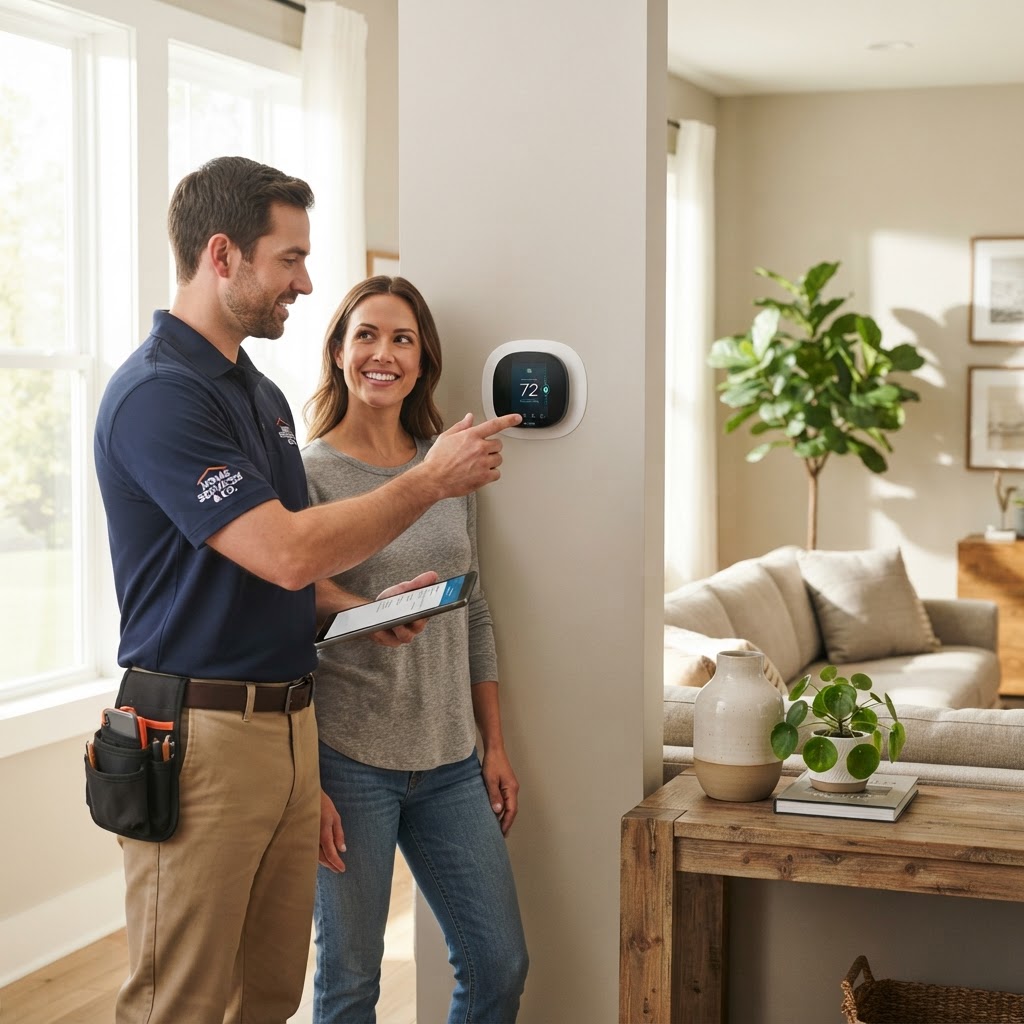
Heating and cooling account for more than half of the typical American home's energy consumption. For decades, the standard approach to managing that expenditure was walking over to a clunky wall dial or a tedious push-button programmable box. Today, smart HVAC controls are fundamentally transforming how we regulate indoor climate. By blending machine learning, occupancy detection, remote connectivity, and multi-zone sensors, modern systems optimize comfort while quietly driving down utility expenses. Whether you want to fix hot spots in upstairs bedrooms or trim monthly utility bills, this guide unpacks everything you need to know about upgrading to intelligent climate management.
What Are Smart HVAC Controls and How Do They Work?
At their core, smart HVAC controls are hardware and software systems designed to monitor, regulate, and automate your home’s heating, ventilation, and air conditioning equipment in real time. Unlike standard thermostats that merely measure ambient temperature at a single wall location, smart controls communicate continuously with your equipment, secondary sensors, and external data sources.
Modern smart systems utilize several key technologies to maintain comfort efficiently:
- Wi-Fi and IoT Connectivity: Connects your equipment to your home network, allowing you to monitor and adjust temperatures remotely via smartphone apps or integrate with ecosystems like Apple Home, Google Home, and Amazon Alexa.
- Algorithmic Learning: Advanced models analyze how quickly your home gains or loses heat under various weather conditions, learning your daily habits to make pre-emptive adjustments.
- Geofencing: Uses the GPS location of household smartphones to detect when everyone has left the property, automatically shifting into an eco-friendly setback mode and returning to ideal temperatures before you pull into the driveway.
- Remote Room Sensors: Small, wireless battery-powered units placed in bedrooms, home offices, or basements feed occupancy and temperature metrics back to the core controller, ensuring the rooms you actually inhabit stay comfortable.
Real-World Benefits: Efficiency, Comfort, and Equipment Lifespan
Upgrading your climate management isn't just a gadget enthusiast's indulgence—it delivers tangible financial and mechanical dividends. According to the EPA Energy Star program, certified smart thermostats save homeowners an average of 8% on annual heating and cooling bills, paying for themselves over time.
Beyond straightforward bill reductions, smart controls offer three distinct advantages:
- Targeted Comfort Without Micro-Managing: Say goodbye to running downstairs at midnight to nudge the dial. Smart systems balance multi-room variations automatically using remote temperature averaging.
- Reduced Wear and Tear: Conventional systems often experience rapid on-off cycling during mild weather. Smart algorithms modulate cycle durations and compressor speeds, mitigating strain on key mechanical components.
- Actionable Maintenance Insights: Many smart controls monitor system run-time trends and static pressure variations, alerting you precisely when filters are clogged or when a heat pump requires routine servicing before a minor issue causes a complete breakdown.
For more proactive ways to preserve your property's primary systems, review our essential home maintenance guide.
Core Types of Smart HVAC Controls for Residential Homes
When selecting smart controls, homeowners typically encounter three primary categories ranging from simple DIY retrofits to sophisticated whole-home zoning configurations:
1. Smart Thermostats: The foundational entry point for most residences. Top-tier smart thermostats replace your legacy 24V wall unit to provide remote scheduling, adaptive recovery, and energy reporting. Premium models support multi-stage heat pumps, dual-fuel configurations, and whole-home dehumidification systems.
2. Smart HVAC Zoning Systems: If your home features uneven temperatures—such as a warm upper floor and an icy ground level—smart zoning offers targeted relief. These setups use motorized duct dampers and independent room sensors to direct conditioned air specifically where it is requested, eliminating the waste of conditioning unoccupied guest spaces.
3. Smart AC and Mini-Split Controllers: For houses reliant on ductless mini-splits, window units, or portable air conditioners, smart infrared (IR) controllers bridge the gap. These plug-in bridges replicate handheld remote commands, integrating ductless units into your unified smart home ecosystem.
Compatibility and Installation: The Critical C-Wire Consideration
Before purchasing hardware, evaluating your system's electrical wiring is essential. Standard smart thermostats feature digital displays, Wi-Fi chips, and backlights that demand continuous low-voltage electricity. That continuous current is supplied by the Common Wire (C-wire).
Older homes with manual two-wire or four-wire configurations often lack a dedicated C-wire. While some manufacturers market power-stealing features or include add-a-wire adapter kits that tap into your furnace control board, improper wiring can lead to erratic furnace cycling, dropped Wi-Fi signals, or blown 3-amp fuses on your control board.
If your control panel lacks dedicated terminal leads or you are integrating complex multi-stage heat pumps, working with a qualified technician ensures reliable performance. Homeowners can turn to FIND-A-PRO to quickly connect with certified local HVAC technicians who understand low-voltage controls and regional system requirements.
DIY vs. Professional Installation: What to Expect
Deciding between a self-install and bringing in a professional hinges largely on your home’s infrastructure:
- When to DIY: If your existing thermostat setup already includes an active C-wire, controls a standard single-stage heating and cooling unit, and you are comfortable shutting off power at the main breaker box, a DIY installation generally takes 30 to 45 minutes using standard screwdrivers and smartphone setup apps.
- When to Hire a Professional: Bring in an expert if your setup involves high-voltage baseboard heat (120V/240V), dual-fuel hybrid systems (heat pump paired with gas furnace backup), proprietary communicating HVAC equipment, or the installation of motorized duct dampers.
Navigating home repairs requires vetting contractors carefully; consult our detailed guide on how to hire a service professional to ensure you ask the right questions regarding licensing and insurance before scheduling service.
Frequently Asked Questions (FAQ)
Can smart HVAC controls damage my existing furnace or air conditioner?
A properly selected and wired smart thermostat will not damage your equipment. However, using a power-stealing thermostat on an older furnace lacking a dedicated C-wire can cause mechanical relay chatter, erratic switching, and premature board failure. Always verify wiring compatibility prior to installation.
Do smart thermostats work if the Wi-Fi network goes down?
Yes. In the event of an internet outage, your thermostat continues functioning as a traditional digital thermostat, maintaining your last programmed schedule and setpoints. You only lose remote mobile app control, voice assistant integration, and real-time outdoor weather tracking until the connection is restored.
How quickly do smart HVAC controls pay for themselves?
Most households recoup the purchase price of an Energy Star-certified smart thermostat within 12 to 24 months through monthly utility savings. In addition, many municipal electric and natural gas utilities offer instant equipment rebates ranging from $50 to $100, which substantially shortens the payback period.
Key Takeaways
Upgrading to smart HVAC controls is one of the most cost-effective home improvements available, combining immediate energy reductions with tailored day-to-day comfort. By eliminating redundant heating and cooling cycles and giving you clear insight into your household energy use, intelligent controls simplify home maintenance. When you are ready to evaluate your system compatibility or install motorized dampers and smart controls seamlessly, visit FIND-A-PRO to find verified, top-rated HVAC specialists in your neighborhood.
