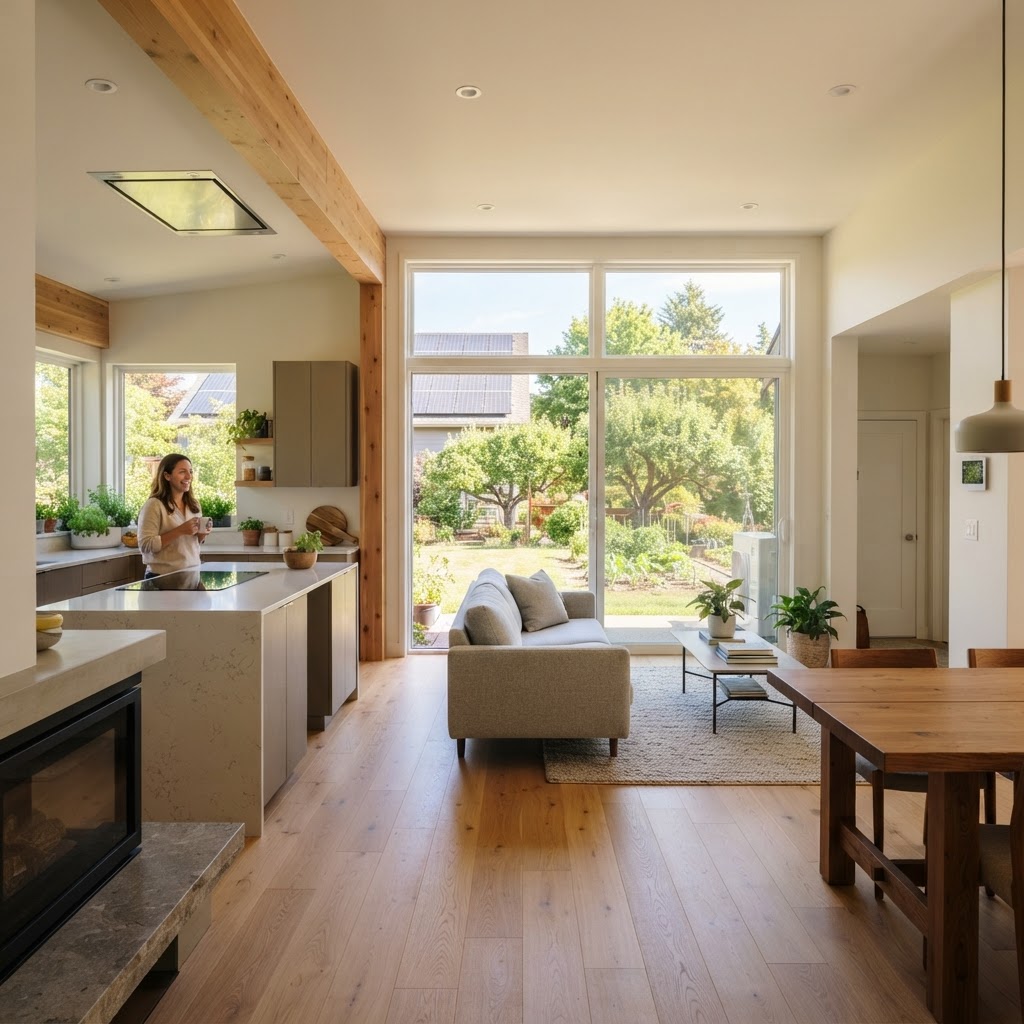
Imagine a home that produces as much energy as it consumes, leaving you with virtually non-existent utility bills and a significantly smaller carbon footprint. This isn't a futuristic fantasy; it is the reality of net zero home design. As energy costs fluctuate and environmental concerns take center stage, more homeowners and builders are turning toward net zero energy (NZE) principles. Whether you are planning a ground-up new build or looking to retro-fit your existing residence, understanding the mechanics of high-performance housing is the first step toward a more sustainable and financially sound future. In this guide, we will break down the essential strategies, from passive solar orientation to the latest in heat pump technology, helping you navigate the journey toward a zero-energy home.
Understanding the Foundation: What Exactly is a Net Zero Home?
At its core, a Net Zero Energy (NZE) home is a building that, over the course of a year, generates enough renewable energy on-site to equal its total energy consumption. While many people immediately think of solar panels, the secret to a successful net zero design isn't just about adding more power; it's about drastically reducing the demand for that power in the first place.
Think of your home like a bucket with holes in it. If you want to keep the bucket full (comfortable temperatures), you can either keep pouring water in (high energy usage) or you can plug the holes (energy efficiency). Net zero design focuses on plugging those holes first. This 'Fabric First' approach ensures that the building envelope is so efficient that the remaining energy needs are small enough to be met by a modest solar array or other renewable sources.
For professionals in the industry, this represents a shift from traditional building methods to a more integrated design process. For homeowners, it means a more comfortable, quieter, and healthier living environment. According to the U.S. Department of Energy, zero-energy-ready homes are at least 40% to 50% more energy-efficient than a typical new home.
The Passive Design Strategy: Working with Nature
The most cost-effective way to achieve net zero is to design with the sun and wind in mind. This is known as passive design, and it requires no mechanical moving parts. The goal is to maximize natural heating in the winter and natural cooling in the summer.
- Orientation: Ideally, the longest side of your home should face south (in the northern hemisphere). This allows you to capture maximum solar gain during the winter when the sun is low in the sky.
- Window Placement: High-performance, triple-pane windows should be concentrated on the southern side. Conversely, minimizing windows on the north, east, and west sides helps prevent unwanted heat loss or gain.
- Thermal Mass: Materials like concrete, brick, or stone can absorb heat during the day and release it slowly at night, helping to stabilize indoor temperatures.
- Shading: Properly sized roof overhangs or deciduous trees can block the hot summer sun while still allowing the lower winter sun to enter the home.
Implementing these strategies during the planning phase costs almost nothing but yields massive dividends for the life of the home. If you are unsure how to orient a new build, using a service like FIND-A-PRO can help you connect with local architects who specialize in sustainable site planning.
The Building Envelope: Insulation and Air Sealing
If passive design is the blueprint, the building envelope is the shield. To reach net zero, the 'skin' of your house must be incredibly tight and well-insulated. Traditional building codes are often the 'bare minimum,' whereas net zero standards aim for much higher R-values (a measure of thermal resistance).
Continuous Insulation: One of the biggest enemies of energy efficiency is thermal bridging. This happens when heat travels through solid objects, like wooden wall studs. By adding a layer of rigid foam insulation to the outside of the framing, you create a thermal break that keeps heat where it belongs. Air Sealing: Most homes leak air like a sieve. In a net zero design, builders use advanced tapes, membranes, and gaskets to seal every gap, crack, and utility penetration. A common benchmark is achieving less than 0.6 air changes per hour (ACH) at 50 pascals of pressure, verified by a blower door test.
It is crucial to work with contractors who understand these technical requirements. You can check out our guide on how to hire a service professional to ensure you're vetting your insulation and framing teams properly for high-performance work.
High-Efficiency HVAC and Indoor Air Quality
Once you have a tight, well-insulated box, you need very little energy to heat and cool it. However, because the house is so airtight, you must manage ventilation mechanically to ensure healthy indoor air quality. This is where ERVs (Energy Recovery Ventilators) or HRVs (Heat Recovery Ventilators) come in. These systems constantly swap stale indoor air for fresh outdoor air while pre-heating or pre-cooling the incoming air using the energy from the exhaust stream.
For heating and cooling, Air Source Heat Pumps (ASHP) are the gold standard for net zero homes. Modern heat pumps can operate efficiently even in sub-zero temperatures. Because they move heat rather than generating it through combustion, they can be 300% to 400% efficient. Combined with a heat pump water heater, you can eliminate the need for natural gas entirely, which is a major step toward total decarbonization.
Renewable Energy: The 'Net' in Net Zero
After you have reduced your energy load through design and efficiency, the final step is generating power. For 99% of net zero homes, this means Photovoltaic (PV) Solar Panels. When sizing your solar array, it is important to look at your projected annual usage. A professional solar installer will analyze your roof's azimuth, pitch, and potential shading from nearby trees.
Battery storage, such as the Tesla Powerwall or similar systems, is becoming increasingly popular. While not strictly required for a 'net zero' rating (if you are grid-tied), batteries provide resilience during power outages and allow you to use your own solar energy during peak evening hours when utility rates are highest. To find a certified solar installer in your area, FIND-A-PRO provides a vetted directory of local specialists who can handle the permitting and installation process.
Financial Incentives and the ROI of Net Zero
Many homeowners worry about the upfront cost of net zero design, which typically ranges from 5% to 10% more than a standard build. However, this is offset by several factors. First, the Inflation Reduction Act (IRA) offers significant tax credits for heat pumps, solar installations, and weatherization. Second, the monthly savings on utility bills often exceed the increase in mortgage payments for the energy-efficient upgrades, leading to positive cash flow from day one.
Furthermore, net zero homes tend to have higher resale values. As energy disclosure laws become more common, homes with a 'Zero Energy Ready' certification or a low HERS (Home Energy Rating System) index will be much more attractive to future buyers. For more information on maintaining these high-tech systems over time, see our essential home maintenance guide.
Frequently Asked Questions About Net Zero Design
Q: Can I turn my existing older home into a net zero home?
A: Yes, though it is more challenging than a new build. It usually involves a 'deep energy retrofit,' which includes adding exterior insulation, replacing windows, and switching to all-electric HVAC systems. It is often done in phases.
Q: Do net zero homes work in cold climates?
A: Absolutely. In fact, the benefits of net zero design are even more pronounced in extreme climates. The thick insulation and airtightness keep the home incredibly warm even when the power goes out, thanks to the home's high thermal mass and resistance.
Q: How long do solar panels and heat pumps last?
A: Most solar panels are warrantied for 25 years and can last longer, though their efficiency slightly degrades over time. Modern heat pumps typically last 15 to 20 years with proper maintenance, similar to a traditional furnace or AC unit.
Key Takeaways
Transitioning to a net zero home is one of the most impactful decisions a homeowner can make for both the planet and their pocketbook. By prioritizing a high-performance building envelope, leveraging passive solar design, and utilizing efficient electric systems, you create a sanctuary that is resilient, comfortable, and sustainable. While the technical details can seem daunting, you don't have to do it alone. Successful net zero projects require a team of dedicated professionals who understand the science of building. Whether you need a specialized energy auditor, an HVAC expert, or a solar installer, FIND-A-PRO is here to connect you with the verified local experts needed to bring your vision to life. Start your journey today and build a home that works for you and the future.
