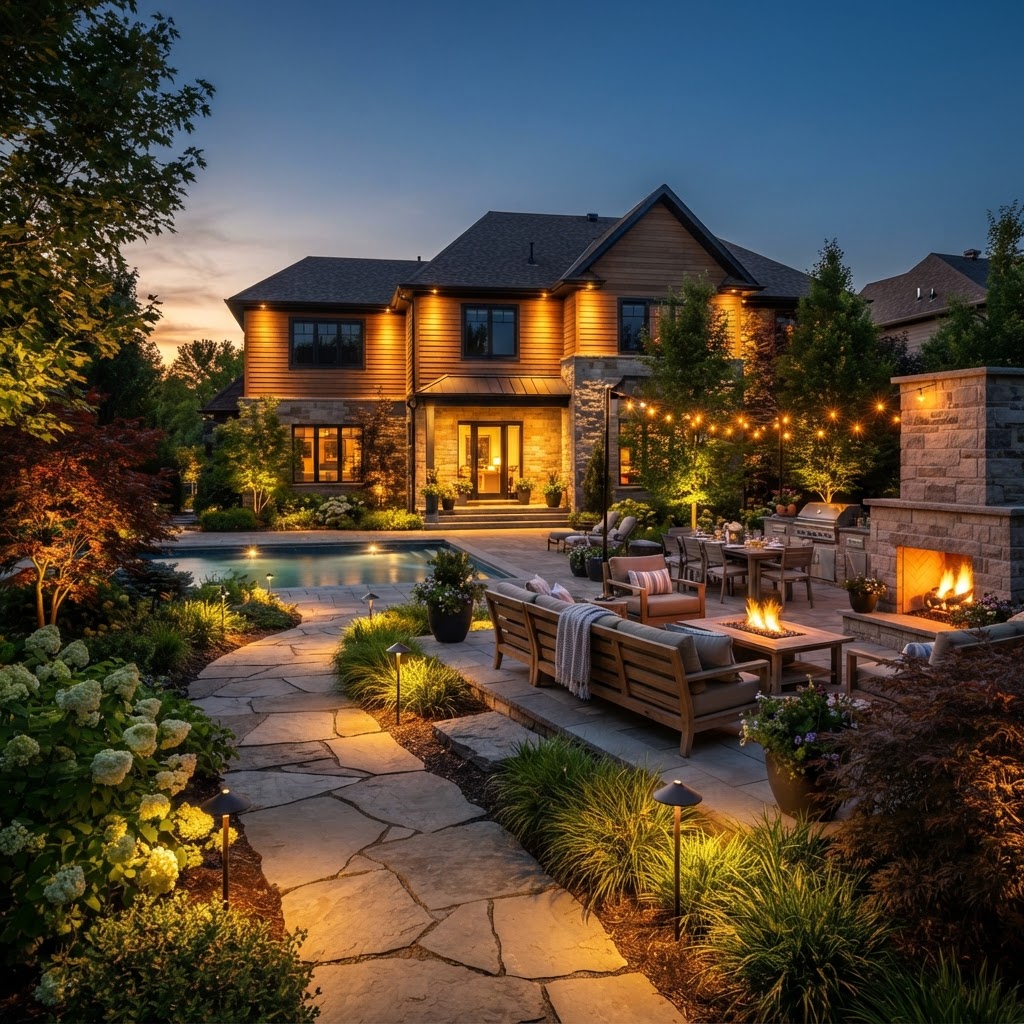
When the sun sets, your home doesn't have to disappear into the shadows. Professional outdoor lighting design is about more than just visibility; it is an art form that balances safety, security, and aesthetic beauty. Whether you want to highlight the architectural details of your facade, create a cozy atmosphere for evening entertaining, or simply ensure your pathways are safe for guests, a well-planned lighting scheme can completely transform your property. In this guide, we will walk you through the essential principles of landscape lighting, helping you move beyond basic porch lights to create a sophisticated, layered nighttime environment.
The Philosophy of Layered Lighting
The most common mistake homeowners make is over-lighting their property, often resulting in a 'runway' effect or harsh glare that ruins the ambiance. Professional designers approach outdoor spaces by thinking in layers. Just as you would layer lighting in your living room, you should apply the same logic to your yard.
- Ambient Lighting: This provides the base level of light, allowing for safe movement across the property.
- Task Lighting: Focused light for specific areas like outdoor kitchens, grills, or entryways where visibility is critical for safety.
- Accent Lighting: The 'jewelry' of your landscape. This is used to highlight specimen trees, stone walls, or architectural features, creating depth and contrast.
By incorporating dark areas into your design, you create balance and visual interest. Remember, outdoor lighting is not about recreating Times Square; it is about highlighting the features that make your home unique, as noted in expert landscape design tips.
Essential Techniques for Architectural and Landscape Lighting
To achieve a high-end look, you must master a few core techniques. Uplighting is perhaps the most impactful method; by placing LED spotlights close to the base of a tree or a textured stone wall, you create dramatic shadows and highlight architectural details. Grazing is another sophisticated technique where lights are placed very close to a textured surface, such as brick or stone, to emphasize the material's character.
For pathways, avoid the temptation to line them up like an airport runway. Instead, stagger your path lights at 8 to 10-foot intervals. This creates a natural rhythm and prevents the 'runway' look. If you are unsure about the technical requirements for your specific property, FIND-A-PRO can help you connect with verified local professionals who specialize in custom lighting layouts.
Planning for Success: Transformers and Voltage
A beautiful design will fail if the technical foundation is weak. One of the most critical aspects of professional installation is managing voltage drop. If your wire runs are too long or your transformer is undersized, your lights will dim significantly at the end of the line. Always calculate your total wattage and ensure your transformer has at least 20% overhead capacity for future expansion. For detailed guidance on energy efficiency and standards, refer to the Energy Star guidelines.
Before you begin, it is helpful to understand the scope of your project. If you are planning a major overhaul, you might want to review our guide on how to hire a service professional to ensure you have the right expertise on your team.
Frequently Asked Questions
Q: How do I choose the right color temperature for my outdoor lights?
A: For most residential homes, warm white (2700K to 3000K) is the gold standard. It creates a welcoming, cozy atmosphere that complements natural wood and stone. Avoid cool, blue-toned lights unless you are aiming for a very specific modern, industrial aesthetic.
Q: Should I use solar or low-voltage lighting?
A: While solar lights are easy to install, they rarely provide the intensity or reliability of a low-voltage system. For permanent, high-end results that enhance curb appeal, a hardwired low-voltage system is almost always the better investment.
Q: How can I prevent glare in my outdoor living spaces?
A: Glare is usually caused by exposed light sources. Use fixtures with deep shrouds or glare guards, and ensure that lights are aimed away from seating areas and windows. The goal is to see the effect of the light, not the bulb itself.
Key Takeaways
Outdoor lighting design is a powerful tool that enhances both the beauty and the security of your home. By focusing on layering, choosing the right fixtures for your home's architectural style, and ensuring your electrical system is properly sized, you can create a stunning nighttime oasis. Whether you are looking to boost your curb appeal or simply enjoy your backyard long after the sun goes down, a thoughtful design makes all the difference. If you are ready to bring your vision to life, use FIND-A-PRO to connect with experienced, verified professionals in your area who can handle the installation with precision and care.
