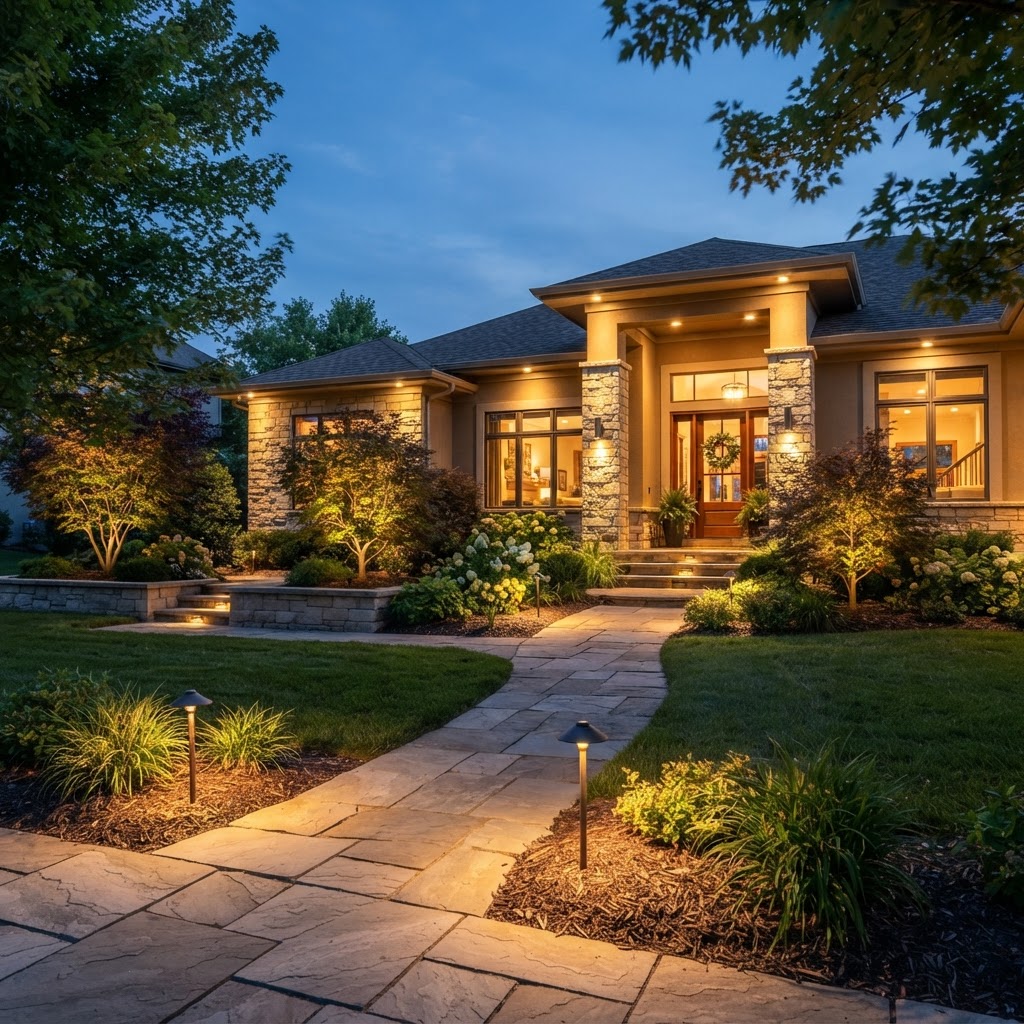
As the sun dips below the horizon, your home shouldn't simply vanish into the shadows. Thoughtful landscape lighting design does more than just illuminate a dark path; it transforms your property into a multi-dimensional masterpiece, highlighting architectural details, casting dramatic shadows, and extending your living space well into the night. Whether you are looking to create a romantic ambiance for evening gatherings or boost your home's security, professional-grade lighting is one of the most impactful investments a homeowner can make. In this guide, we will explore the nuances of light, shadow, and technology to help you envision a landscape that truly shines after dark.
The Core Principles of Landscape Lighting Design
Effective landscape lighting design is built on three pillars: aesthetics, safety, and security. To achieve a professional look, you must move beyond the 'runway' effect—those lines of identical path lights that look like an airport landing strip. Instead, focus on layering your light. Just like interior design uses ambient, task, and accent lighting, your outdoor space requires a blend of different intensities and angles.
First, consider ambient lighting. This is your base layer, providing a gentle glow that allows people to navigate the yard without feeling blinded. Next is task lighting, which focuses on functional areas like outdoor kitchens, stairs, or entryways where visibility is paramount for safety. Finally, accent lighting is where the magic happens. This involves pinpointing specific features—a gnarled oak tree, a stone fountain, or the texture of a brick wall—and making them focal points. By balancing these three layers, you avoid 'hot spots' (areas that are too bright) and ensure that the eye is drawn to the most beautiful parts of your landscape.
Professional Techniques: From Moonlighting to Grazing
To get the most out of your fixtures, you need to understand specific professional techniques. Up-lighting is perhaps the most common, where fixtures are placed at the base of a tree or architectural feature and aimed upward to highlight structure and height. However, for a more natural look, many designers prefer moonlighting. This involves placing large-angle fixtures high up in trees and directing the light downward through the branches, creating the soft, dappled shadows you would see on a full-moon night.
If you have a textured surface like a stone veneer or a rugged retaining wall, grazing is an excellent choice. By placing the light source very close to the wall and directing the beam straight up or down, you emphasize the peaks and valleys of the material. Conversely, silhouetting places a light source behind an object (like a unique topiary) and aims it at a backdrop wall, creating a dark, dramatic shape against a bright surface. Understanding these methods is key to creating a sophisticated look. For more tips on keeping your property in top shape, check out our essential home maintenance guide.
Choosing the Right Fixtures and Bulbs
Hardware choice is where many DIY projects fail. Cheap plastic fixtures from big-box stores often brittle and break within a single season. Professionals recommend solid brass or copper fixtures because they patina beautifully over time and withstand the elements. When it comes to the light source, LED is the gold standard. Modern LEDs offer incredible color rendering, use 80% less energy than traditional halogen bulbs, and can last up to 50,000 hours.
When selecting bulbs, pay attention to the Color Temperature, measured in Kelvins (K). For most residential landscapes, a warm white (2700K to 3000K) is ideal. It feels inviting and mimics the glow of a campfire or indoor incandescent bulb. Cooler lights (4000K and above) can look clinical and blue, which rarely complements natural foliage. You can find more information on energy-efficient lighting standards at the Energy Star website to ensure your upgrades are environmentally friendly.
Safety, Security, and Smart Controls
While beauty is a priority, lighting is a critical safety feature. Illuminating elevation changes, such as steps and terrace edges, prevents trips and falls. Furthermore, a well-lit home is a significant deterrent to intruders. Dark corners provide cover, whereas a strategically lit perimeter removes hiding spots without the need for harsh, blinding floodlights. Motion sensors can be integrated into your design to provide extra security only when movement is detected.
Smart technology has also revolutionized how we interact with our yards. You can now install smart transformers that allow you to control individual zones from your smartphone. Want the patio lights at 50% brightness but the security lights at 100%? There's an app for that. You can also set astronomical timers that automatically adjust for daylight savings and the changing sunset times throughout the year, ensuring your home is never left in the dark.
Planning Your Layout: A Step-by-Step Approach
Before you dig a single trench, you need a plan. Start by walking your property at night with a high-powered flashlight. Mimic different lighting angles to see how shadows fall. Sketch your yard and mark your focal points, walkways, and entry points. This is also the time to consider your transformer capacity. Total the wattage of all your planned bulbs and ensure your transformer can handle the load, plus a 20% buffer for future expansion.
Low-voltage (12V) systems are the preferred choice for most homeowners because they are safe, energy-efficient, and the cables only need to be buried a few inches deep. However, the installation still requires a keen eye for voltage drop—the phenomenon where lights further from the transformer appear dimmer. If this sounds overwhelming, remember that FIND-A-PRO can connect you with local experts who specialize in electrical design and landscape aesthetics to ensure your system is installed correctly and safely.
DIY vs. Hiring a Professional
Many homeowners wonder if they can tackle landscape lighting as a weekend project. While installing a few solar path lights is easy, a comprehensive, hard-wired system is complex. A professional designer understands beam spreads, lumen output, and electrical load balancing. They also have access to high-quality fixtures that aren't available to the general public. If you're planning a large-scale renovation, hiring a pro can actually save you money by preventing costly mistakes and ensuring the longevity of the system.
When you're ready to find a contractor, make sure you know what to look for. You should ask about their experience with low-voltage systems and request a nighttime demo if possible. For a deeper dive into vetting contractors, read our guide on how to hire a service professional. Using a platform like FIND-A-PRO ensures you are matched with verified, reputable professionals in your area who have a proven track record of excellence.
Common Questions About Landscape Lighting
Q: How much does professional landscape lighting cost?
A: Costs vary widely based on the number of fixtures and the quality of materials. A basic professional setup might start around $2,000, while extensive estate lighting can exceed $10,000. However, the increase in property value and curb appeal often provides a high return on investment.
Q: Is solar lighting a good alternative to wired systems?
A: Solar lights are convenient for remote areas where wiring is impossible, but they generally lack the brightness and reliability of a hard-wired LED system. They also tend to fail much sooner due to battery degradation.
Q: Will landscape lighting bother my neighbors?
A: Not if it is designed correctly. Professionals use 'shielded' fixtures that direct light exactly where it's needed, preventing 'light pollution' and glare from entering neighboring windows. This is known as good neighbor lighting.
Key Takeaways
Landscape lighting design is the ultimate finishing touch for any home. It bridges the gap between architecture and nature, creating an inviting atmosphere that enhances both your lifestyle and your property's value. By understanding the principles of layering, choosing high-quality LED fixtures, and utilizing professional techniques like moonlighting and grazing, you can create a nighttime sanctuary that is as safe as it is beautiful. Whether you are starting small with a few path lights or planning a total property transformation, don't hesitate to seek expert help. Use FIND-A-PRO to find the most qualified landscape lighting specialists in your neighborhood and turn your vision into a brilliant reality.
