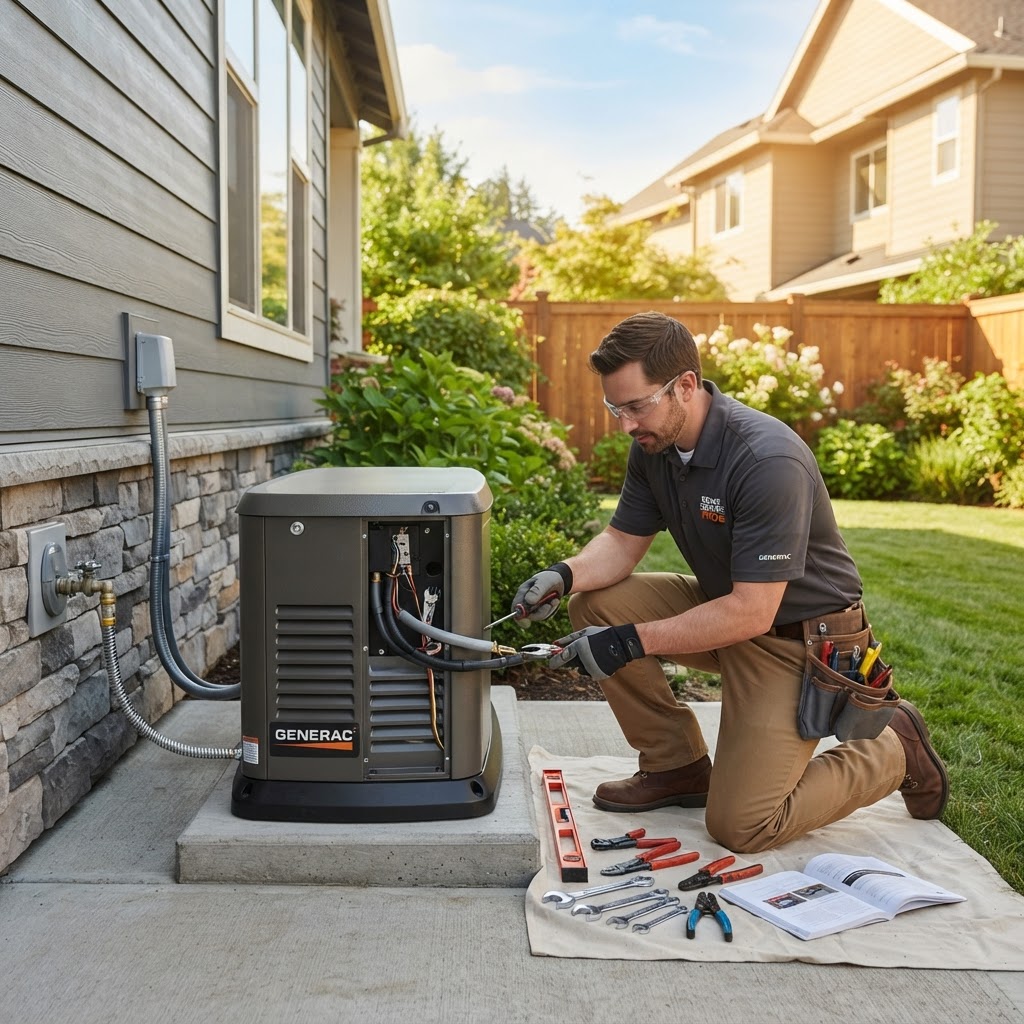
When the power grid fails, the silence that follows can be unsettling—and for many homeowners, it’s a major inconvenience. A standby generator is more than just a luxury; it is a critical piece of infrastructure that keeps your lights on, your refrigerator running, and your HVAC system operational during emergencies. However, installing a generator is a complex, high-stakes project that involves dangerous electrical currents and volatile fuel lines. In this guide, we will walk you through the professional installation process so you know exactly what to expect when you decide to invest in home backup power.
Why Professional Installation is Non-Negotiable
It is tempting to look at a generator and think of it as a simple appliance, but it is actually a sophisticated power plant. According to industry standards, installing a standby generator involves integrating high-voltage electrical systems with your home’s existing panel and connecting to a fuel source like natural gas or propane. Because of the risks involved—including fire, carbon monoxide poisoning, and electrocution—this is not a DIY project.
Licensed professionals ensure that your installation complies with the National Electrical Code (NEC) and local building codes. Furthermore, improper installation can void your manufacturer’s warranty. If you are ready to get started, you can use FIND-A-PRO to connect with verified local professionals who have the expertise to handle these complex systems safely.
The Anatomy of a Standby Generator Installation
A professional installation follows a rigorous sequence to ensure safety and reliability. Here is the typical workflow your contractor will follow:
- Site Selection and Preparation: The generator must be placed outdoors, at least 5 feet away from doors, windows, and vents to prevent carbon monoxide buildup. A level concrete or composite pad is installed to provide a stable, well-drained foundation.
- Transfer Switch Installation: The automatic transfer switch (ATS) is the 'brain' of your system. It monitors utility power and automatically switches your home to generator power when an outage is detected. This is installed near your main electrical panel.
- Electrical Integration: Your electrician will run conduit from the generator to the transfer switch, connecting the unit to your home’s critical circuits.
- Fuel Line Connection: Whether using natural gas or propane, a licensed professional must size the lines correctly to ensure the generator receives the required volume of fuel to operate at full load.
For more information on safety standards, you can review the OSHA generator safety guidelines.
Planning for Permits and Inspections
One of the most overlooked aspects of home improvement is the permitting process. A professional installer will handle the paperwork, which often includes electrical permits and sometimes gas or mechanical permits. Once the work is complete, a municipal inspector will verify that the installation meets all local safety codes. This step is vital for your insurance coverage and the long-term safety of your home. If you are unsure about the maintenance requirements for your home after the installation, check out our essential home maintenance guide to keep your systems running smoothly.
Frequently Asked Questions (FAQ)
Q: Can I install a standby generator myself?
A: No. Due to the complexity of high-voltage electrical work and gas line installation, it is strongly recommended that you hire a licensed professional to ensure safety and code compliance.
Q: How long does the installation process take?
A: A typical installation can take anywhere from 12 to 16 man-hours of labor, though the total project timeline may span several days depending on permit approvals and utility coordination.
Q: Do I need to upgrade my gas meter?
A: Often, yes. Your gas utility may need to verify that your current meter can handle the additional load of a generator alongside your existing appliances. Your installer will coordinate this assessment for you.
Key Takeaways
Investing in a standby generator is a significant step toward home security and peace of mind. By understanding the installation process—from site preparation to the final electrical inspection—you can ensure that your backup power system is ready to perform when you need it most. Remember, the safety of your home depends on the quality of the installation. When you are ready to move forward, use FIND-A-PRO to find qualified, licensed professionals in your area who can provide a safe, code-compliant installation that protects your investment for years to come.
