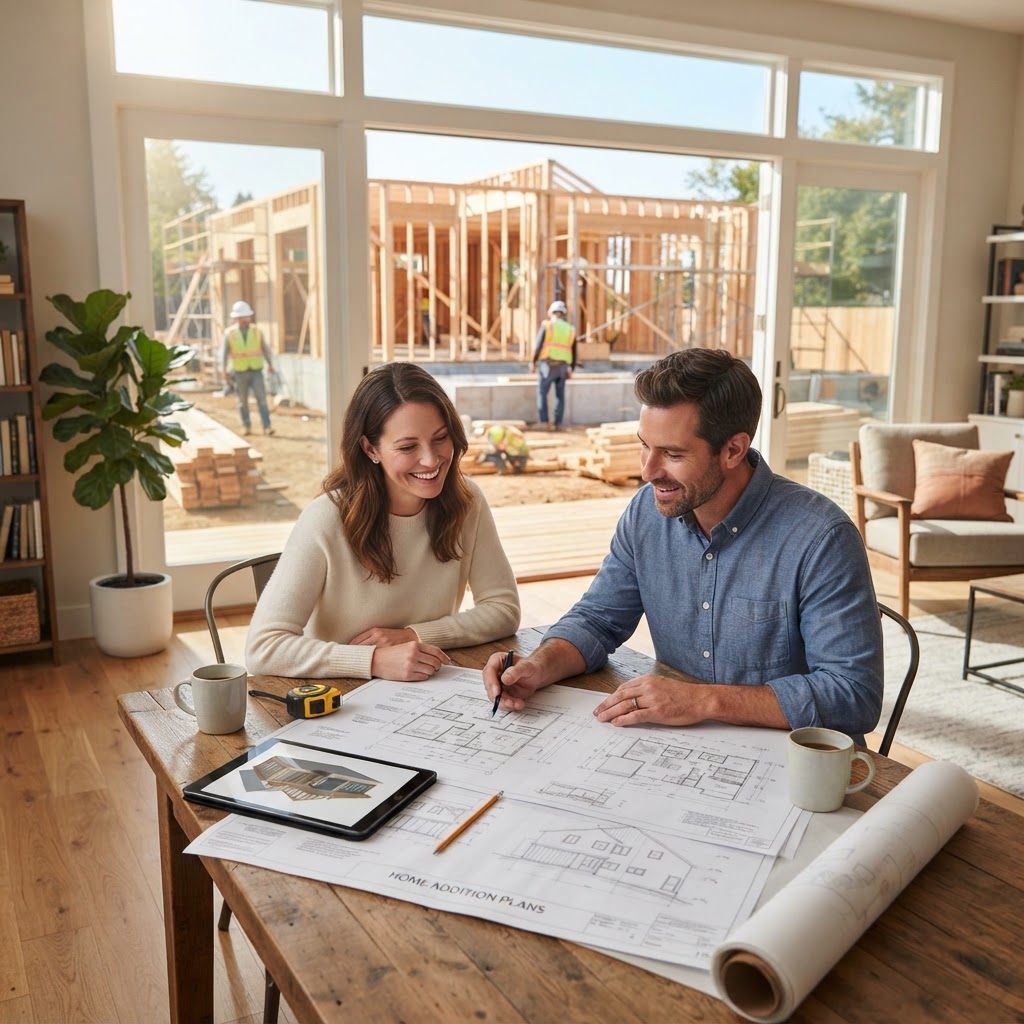
There is a distinct moment in every homeowner's journey where the walls start to feel a little closer than they used to. Perhaps your family is growing, you’ve transitioned to working from home, or you simply crave that extra square footage to breathe. While moving is one option, many homeowners prefer to improve where they already are. Home addition planning is an exciting, albeit complex, endeavor that transforms your living environment—but success lies entirely in the preparation. Whether you are dreaming of a spacious new primary suite, a sprawling kitchen expansion, or a multi-purpose sunroom, careful planning is the bridge between a chaotic construction zone and your dream home.
Defining Your Goals and Assessing Feasibility
Before you start browsing tile samples or picking out paint colors, you must establish the 'why' and the 'how' of your project. Are you looking to increase the resale value, or is this for long-term comfort? Understanding your primary motivation helps guide your budget and design choices.
Next, you need to conduct a feasibility study of your property. Not every lot can accommodate an addition. Consider these essential factors:
- Zoning Laws and Setbacks: Most municipalities have strict rules about how close a structure can be to your property line. You can check your local government’s website or consult with a professional to understand your footprint limits.
- Existing Infrastructure: Can your current HVAC system handle the extra load? Is your electrical panel up to code to support new outlets and lighting?
- Foundation Constraints: Adding a second story requires a vastly different structural approach than a ground-level bump-out.
If you aren't sure where to start, our guide on how to hire a service professional can help you find an architect or contractor who can perform a site analysis to see if your vision is structurally sound.
Budgeting for Your Home Addition
One of the biggest pitfalls in home addition planning is the 'hope-based' budget. Homeowners often estimate costs based on a friend's renovation from five years ago. To avoid financial stress, you need a realistic, detailed budget.
Break your budget down into categories:
- Professional Fees: Architects, engineers, and designers.
- Permits and Inspections: These are non-negotiable costs that vary by city.
- Site Prep and Demolition: Clearing the space, grading, and utility rerouting.
- Construction and Materials: The 'hard' costs.
- The 'Oh No' Fund: Always set aside 15–20% of your total budget for unexpected issues. When you open walls, you might find old wiring or structural surprises that need immediate attention.
For more specific tips on how to protect your investment, review the Federal Trade Commission’s guide on hiring a contractor to ensure you understand contracts and payment schedules.
Navigating Permits and Legal Requirements
If you try to skip the permitting process, you might save money in the short term, but you will pay for it dearly when you try to sell your home. Unpermitted work is a massive red flag for buyers and can lead to forced retrofitting or even demolition orders.
Your contractor should handle the bulk of the permitting process, but you should stay informed. Typically, you will need to submit:
- Detailed architectural drawings.
- Structural engineering plans (especially for second-story additions).
- Proof of property lines and surveys.
- Verification that the project meets local building codes.
Working with experienced, verified professionals is the best way to ensure your project stays on the right side of the law. You can use FIND-A-PRO to connect with local contractors who have a proven track record of handling municipal permit processes smoothly.
Design and Functionality: Making It Flow
A successful addition should look like it was part of the original house, not a 'tacked-on' afterthought. Achieving architectural harmony requires careful consideration of materials, roof lines, and window placement.
Design Checklist:
- Match Materials: Use siding, brick, or stucco that matches or intentionally complements your existing exterior.
- Maintain Sightlines: Don't block off natural light to the rest of the house. Use open floor plans or glass doors to maintain a sense of space.
- Future-Proofing: Think about how this space will be used in 10 years. Can that home office easily convert into a nursery or a guest room?
Also, consider energy efficiency. Integrating modern insulation and high-performance windows is crucial for long-term comfort. For guidance on energy-efficient standards, refer to the Energy Star website to make choices that will lower your utility bills.
Frequently Asked Questions
Q: How long does a typical home addition take?
A: Depending on the scale, a home addition can take anywhere from three to nine months. Factors like weather, material availability, and the complexity of the permits will impact your timeline.
Q: Is it cheaper to build out or build up?
A: Generally, building out (a bump-out) is less disruptive to your daily life, but it requires more land. Building up (a second-story addition) requires extensive structural reinforcement of the existing foundation and framing, which often makes it more expensive.
Q: Can I live in the house during construction?
A: In many cases, yes, but it won't be easy. You will deal with dust, noise, and potential utility shut-offs. Discuss this with your contractor; they can often isolate the construction area to keep the rest of your home livable.
Key Takeaways
Home addition planning is undoubtedly a major undertaking, but the reward of a perfectly tailored living space is worth every bit of effort. By setting clear goals, establishing a realistic budget, and prioritizing the permitting process, you can navigate the path to a successful remodel with confidence. Remember, you don't have to navigate this journey alone. When you are ready to start interviewing architects or builders, use FIND-A-PRO to find verified, high-quality professionals in your area who can bring your vision to life. Take your time, plan thoroughly, and look forward to the day you step into your beautiful, newly expanded home.
