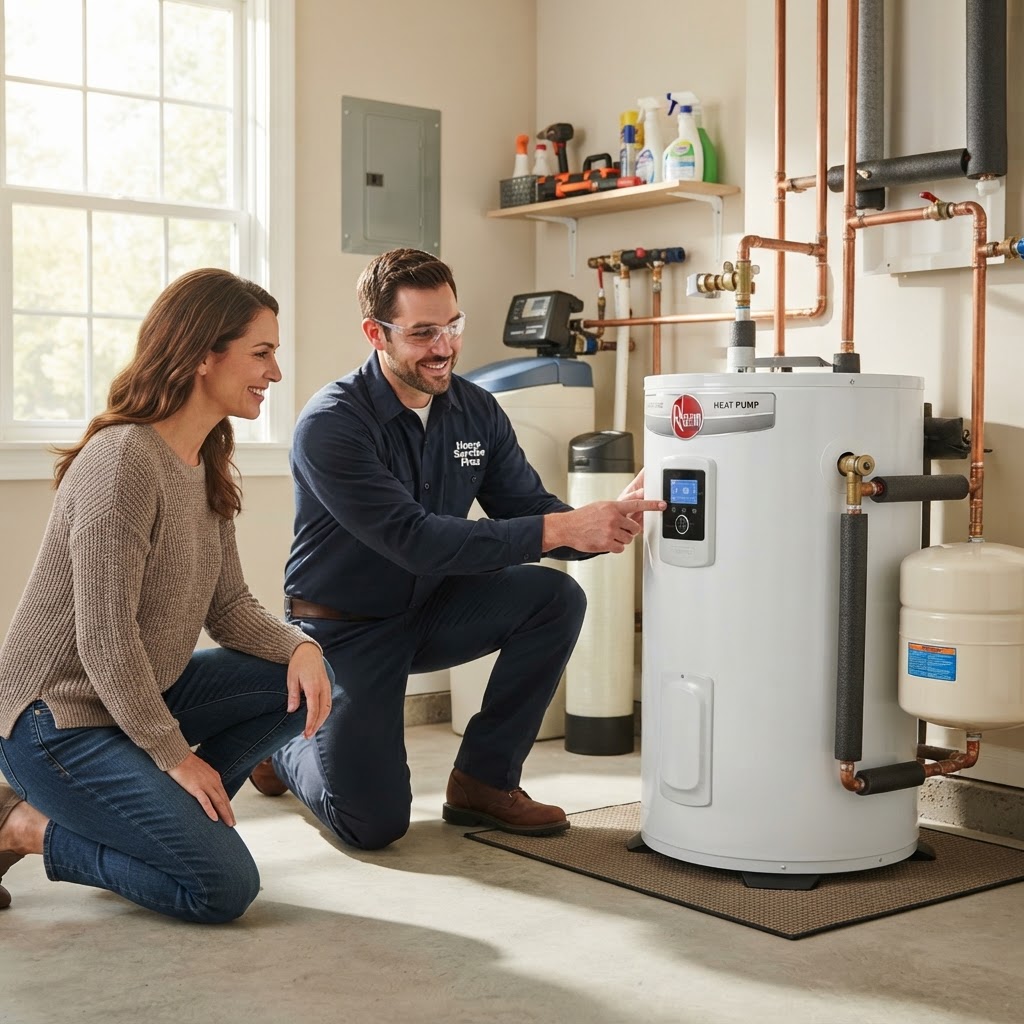
If you are looking for the single most impactful upgrade to your home’s energy efficiency, look no further than the water heater. For most households, water heating is the second-largest energy expense, trailing only behind space heating and cooling. Enter the heat pump water heater (HPWH)—a game-changing technology that is rapidly becoming the gold standard for modern, sustainable homes. By moving heat rather than generating it through inefficient resistance coils, these units can reduce your water heating energy consumption by up to 70%. Whether you are a homeowner looking to lower monthly utility bills or a professional staying ahead of the curve, understanding this technology is essential.
How Heat Pump Water Heaters Work
Think of a heat pump water heater as a refrigerator running in reverse. While a refrigerator pulls heat out of an insulated box and exhausts it into your kitchen, a heat pump water heater pulls ambient heat from the surrounding air and transfers it into your water tank. This process is remarkably efficient because it takes significantly less energy to move existing heat than it does to create it from scratch using electric resistance elements.
Most residential models are integrated heat pump water heaters, meaning the compressor and heat exchanger are mounted directly on top of the storage tank. This design makes them a relatively straightforward replacement for traditional electric tanks. Because they rely on ambient air, they work best in spaces that remain between 40°F and 90°F, such as a garage, basement, or utility room, where they can also act as a dehumidifier for the surrounding area.
Key Benefits for Homeowners
The primary driver for most homeowners is the significant reduction in operating costs. According to ENERGY STAR, a household of four can save approximately $550 to $600 per year on electric bills by switching to a certified HPWH. Over the lifetime of the unit, these savings can easily exceed $5,600.
- Safety and Air Quality: Unlike gas-fired water heaters, HPWHs are 100% electric. This eliminates the risk of carbon monoxide leaks, nitrogen dioxide emissions, and the potential for gas explosions or pipe leaks.
- Smart Connectivity: Many modern units feature digital control panels and mobile apps, allowing you to track energy consumption, set vacation modes, and adjust temperature setpoints remotely.
- Tax Credits and Rebates: With federal tax credits and local utility incentives, the upfront cost of these units is often offset, making them a highly cost-effective long-term investment.
If you are ready to make the switch, it is vital to work with a qualified technician. You can use FIND-A-PRO to connect with verified local professionals who specialize in high-efficiency water heating systems.
Operating Modes and Performance
One of the most versatile features of a modern HPWH is the ability to toggle between different operating modes to balance efficiency with demand:
- Heat Pump Only: The most efficient mode, relying solely on the heat pump.
- Hybrid Mode: Uses the heat pump as the primary source but engages electric resistance elements during periods of high demand to ensure you never run out of hot water.
- High Demand/Boost: Engages the resistance elements sooner for rapid recovery.
- Vacation Mode: Keeps the tank at a low temperature while you are away to save energy.
While HPWHs are highly efficient, they can take slightly longer to recover a full tank of hot water compared to a gas unit. It is important to discuss your household's specific usage patterns with your installer to ensure you select the right tank size. For more guidance on vetting your contractor, check out our guide on how to hire a service professional.
Installation Considerations
Installing a heat pump water heater is not a standard DIY project. Because these units are taller than traditional tanks and require specific electrical and drainage considerations, professional installation is highly recommended. A pro will ensure the unit is placed in an area with adequate airflow, as the heat pump needs to pull in air to function. They will also handle the condensate drain line, which is necessary because the unit removes moisture from the air as it operates.
When planning your installation, remember that these units are an investment in your home's infrastructure. Proper sizing and placement are critical to achieving the efficiency ratings promised by the manufacturer. Always consult with a licensed expert to ensure your home's electrical panel can support the new unit and that the installation meets local building codes.
Frequently Asked Questions
Q: Will a heat pump water heater work in a cold climate?
A: Yes. While they are most efficient in warmer temperatures, ENERGY STAR certified models are designed to operate effectively in a wide range of climates. In very cold conditions, the unit will automatically switch to its electric resistance elements to ensure you have hot water.
Q: How long do these units last?
A: Most manufacturers offer 10-year warranties on these units, and with proper maintenance, they are built to provide reliable service for many years, comparable to traditional electric water heaters.
Q: Can I install a heat pump water heater in a small closet?
A: Generally, no. These units require a certain amount of cubic feet of air space to function properly because they extract heat from the surrounding air. If the space is too small, the unit will struggle to heat the water efficiently. Always check the manufacturer's clearance requirements before purchasing.
Key Takeaways
Transitioning to a heat pump water heater is a smart move for both your wallet and the environment. By leveraging advanced heat transfer technology, you can enjoy consistent hot water while significantly lowering your home's carbon footprint and monthly energy expenses. Whether you are looking to take advantage of federal tax credits or simply want a safer, more efficient home, this technology is a proven winner. To ensure your installation is handled correctly and to get the most out of your new system, use FIND-A-PRO to connect with verified, experienced professionals in your area who can guide you through the selection and installation process.
