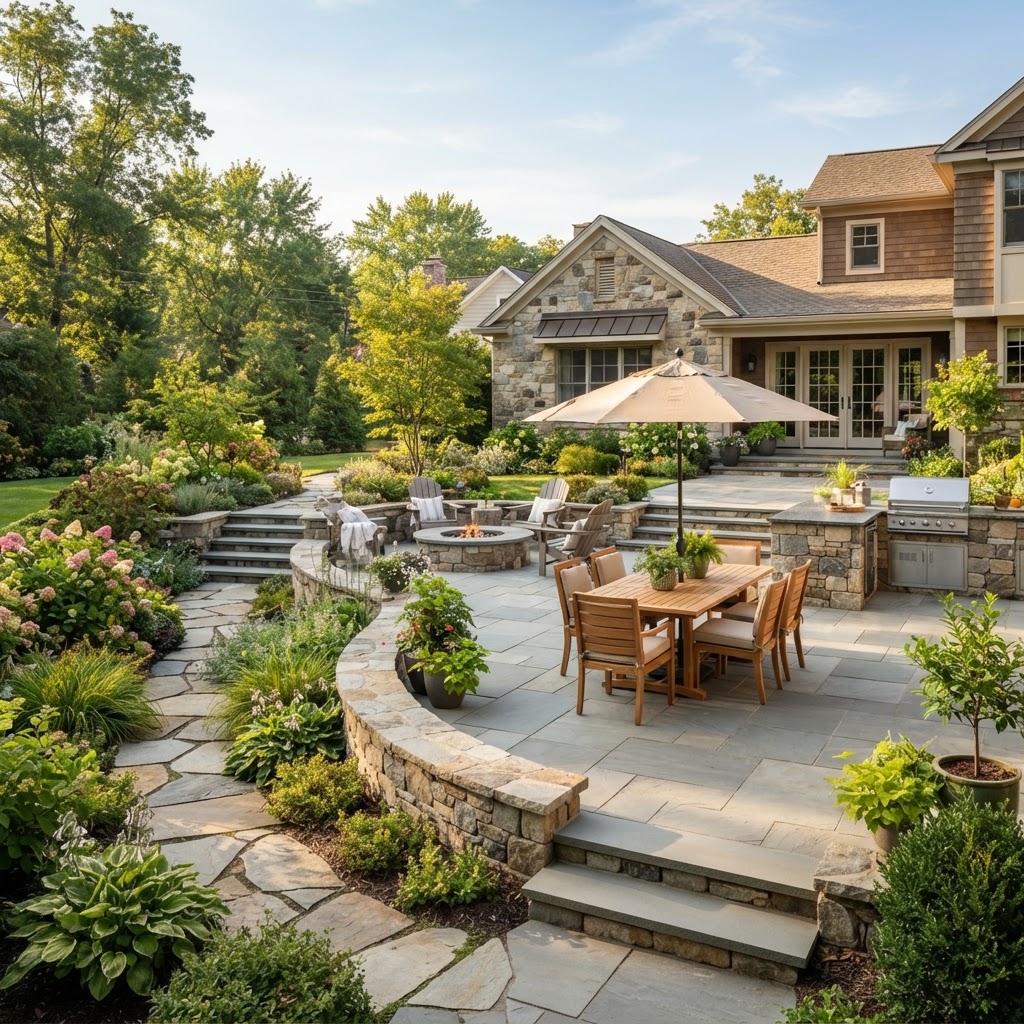
When homeowners think about enhancing curb appeal or backyard enjoyment, lush lawns, flowering perennial beds, and ornamental trees often come to mind first. However, the true backbone of any well-designed outdoor environment is its hardscaping. From stone patios and meandering flagstone walkways to structural retaining walls and built-in fire features, hardscaping provides the permanent structure, functional circulation, and livable square footage that transforms an ordinary yard into a true extension of your home. Whether you are tackling severe slope erosion or dreaming of an alfresco dining retreat, these practical hardscaping ideas will inspire your next exterior renovation while helping you avoid costly design mistakes.
What Is Hardscaping? Understanding Softscape vs. Hardscape
In landscape architecture, an outdoor space is divided into two primary disciplines: softscaping and hardscaping. Softscape includes all the living, biological elements—such as turfgrass, ornamental shrubs, perennials, mulch, and trees. In contrast, hardscaping encompasses all the non-living, rigid, and structural elements of your exterior layout.
Common hardscape features include:
- Patios, terraces, and open-air courtyards
- Walkways, stepping stones, and garden paths
- Retaining walls, seating benches, and decorative privacy barriers
- Outdoor kitchens, pizza ovens, and built-in grills
- Fire pits, outdoor fireplaces, and water fountains
- Pergolas, gazebos, decks, and structural shade canopies
A balanced landscape brings both worlds together. Hardscaping defines zones, handles foot traffic, and controls grading, while softscaping softens hard edges, introduces vibrant texture, and cools the microclimate around masonry structures. If you are starting from scratch, learning how to hire a service professional ensures your structural foundations are engineered properly before you plant a single flower.
Top Hardscaping Ideas for Patios and Outdoor Living Rooms
A patio serves as the anchor for almost all backyard gatherings. When designing a patio, resist the urge to pour an unadorned concrete slab; instead, treat the area as an open-air room with distinct flooring patterns, borders, and functional zones.
- Multi-Level Terracing: If your yard slopes, multi-tiered patios break the space into intimate destinations. Dedicate an upper tier right off your back door for outdoor cooking and dining, then create stone steps down to a sunken lounge or fire circle.
- Geometric Large-Format Slabs: Modern hardscape trends favor oversized, clean-lined concrete or porcelain architectural slabs. Pairing neutral slate or charcoal slabs with warm timber accents offers high-end contemporary elegance.
- Mixed-Material Borders: Frame natural stone or interlocking pavers with a soldier course of contrasting brick or dark granite pavers. This technique visually defines borders and establishes a finished, tailored appearance.
- Integrated Built-In Seating: Low sitting walls (around 18 to 21 inches high) built from manufactured wall blocks or natural fieldstone do double duty. They act as windbreaks, outline the patio perimeter, and provide abundant seating without crowding the patio with loose outdoor chairs.
Functional and Aesthetic Walkways: Guiding Movement Through the Yard
Pathways do more than protect your lawn from foot traffic; they direct the visual journey through your garden and establish flow. How you design a pathway can dramatically alter the perception of your yard's size.
- Stepping Stones with Living Groundcover: For an organic, cottage, or naturalistic aesthetic, lay irregular flagstone pieces spaced 2 to 3 inches apart. Fill the joints with resilient, low-growing groundcover like creeping thyme, dwarf mondo grass, or Irish moss to produce a charming, green-veined walkway.
- Permeable Pea Gravel and Cobblestone: Crushed stone or pea gravel edged with steel or cobblestones creates an audible, tactile walking experience reminiscent of European gardens. Gravel provides excellent drainage and adapts easily to winding curves around established trees.
- Linear Modern Runways: Long rectangular concrete pavers set in a straight, floating runway style over a bed of contrasting black river rock create a minimalist statement for contemporary homes.
Retaining Walls: Blending Engineering with Visual Elegance
While many hardscape ideas are chosen purely for leisure, retaining walls often solve critical structural dilemmas. Sloped lots, soil erosion, and uneven property lines can make large portions of your yard unusable or even threaten foundation safety.
By installing structural retaining walls, you can carve tiered, flat plateaus out of steep inclines, unlocking valuable square footage for gardens, play areas, or secondary patios. Common materials include:
- Segmental Concrete Block: Engineered specifically for structural retention, these interlocking blocks feature built-in pin or lip mechanisms and offer varied stone textures.
- Natural Fieldstone or Boulders: Perfect for a rustic look, dry-stacked stone or large granite riprap creates informal, hillside-stabilizing terraces.
- Poured Architectural Concrete: Smooth, board-formed concrete retaining walls provide a striking, industrial backdrop that highlights modern landscaping.
Pro Safety Tip: Any retaining wall exceeding 3 to 4 feet in height generally requires geogrid soil reinforcement, proper backfill drainage gravel, and municipal permitting. Poor drainage behind a retaining wall builds hydrostatic pressure, which is the leading cause of wall failure.
Fire and Water: Adding Ambiance, Drama, and Three-Season Comfort
The best hardscapes engage multiple senses. Integrating fire and water features elevates an ordinary backyard into a true retreat.
Fire Features: A built-in fire pit or full masonry outdoor fireplace extends the usable lifespan of your backyard well into autumn and early spring. Wood-burning fire pits provide aromatic ambiance and crackling heat, while natural gas or propane fire tables offer push-button convenience and smokeless warmth on compact patios.
Water Elements: Water features introduce relaxing white noise that masks nearby neighborhood traffic. Consider a sleek sheer-descent waterfall spilling out of a retaining wall into a hidden basin, or a standalone recirculating stone fountain. A bubbling rock fountain requires minimal maintenance and provides a safe drinking station for local pollinators and birds without the hazards or upkeep of a standing pond.
Permeable Hardscaping and Eco-Friendly Runoff Management
Traditional non-porous hardscape surfaces—like solid asphalt and continuous poured concrete—prevent rainwater from soaking into the ground, contributing to stormwater runoff, local street flooding, and soil erosion. Sustainable homeowners are increasingly turning to permeable hardscaping solutions.
Permeable interlocking concrete pavers (PICP) are installed over open-graded aggregate layers without fine sand. This permits heavy stormwater to filter naturally through the joint voids and recharge the local groundwater table. According to guidelines from the U.S. Environmental Protection Agency (EPA), permeable pavements dramatically reduce runoff volume and help filter pollutants before moisture enters local waterways.
Incorporating permeable pavers on driveways, walkways, and patios not only protects the environment but also prevents standing water puddles and winter ice slicks across your walking surfaces.
Choosing the Right Hardscape Materials: Pros, Cons, and Costs
Selecting the right materials determines the durability, appearance, and maintenance requirements of your hardscaping project. Here is an overview of popular options:
- Natural Stone (Flagstone, Bluestone, Slate, Travertine): Timeless, uniquely patterned, and cool underfoot (especially travertine). However, material and labor costs are higher due to irregular shapes and heavy weight. Expect $25 to $45+ per square foot installed.
- Interlocking Concrete Pavers: Highly versatile, uniform in thickness, and available in countless shapes, colors, and textures that mimic stone or wood. Pavers flex with freeze-thaw cycles without cracking. Costs typically range from $15 to $30 per square foot installed.
- Stamped or Decorative Concrete: Poured concrete stamped and tinted to resemble slate, cobblestone, or brick. While cost-effective up front ($12 to $22 per square foot), it requires regular sealing and is prone to surface cracking over time in cold climates.
- Decomposed Granite & Pea Gravel: The most budget-conscious choice ($5 to $12 per square foot installed). Excellent permeability and easy DIY installation, though it can migrate into lawns and requires periodic replenishment.
For more advice on keeping hardscape investments in peak condition, explore our essential home maintenance guide.
DIY vs. Hiring a Professional: When to Call the Experts
A modest gravel path, a simple dry-stacked garden border, or an unmortared fire pit circle are manageable weekend projects for motivated DIYers. However, larger hardscape installations involve heavy excavation, delicate grading, laser leveling, and mechanical soil compaction.
You should strongly consider hiring a licensed hardscape contractor if your project entails:
- Excavating near buried utility lines, gas lines, or tree root zones
- Installing elevated patios that tie into your home's foundation or siding
- Building structural retaining walls over 3 feet tall
- Running underground electrical conduits or natural gas supply lines
- Correcting severe water drainage problems on your lot
A failed base layer or incorrect slope pitch will cause pavers to shift, sink, or pool water back against your foundation. When preparing for major site work, homeowners turn to FIND-A-PRO to connect with thoroughly vetted, insured, and experienced local hardscaping contractors who understand soil conditions and building codes in their area.
Frequently Asked Questions About Hardscaping
Q: What is the most cost-effective hardscaping material?
A: Pea gravel, crushed stone, and decomposed granite are the most budget-friendly hardscape surface options. For structural hard surfaces, standard poured concrete and basic concrete pavers are significantly more affordable than imported natural flagstone or travertine.
Q: Does hardscaping increase property value?
A: Yes. Well-designed hardscaping offers an excellent return on investment (often between 60% and 80%). Features like paver patios, functional walkways, and outdoor kitchens boost usable living space, which ranks near the top of buyer wish lists in modern real estate markets.
Q: How do you prevent weeds from growing between pavers?
A: Weeds in paver joints rarely grow up from underneath the base; rather, windblown seeds settle in the surface sand from above. The most effective way to prevent weeds is by filling joint voids with polymeric sand during installation, which hardens when activated with water, and applying a quality paver sealer every 3 to 5 years.
Key Takeaways
Thoughtful hardscaping bridges the gap between indoor comfort and natural beauty, turning your yard into an organized, functional, and durable oasis. By choosing quality materials, prioritizing foundational drainage, and balancing stone surfaces with lush greenery, you create an outdoor retreat that brings daily enjoyment and long-term home value. When you are ready to turn your hardscaping ideas into reality, use FIND-A-PRO to find verified, highly rated local hardscape professionals and landscape contractors who will get the job done right.
