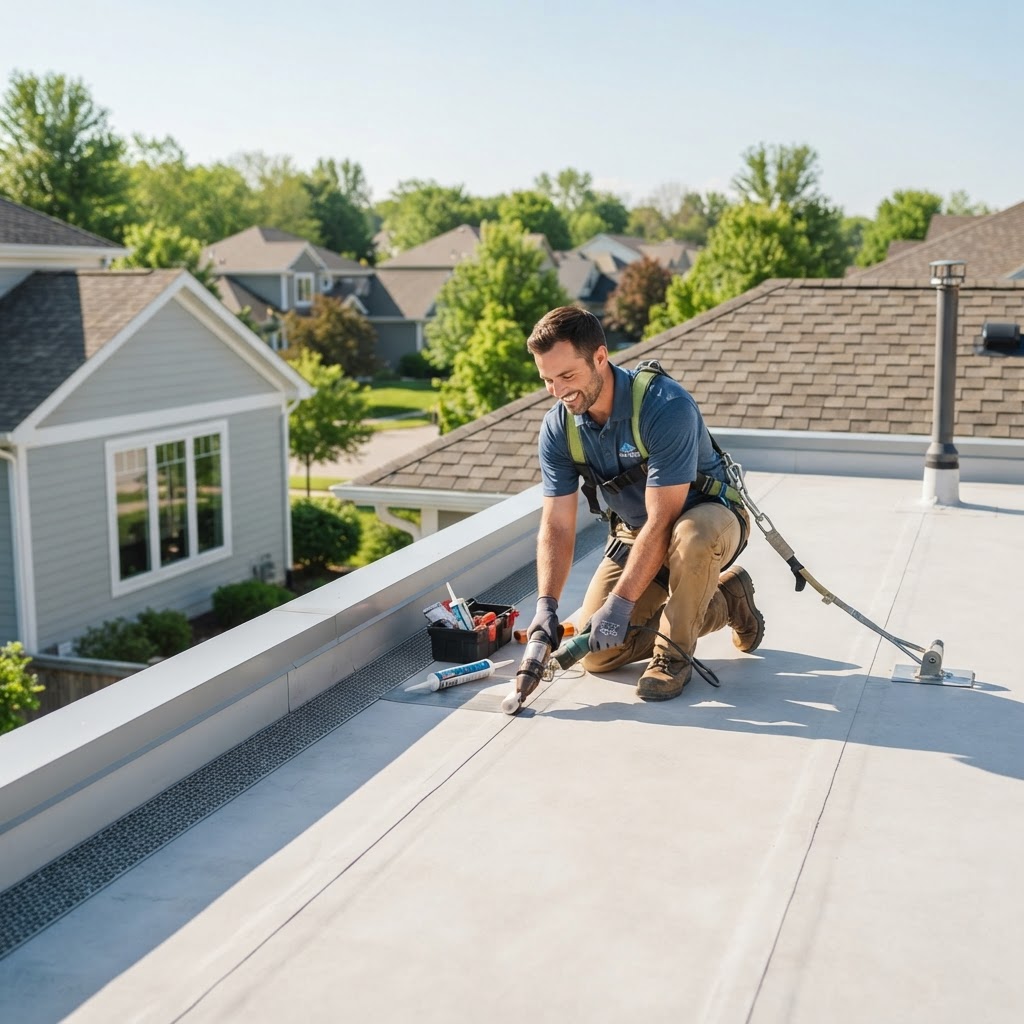
If you live in a modern home or have a specific addition like a garage or sunroom, you likely have a flat roof. While flat roofs offer a sleek, contemporary aesthetic and extra functional space, they are fundamentally different from their sloped counterparts. They don’t have the luxury of gravity to whisk water away instantly. Instead, a flat roof is more like a high-tech membrane designed to act as a waterproof seal. To keep that seal intact and avoid the dreaded 'ceiling drip,' a proactive maintenance strategy is essential. In this guide, we’ll dive deep into the specific needs of flat roofs, providing you with the professional-grade knowledge required to protect your investment for decades.
Understanding Your Flat Roof Material
Before you climb a ladder, you need to know what you’re standing on. Unlike shingle roofs, flat roofs use specialized membranes. The three most common materials are EPDM (Ethylene Propylene Diene Monomer), TPO (Thermoplastic Polyolefin), and Modified Bitumen. EPDM is a durable synthetic rubber, TPO is a white, heat-reflective plastic, and Modified Bitumen is an evolution of traditional 'tar and gravel' roofs.
Why does this matter? Because each material reacts differently to chemicals and cleaning methods. For instance, using petroleum-based products on an EPDM roof can cause the rubber to swell and degrade rapidly. Understanding your roof's DNA is the first step in any essential home maintenance guide strategy. If you aren't sure what material you have, a quick inspection by a professional found through FIND-A-PRO can help identify your system and its specific vulnerabilities.
The Golden Rule: Managing Ponding Water
In the roofing world, 'ponding water' is the primary enemy of flat surfaces. This is defined as water that remains on a roof for more than 48 hours after a rainstorm. While modern flat roofs are designed to handle some moisture, standing water puts immense hydrostatic pressure on seams and flashings.
- Check your pitch: Even 'flat' roofs should have a slight slope (at least 1/4 inch per foot) toward drains.
- Inspect for sagging: Over time, house settling can create low spots where water collects.
- Clear the path: Ensure that water has a clear, unobstructed path to your gutters or scuppers.
If you notice persistent puddles, you may need a 'tapered insulation' system or additional drains installed. Ignoring ponding water is the fastest way to turn a minor maintenance task into a full-scale structural repair.
Debris: The Silent Clogger
Leaves, twigs, and wind-blown trash are more dangerous on a flat roof than on a pitched one. On a slope, debris often washes into the gutters; on a flat roof, it tends to clump together, creating 'dams' that trap water. These dams eventually turn into organic mulch, which can support the growth of moss, algae, and even small trees.
We recommend a thorough cleaning at least twice a year—once in the late fall after the leaves have dropped, and once in the spring to clear out winter grit. Use a soft-bristle broom or a leaf blower. Never use a high-pressure power washer on a flat roof membrane unless you are an expert, as the intense pressure can strip the protective top layer or puncture the seams.
Inspecting Seams and Flashings
If a flat roof is going to leak, it will almost certainly happen at the seams or the flashings. Seams are where two sheets of membrane overlap, and flashings are the reinforcements around chimneys, vents, and the roof edge. Over years of thermal expansion (the roof growing and shrinking with temperature changes), these joints can pull apart.
During your walk-around, look for:
- Fish-mouthing: This is when the edge of a seam begins to curl up, resembling a fish's mouth.
- Cracked caulking: Sealants around vents can dry out and crack due to UV exposure.
- Rust: If you have metal flashings, look for signs of corrosion that could compromise the seal.
Small gaps in seams can often be repaired with specialized roof tape or lap sealant, but significant failures require a professional touch to ensure the patch is chemically bonded correctly.
The Power of Reflective Coatings
Flat roofs are often exposed to direct, punishing sunlight all day long. This UV radiation breaks down the molecular structure of the roofing material over time. One of the best maintenance investments you can make is applying a high-quality reflective coating.
According to the Energy Star roof products guide, reflective roofs (also known as 'cool roofs') can lower the roof surface temperature by up to 50 degrees Fahrenheit. Not only does this extend the life of the membrane by reducing thermal stress, but it also significantly lowers your summer cooling bills. These coatings act as a sacrificial layer; the sun beats up the coating instead of your expensive roof membrane.
When to DIY vs. When to Call FIND-A-PRO
Homeowners can easily handle debris removal and basic visual inspections. However, repairing a flat roof requires specialized tools and materials. For example, TPO roofs require a heat-welding tool to join seams, which isn't something you'll find in the average garage. Furthermore, walking on a roof—especially a wet or gravel-covered one—poses significant safety risks.
If you spot active leaks, significant ponding, or widespread seam failure, it is time to consult a specialist. You can use FIND-A-PRO to connect with local, background-checked roofing professionals who specialize in flat systems. For tips on vetting these experts, check out our guide on how to hire a service professional to ensure you get the best quality workmanship for your home.
Winter-Specific Maintenance
Winter presents unique challenges for flat roofs, particularly the 'freeze-thaw' cycle. When water gets into a tiny crack and freezes, it expands, making the crack larger. The next time it thaws, more water enters, and the cycle repeats. If you live in a snowy climate, 'ice dams' can also form around the edges of a flat roof, preventing meltwater from reaching the downspouts.
Always ensure your internal drains are clear before the first frost. If you have an internal drain, the warmth of the house usually keeps it clear, but if the strainer is blocked by leaves, you'll end up with a massive ice block on your roof, which is a structural weight hazard.
Frequently Asked Questions About Flat Roofs
A: With proper maintenance, a modern flat roof (like EPDM or TPO) should last 20 to 25 years. Modified bitumen typically lasts 15 to 20 years. Regular inspections are the key to reaching these upper limits.
Q: Is ponding water always a sign of a leak?A: Not immediately, but it is a sign of a future leak. Water sitting for long periods will eventually find a way through the smallest imperfection in a seam or fastener.
Q: Can I walk on my flat roof?A: Most flat roofs are designed to handle occasional foot traffic for maintenance. However, if you plan to use it as a deck or patio, you must install 'walkway pads' or a floating deck system to protect the membrane from puncture and abrasion.
Key Takeaways
Proper flat roof maintenance is less about heavy labor and more about consistent vigilance. By keeping your roof clear of debris, managing drainage, and addressing minor seam issues early, you can avoid the massive expense of a premature roof replacement. Remember, your roof is your home’s first line of defense against the elements. If you ever feel overwhelmed or spot a problem that looks beyond a simple DIY fix, don't wait for the next storm to act. Use FIND-A-PRO to find a verified roofing expert in your area who can provide a professional inspection and give you the peace of mind you deserve.
