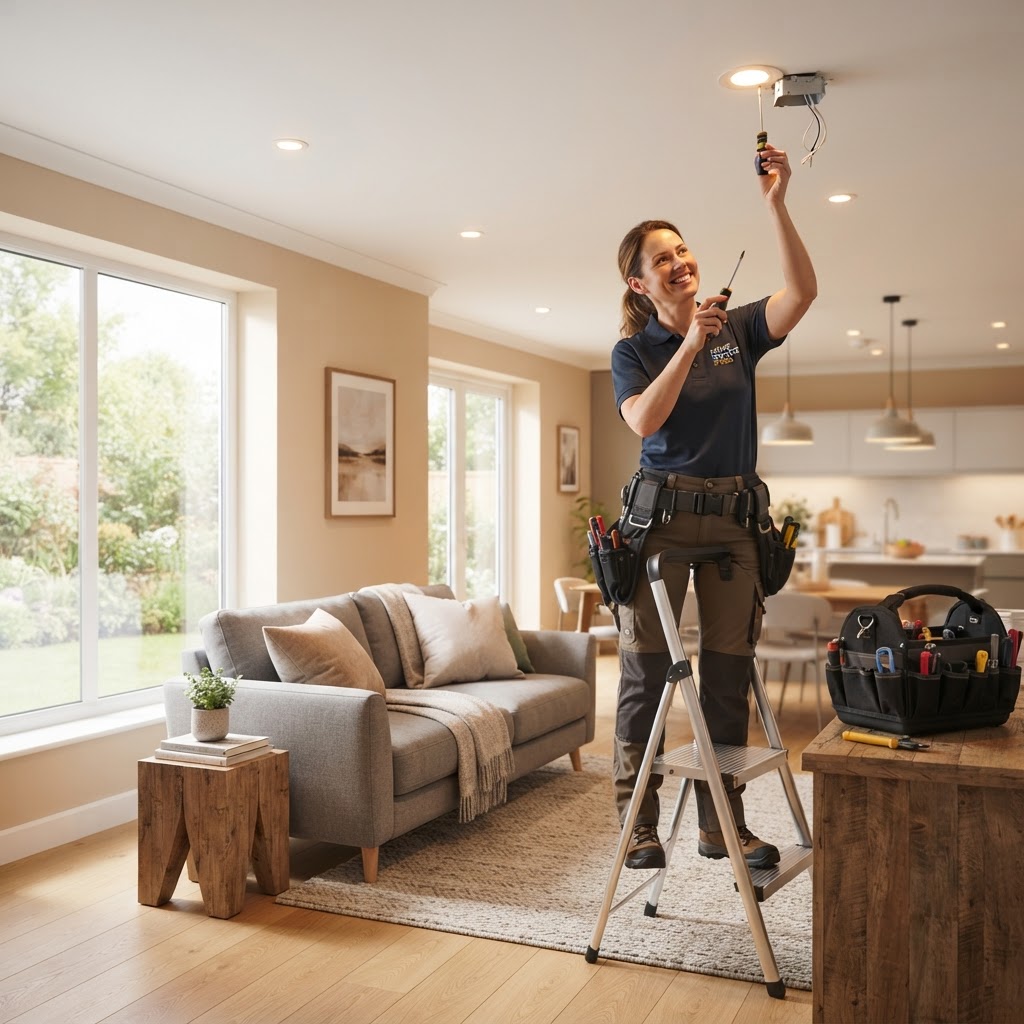
Lighting does far more than illuminate our rooms—it sets the mood, enhances home security, and significantly impacts our monthly utility costs. In fact, lighting accounts for up to 15% to 20% of an average home's total electric bill. If your house is still relying on legacy incandescent bulbs or buzzing compact fluorescents, you are essentially paying extra to turn electricity into wasted heat. Transitioning to modern energy efficient lighting is one of the highest-return home improvements you can make. In this comprehensive guide, we'll walk you through everything from decoding lumens and kelvins to smart lighting controls and professional electrical upgrades.
Understanding Energy Efficient Lighting: The Evolution from Incandescent to LED
For generations, homes were lit almost exclusively by traditional incandescent bulbs—a technology that converted only about 10% of its electrical power into usable light, wasting the remaining 90% as radiant heat. Compact Fluorescent Lamps (CFLs) introduced substantial energy reductions in the late 1990s, but their sluggish warm-up times, harsh color profiles, and trace amounts of mercury left many homeowners frustrated.
Today, Light Emitting Diodes (LEDs) stand as the uncontested gold standard of residential illumination. According to efficiency benchmarks by ENERGY STAR, certified LED bulbs consume up to 75% to 90% less energy than standard incandescents and can last 15 to 25 times longer. Replacing just five of your home’s most frequently used fixtures with high-efficiency LEDs can trim notable dollars off your annual electricity bills right away.
Lumens vs. Watts: How to Choose the Right Brightness
One of the most common pitfalls homeowners encounter when shopping for modern bulbs is looking for wattage to gauge brightness. Watts simply measure how much electrical power a fixture draws, whereas lumens measure actual light output.
When transitioning away from outdated bulbs, use these standard lumen conversions to find an equivalent LED:
- 450 Lumens: Equivalent to an old 40-watt bulb (uses roughly 5–6 watts in LED). Ideal for bedside reading lamps and subtle accent fixtures.
- 800 Lumens: Equivalent to an old 60-watt bulb (uses roughly 8–10 watts in LED). Standard choice for living rooms, hallways, and pendant lights.
- 1,100 Lumens: Equivalent to an old 75-watt bulb (uses roughly 11–13 watts in LED). Great for task lighting in kitchens and home workshops.
- 1,600 Lumens: Equivalent to an old 100-watt bulb (uses roughly 15–18 watts in LED). Best suited for high ceilings, large open-concept basements, and exterior floodlights.
Adopting a lumens-first mindset ensures you maintain sufficient illumination in every space without running up your electric meter.
Color Temperature and CRI: Designing Beautiful, Comfortable Spaces
Early adopters of LED lighting often complain about harsh, clinical white tones. Modern LED technology has completely resolved this issue through precise Correlated Color Temperature (CCT) management, measured in Kelvin (K):
- 2700K – 3000K (Soft / Warm White): Offers an inviting, slightly golden hue reminiscent of traditional incandescents. Perfect for bedrooms, dens, and living areas where relaxation is paramount.
- 3500K – 4000K (Bright / Neutral White): Clean, energizing, and balanced. Excellent for kitchen islands, home offices, and bathroom vanities.
- 5000K+ (Daylight): A crisp, blue-toned light that mimics high-noon daylight. Recommended for garages, utility laundry rooms, and specialized crafting benches.
Additionally, pay attention to the Color Rendering Index (CRI). CRI measures how faithfully a bulb renders colors relative to natural sunlight on a scale from 0 to 100. For living spaces, kitchens, and dressing rooms, choose bulbs with a CRI rating of 90 or higher so artwork, finishes, and skin tones look rich and vibrant.
Maximizing Savings with Dimmers, Timers, and Smart Controls
Upgrading your bulbs is only the first step; dynamic controls unlock maximum efficiency. Dimming an LED bulb reduces its power consumption linearly, prolonging the bulb's lifespan while enabling tailored ambiance.
However, dimming LEDs requires matched hardware. Older incandescent dimmer switches use phase-cutting methods that cause modern LEDs to flicker, hum, or fail prematurely. Installing dedicated electronic low-voltage (ELV) or LED-rated dimmers will provide smooth, silent operation. For larger overhauls, incorporating smart switches or smart plugs allows you to set automated schedules, ensuring fixtures aren't burning energy in empty rooms.
Before taking on wall-box wiring, consult our guide on how to hire a service professional to evaluate whether your current switches feature neutral wires and compatible gang boxes.
Room-by-Room Lighting Strategies for Peak Efficiency
A cohesive lighting plan avoids over-lighting unnecessary zones while giving task-heavy spaces the visibility they need:
- Kitchens: Instead of flooding the entire room with high-wattage ceiling floodlights, install low-profile under-cabinet LED tape lighting. This delivers light directly to your countertops where meal prep happens, allowing you to keep general ambient fixtures dim.
- Bathrooms: Mount vertical LED sconces at eye level beside mirrors rather than a single overhead can light to eliminate shadows while reducing wattage.
- Outdoor & Landscape: Swap exterior porch lights and perimeter fixtures for photocell dusk-to-dawn sensors and integrated motion-sensor spotlights, ensuring floodlights draw power only when people or vehicles are present.
- Living Rooms & Bedrooms: Use layered lighting—table lamps paired with recessed accent cans on independent switches—so you only power the exact areas in use.
Integrating these updates into your ongoing property upkeep routine? Check out our essential home maintenance guide for comprehensive seasonal checklists covering electrical and efficiency checks.
When to Call a Licensed Electrician
Swapping a screw-in A19 table lamp bulb is a straightforward DIY task. However, broader lighting retrofits frequently touch vital electrical components that require professional attention:
- Replacing outdated fluorescent troffers or ballast-driven shop lights with direct-wire LED setups
- Upgrading recessed ceiling canisters to airtight, insulation-contact (IC-rated) LED retrofits
- Adding hardwired smart switches or whole-home lighting automation hubs to older panel circuits
- Installing dedicated circuits for exterior security systems and architectural landscape illumination
Working inside breaker panels and junction boxes without proper grounding or load calculation poses shock and fire hazards. When you need guaranteed safety, code compliance, and flawless installation, FIND-A-PRO connects you with pre-screened, licensed local electricians equipped to handle complete residential lighting upgrades safely.
Frequently Asked Questions About Energy Efficient Lighting
Q: Do energy efficient LED bulbs really last up to 20 years?
A: High-quality LED bulbs can last between 15,000 and 25,000 hours. Under normal household conditions—roughly 3 hours of operation per day—that equates to 15 to 22 years of service. However, poor heat dissipation in fully enclosed fixtures or incompatible dimmer switches can degrade internal drivers and shorten operational life.
Q: Why do my new LED lights flicker or buzz when dimmed?
A: Flickering and humming almost always stem from an incompatible dimmer switch. Older switches designed for incandescent bulbs require a higher minimum electrical load than low-draw LEDs pull. Replacing the switch with an LED-compatible dimmer resolves this issue.
Q: Can I put a higher-lumen LED bulb in a lamp that has a 60-watt maximum rating?
A: Yes, as long as the LED’s actual wattage does not exceed the fixture's rating. Fixture wattage limits are established to prevent heat damage from incandescent filaments. Because an LED generating 1,600 lumens (equivalent to a 100-watt incandescent) draws only 15 to 18 watts, it operates well below the safe thermal threshold of a 60-watt rated socket.
Key Takeaways
Switching to energy efficient lighting is one of the easiest, most cost-effective investments you can make for your home. By matching proper lumen outputs, selecting comfortable color temperatures, and pairing LEDs with modern controls, you can craft welcoming living spaces while protecting your household budget. When your project calls for new wiring, recessed retrofits, or dimmer installations, turn to FIND-A-PRO to quickly connect with trusted, certified local electricians who will get the job done right the first time.