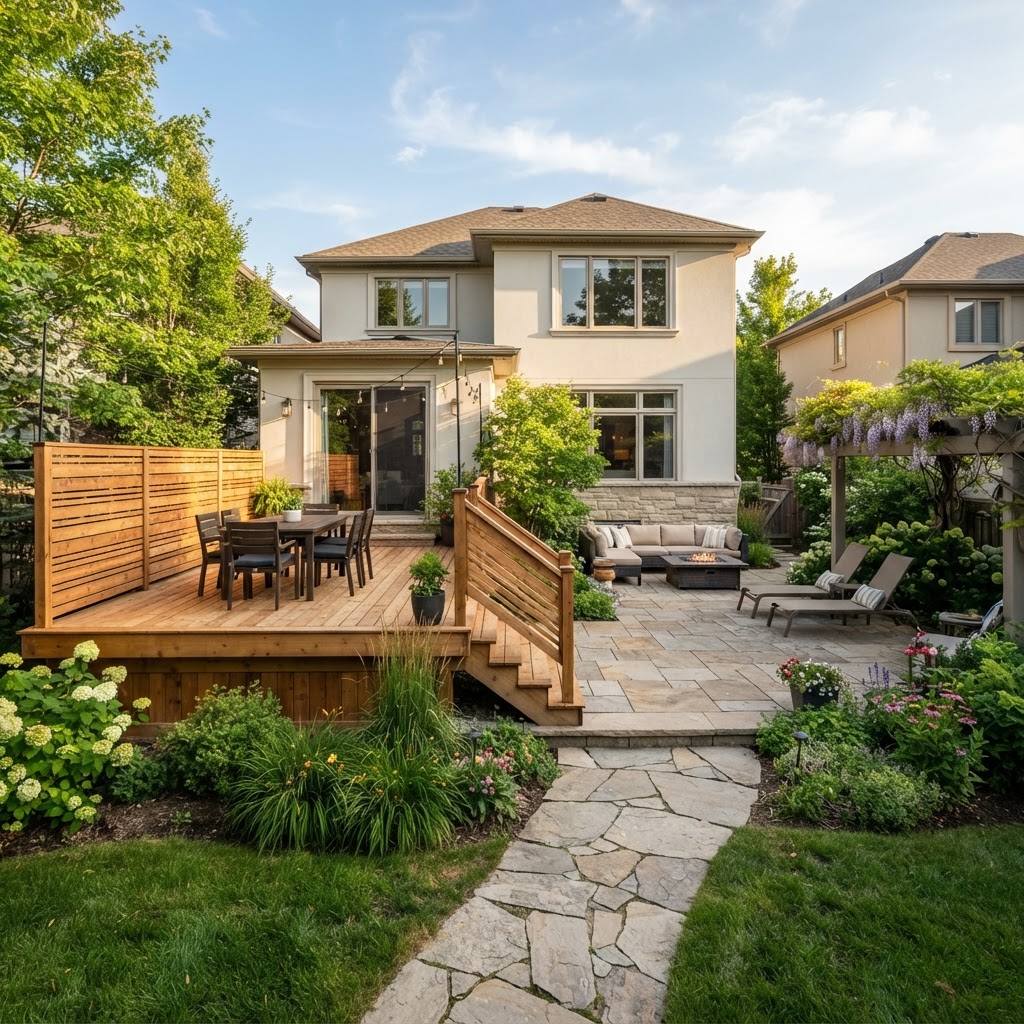
Deciding between a deck and a patio is one of the most significant choices a homeowner will make when enhancing their outdoor living environment. Both options offer a sanctuary for relaxation, a hub for family gatherings, and a boost to your property's overall value, but they serve different architectural needs and come with distinct price tags. Whether you are envisioning a raised wooden platform that overlooks a lush garden or a sleek, stone-paved terrace that feels like an extension of your living room, the right choice depends on your yard's terrain, your budget, and how much time you want to spend on maintenance. In this comprehensive guide, we will break down everything you need to know about the deck and patio comparison, from material costs to long-term durability, ensuring you have the practical knowledge to make an informed investment in your home.
The Fundamental Differences: What Defines a Deck and a Patio?
At the most basic level, the difference between a deck and a patio is its relationship with the ground. A deck is an open, elevated porch or platform that is typically constructed from wood or composite materials. It is supported by a frame or pillars and can be attached to the house or built as a freestanding island in the yard. Because they are elevated, decks are ideal for homes with steep slopes or uneven terrain, as they can be built to level out the living space above the ground.
A patio, on the other hand, is a paved area built directly on the ground. It is usually made from materials like concrete, pavers, brick, or natural stone. Patios are best suited for flat lots and are often integrated into the landscaping with flower beds, retaining walls, or fire pits. While a deck is often considered a transition between the indoors and the yard, a patio is a literal extension of the earth itself. Understanding this distinction is the first step in your deck and patio comparison journey.
Cost Analysis: Upfront Investment vs. Long-Term Value
When comparing the financial aspects, there is a common misconception that patios are always cheaper. While the raw materials for a basic concrete patio may cost less than high-end composite decking, the labor and site preparation can close that gap quickly. Generally, homeowners can expect to pay anywhere from $30 to $60 per square foot for a professionally installed deck, depending on the material. Natural wood is more affordable upfront, while composite materials like Trex or Azek require a larger initial investment but offer lower maintenance costs.
Patios typically range from $15 to $40 per square foot. A simple poured concrete slab is the most budget-friendly option, but if you opt for high-end natural flagstone or intricate paver designs, the price can easily surpass that of a deck. It is important to remember that patios require extensive ground preparation, including excavation, leveling, and the installation of a proper gravel and sand base to prevent shifting. If your yard has significant drainage issues, the cost of a patio may increase as you address water management. For a detailed breakdown of how to budget for these projects, we recommend consulting our guide on hiring service professionals to get accurate local quotes.
Terrain and Geography: Does Your Yard Dictate the Choice?
Your yard's topography is perhaps the most practical factor in the deck and patio comparison. If your home is built on a slope or has an walk-out basement that is several feet above the ground, a deck is almost always the superior choice. Building a patio on a steep hill requires massive amounts of fill dirt, expensive retaining walls, and complex drainage systems that can double or triple the project's cost. A deck, by contrast, uses vertical supports to create a level surface over any grade.
Conversely, if your yard is perfectly flat, a patio is often the more natural and aesthetically pleasing choice. Ground-level decks on flat lots are prone to moisture issues because air cannot circulate beneath the joists, leading to rot and mold. For flat terrain, a stone or paver patio offers a durable, low-profile solution that blends seamlessly with your lawn. Question: Is a deck or patio better for a sloped yard? Answer: A deck is significantly better and more cost-effective for sloped yards because it utilizes posts and beams to create a level platform without the need for extensive earth-moving and retaining walls.
Maintenance Realities: Time and Effort Requirements
Maintenance is where the deck and patio comparison really diverges. If you choose a natural wood deck (like pressure-treated pine or cedar), you are committing to a biennial cycle of power washing, sanding, and staining or sealing. Without this care, wood will warp, crack, and eventually rot. Composite decking has solved much of this problem, requiring only an occasional scrub with soap and water to keep it looking new. However, even composite decks have a structural frame made of wood that needs to be inspected periodically for safety. You can learn more about protecting your outdoor assets in our essential home maintenance guide.
Patios are generally considered the low-maintenance winners. Aside from the occasional power wash to remove moss or dirt, a well-built patio requires very little attention. The biggest maintenance task for a paver patio is managing the joints; over time, the sand between pavers can wash away or become a home for weeds. Using polymeric sand during installation can mitigate this for years. If a paver cracks, you can simply replace that one stone, whereas a cracked concrete slab may require a total tear-out and repour to look right again.
Longevity and Durability: Which One Lasts Longer?
In terms of lifespan, a high-quality patio will almost always outlast a deck. A stone or brick patio that is properly installed can last for 30 to 50 years with minimal intervention. Concrete patios are also durable but are susceptible to cracking in climates with extreme freeze-thaw cycles. Natural wood decks usually have a lifespan of 10 to 15 years, though premium hardwoods like Ipe can last 40 years if meticulously maintained. Composite decks often come with 25-to-30-year warranties, making them a very durable alternative to wood.
It is crucial to consider your local climate. In damp, shaded areas, wood decks are prone to algae growth and rot. In areas with high seismic activity or shifting clay soils, a flexible paver patio is often better than a rigid concrete slab, as the pavers can move slightly without cracking the entire surface. When planning your project, using FIND-A-PRO to connect with a local landscaping expert can help you determine which materials are best suited for your specific regional soil and weather conditions.
Permits, Regulations, and Safety Standards
Before you break ground, you must consider the legal and safety requirements. Because decks are elevated structures, they are subject to much stricter building codes than patios. Most municipalities require a permit for any deck that is more than 30 inches above the ground. These codes cover everything from the depth of the concrete footings to the spacing of the railing balusters and the strength of the ledger board (where the deck attaches to your house). Safety is paramount here, as deck collapses are a serious hazard.
Patios often bypass these stringent structural requirements, though they may still require permits for grading or if they exceed a certain square footage. You must also be aware of 'impermeable surface' limits in your neighborhood, which restrict how much of your lot can be covered by materials that don't absorb rainwater. For more information on your rights and protections as a consumer when hiring contractors for these regulated projects, check out the FTC guidance on hiring home improvement contractors. Working with a verified professional through FIND-A-PRO ensures that your project meets all local safety codes and permit requirements.
Return on Investment (ROI): Resale Value Considerations
If you are looking at your outdoor space as an investment, the deck and patio comparison yields interesting data. Historically, decks have offered a slightly higher return on investment at the time of resale. According to industry data, a wood deck can recoup about 65% to 70% of its cost during a home sale. This is largely because a deck is seen as an 'extra room' that adds square footage to the living experience. Composite decks have a slightly lower ROI because of their higher initial cost, though their low maintenance is a major selling point for modern buyers.
Patios typically offer an ROI of around 50% to 60%. However, this varies significantly by region. In warmer climates where outdoor living is year-round (like Florida or Arizona), a high-end patio with an outdoor kitchen can be the single most attractive feature of a home. When deciding, consider the 'neighborhood standard.' If every home in your subdivision has a large deck, adding a patio might make your home stand out—or it might make it harder to sell if the market expects a deck. Balance your personal enjoyment with the market expectations of your specific area.
The Hybrid Approach: Can You Have Both?
Many homeowners find that the best solution is not an 'either/or' choice but a 'both/and' design. A multi-level outdoor space that features an elevated deck for dining and a lower-level stone patio for a fire pit offers the best of both worlds. This hybrid approach allows you to separate the 'active' areas (like the grill and dining table) from the 'passive' areas (like a lounge space or hot tub). It also solves the problem of how to transition from a high back door down to a large yard. By using a small deck as a landing and a staircase that leads to a sprawling patio, you create a sophisticated architectural look that maximizes the utility of your entire property.
Frequently Asked Questions About Decks and Patios
- Is a patio cheaper than a deck? Generally, yes. A basic concrete or gravel patio is cheaper than a wood deck. However, high-end stone patios can cost more than a standard deck, especially if significant excavation or retaining walls are required.
- Which is better for property taxes? In many jurisdictions, a deck is considered a permanent addition to the home's structure and may increase your property tax assessment more than a ground-level patio, which is often categorized as landscaping.
- Can I build a patio over a septic tank or utility lines? You should never build a permanent structure like a deck or a concrete patio over a septic tank or drain field. For utility lines, you must call 811 before you dig to ensure safety and access for future repairs.
- Which is safer for children and pets? Patios are generally safer because they are at ground level, eliminating the risk of falls from heights. Decks require secure railings and gates to be safe for young children.
Key Takeaways
The deck and patio comparison ultimately comes down to your home's unique layout, your long-term maintenance preferences, and your budget. If you have a sloped yard and want a high ROI, a deck is likely your best path. If you prefer a low-maintenance, long-lasting space that blends into your garden, a patio is the way to go. Regardless of which you choose, the quality of the installation is the most important factor in the success of your project. Don't leave your investment to chance; use FIND-A-PRO to connect with highly-rated, local landscaping and decking professionals who can bring your vision to life with expert craftsmanship and reliable service.
