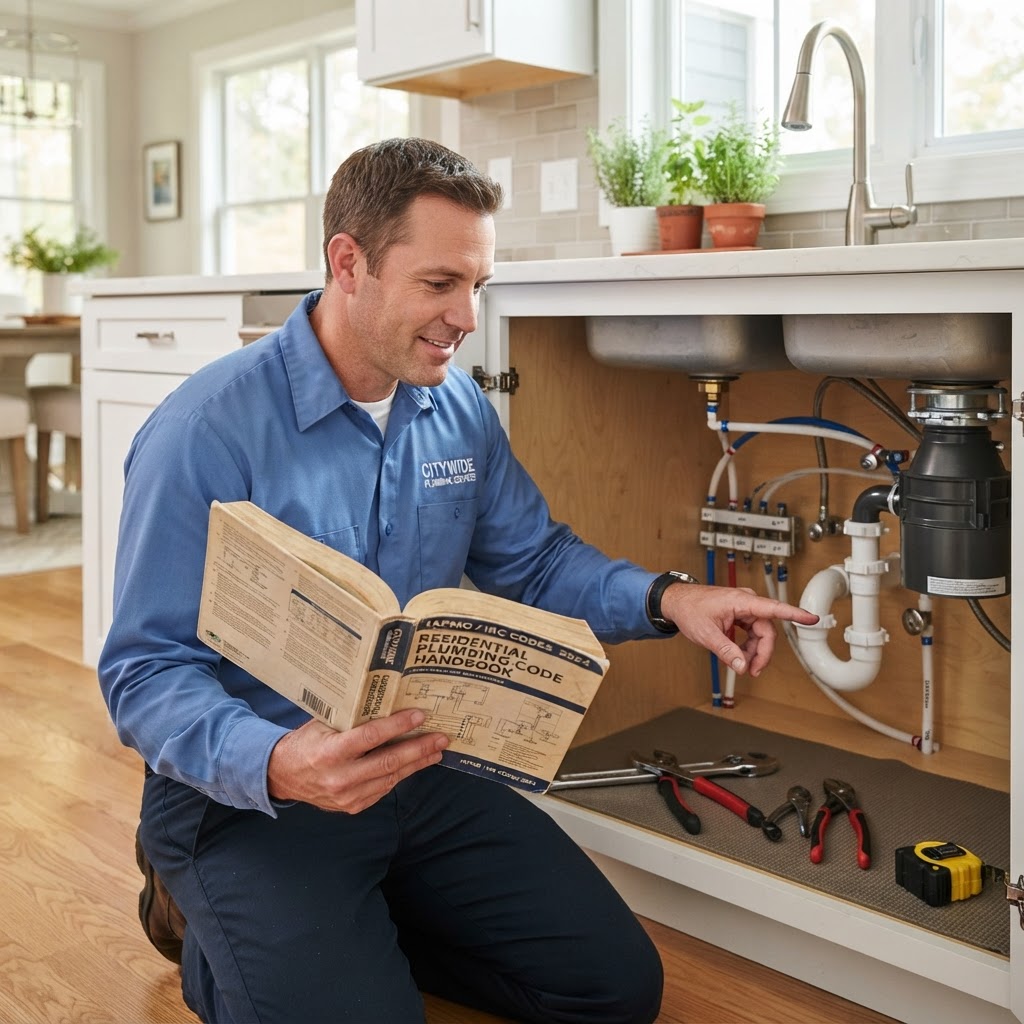
Plumbing is often described as the circulatory system of a home. When it functions correctly, you hardly notice it. But when things go wrong, the consequences can range from a minor annoyance to a catastrophic health hazard. This is where common plumbing codes come into play. Many homeowners view building codes as bureaucratic red tape designed to slow down their DIY projects or increase the cost of a renovation. In reality, these codes are a set of scientific standards developed over decades to protect public health, ensure structural integrity, and prevent environmental contamination. Whether you are planning a complete kitchen remodel, adding a basement bathroom, or simply replacing a water heater, understanding these regulations is vital. Not only does compliance keep your family safe from sewer gases and contaminated water, but it also protects your investment by ensuring that your work passes inspections during a future home sale. In this guide, we will break down the complex world of plumbing regulations into actionable knowledge you can use for your next project.
The Two Main Standards: IPC vs. UPC
In the United States, plumbing codes are not a single federal law. Instead, they are typically adopted at the state or local level based on two primary models: the International Plumbing Code (IPC) and the Uniform Plumbing Code (UPC). While they share the same goal—safety and sanitation—they differ in their specific technical requirements and philosophies. The IPC is often considered more flexible and performance-based, while the UPC is traditionally seen as more prescriptive and conservative. Before you start any work, you must determine which code your local municipality follows. This is usually as simple as checking your city or county building department's website. Following the wrong code, even if the work is high quality, can lead to failed inspections and costly rework. When navigating these complexities, many homeowners find it helpful to consult with experts; you can use FIND-A-PRO to connect with local, licensed plumbers who are intimately familiar with the specific codes in your zip code.
Why Permits are Non-Negotiable
One of the most common mistakes homeowners make is skipping the permit process. It is tempting to save the fee and the time, especially for 'hidden' work inside walls. However, plumbing permits serve as a critical safety net. When you pull a permit, you are essentially hiring a second pair of expert eyes—the municipal inspector—to verify that the work meets safety standards. If you ever sell your home, a title search or home inspection may reveal unpermitted work, which can derail a sale or force you to tear out finished walls to prove compliance. Furthermore, insurance companies may deny claims for water damage if the cause was an unpermitted and non-compliant plumbing installation. As you prepare for a major project, we recommend reading our guide on how to hire a service professional to ensure your contractor is willing to pull the necessary permits and stand by their work.
Kitchen Plumbing Codes: Sink and Dishwasher Standards
The kitchen is the heart of the home, but it is also a hub for plumbing code violations. One of the most critical codes involves the dishwasher drain. To prevent 'cross-contamination'—where dirty sink water flows back into your clean dishwasher—most codes require either a high-loop installation or a physical air gap. An air gap is a small chrome cylinder mounted on the sink or countertop that physically separates the drain lines. Another frequent issue is the P-trap. A P-trap must be installed for every fixture to hold a small amount of water that blocks sewer gases from entering your home. According to code, a P-trap must have a water seal depth of between 2 and 4 inches. If it is too shallow, the water can evaporate; if it is too deep, it may not flush properly, leading to clogs. Additionally, sink drains typically require a 1.5-inch diameter pipe to handle the volume of water and food waste effectively.
Bathroom Clearances and Accessibility
Bathroom codes focus heavily on spacing and ergonomics. A common code requirement is the '30-inch rule' for toilets. There must be at least 15 inches of space from the center of the toilet to any side wall or fixture, and a total width of at least 30 inches for the toilet compartment. Additionally, there should be at least 21 inches of clear space in front of the toilet. For showers, the minimum interior size is usually 30 inches by 30 inches, though many professionals recommend 36 inches for comfort. Shower drains must be 2 inches in diameter—larger than sink drains—to prevent flooding. Waterproofing is also strictly regulated; the 'green board' or cement backer board behind your tiles must be installed correctly to prevent mold and structural rot. For more on maintaining these systems, check out our essential home maintenance guide.
The Science of Venting: Why Your Pipes Need to Breathe
Venting is perhaps the most misunderstood aspect of plumbing. Every time water flows down a drain, it creates a vacuum behind it. Without a vent to let air in, that vacuum will suck the water out of your P-traps, allowing toxic sewer gases to enter your living space. Common codes dictate the distance a fixture can be from its vertical vent stack. For example, a 1.5-inch pipe usually cannot travel more than 6 feet horizontally before hitting a vent. If you are adding an island sink, you may need a 'loop vent' or a specialized Air Admittance Valve (AAV), though AAVs are not allowed in all jurisdictions. Proper venting also ensures that drains flow smoothly; if you hear gurgling sounds when you flush the toilet, it is often a sign of a venting issue rather than a clog.
Water Heater Safety: TPR Valves and Expansion Tanks
Water heaters are pressurized vessels that can be dangerous if not installed to code. The most critical safety feature is the Temperature and Pressure Relief (TPR) valve. This valve is designed to open if the tank gets too hot or the pressure gets too high, preventing an explosion. Code requires that the discharge pipe from this valve be made of an approved material (like copper or CPVC), be the same diameter as the valve outlet, and terminate no more than 6 inches above the floor or into an indirect waste receptor. In many areas, especially those with hard water or 'closed' plumbing systems, an expansion tank is also required. This small tank handles the thermal expansion of water as it heats up, preventing stress on your pipes and the heater itself. The Energy Star website provides excellent resources on choosing efficient, code-compliant water heaters that save money and energy.
Drainage Slope: The Goldilocks Rule
When it comes to horizontal drain pipes, the slope must be 'just right.' If the slope is too flat, water and solids won't move, leading to clogs. If the slope is too steep, the water will move so fast that it leaves the solids behind, which also leads to clogs. The standard code requirement for pipes 2 inches in diameter or smaller is a slope of 1/4 inch per foot. For larger pipes, such as a 4-inch main sewer line, the code may allow for a 1/8 inch per foot slope. Ensuring this exact pitch requires precision and the use of levels throughout the installation process. Professionals found through FIND-A-PRO use specialized tools to ensure these slopes are maintained over long distances, even as a house settles over time.
Backflow Prevention and Outdoor Plumbing
Protecting the municipal water supply is a top priority for plumbing codes. Backflow occurs when a drop in water pressure causes contaminated water (from a garden hose, irrigation system, or pool) to be sucked back into the clean drinking water lines. To prevent this, codes require backflow prevention devices, such as vacuum breakers on outdoor hose bibbs. In many regions, these outdoor faucets must also be 'frost-proof' to prevent pipes from bursting in the winter. If you have an underground sprinkler system, you likely need a specific type of backflow preventer that must be tested annually by a certified technician to ensure it is functioning correctly.
FAQ: Common Plumbing Code Questions
Q: What is the most common plumbing code violation?
A: Improper venting and incorrect drainage slopes are the most frequent issues inspectors find. Many DIYers fail to realize that every drain needs a corresponding vent within a specific distance to function safely.
Q: Can I perform my own plumbing work if I own the home?
A: In many jurisdictions, homeowners are allowed to do their own plumbing work, but they are still required to pull permits and have the work inspected. Some cities, however, require a licensed master plumber for all major work, especially involving the main sewer or gas lines.
Q: What happens if I get caught doing plumbing work without a permit?
A: You may face significant fines, and the building department can force you to stop work. In extreme cases, they can require you to remove finished walls or flooring so they can inspect the rough-in plumbing. It can also cause major issues during the home appraisal and sale process.
Pipe Materials and Sizing Standards
Not all pipes are created equal, and code dictates exactly what material can be used for what purpose. For supply lines, PEX (cross-linked polyethylene) has become the industry standard due to its flexibility and resistance to scale, but it must be installed with specific supports to prevent 'water hammer.' Copper remains a high-end choice but must be joined with lead-free solder. For drainage, PVC (Polyvinyl Chloride) is standard, but the wall thickness (Schedule 40) is strictly regulated. You cannot use thin-wall 'drainage and waste' (DWV) pipe for pressurized applications. Pipe sizing is also a science; a master bathroom with a double vanity, a large soaking tub, and a multi-head shower requires much larger supply lines (often 3/4 inch) than a simple powder room to ensure adequate pressure for all fixtures simultaneously.
Key Takeaways
Navigating common plumbing codes might seem daunting, but these rules exist to ensure that your home remains a safe and healthy environment for your family. By following standards for venting, drainage slope, and fixture clearances, you prevent the risk of water damage, health hazards, and legal headaches. While small repairs are often manageable for a handy homeowner, major renovations or system overhauls demand a level of expertise that only a professional can provide. Don't risk the integrity of your home on guesswork. When you are ready to ensure your plumbing is up to code, use FIND-A-PRO to connect with verified, local professionals who can get the job done right the first time.
