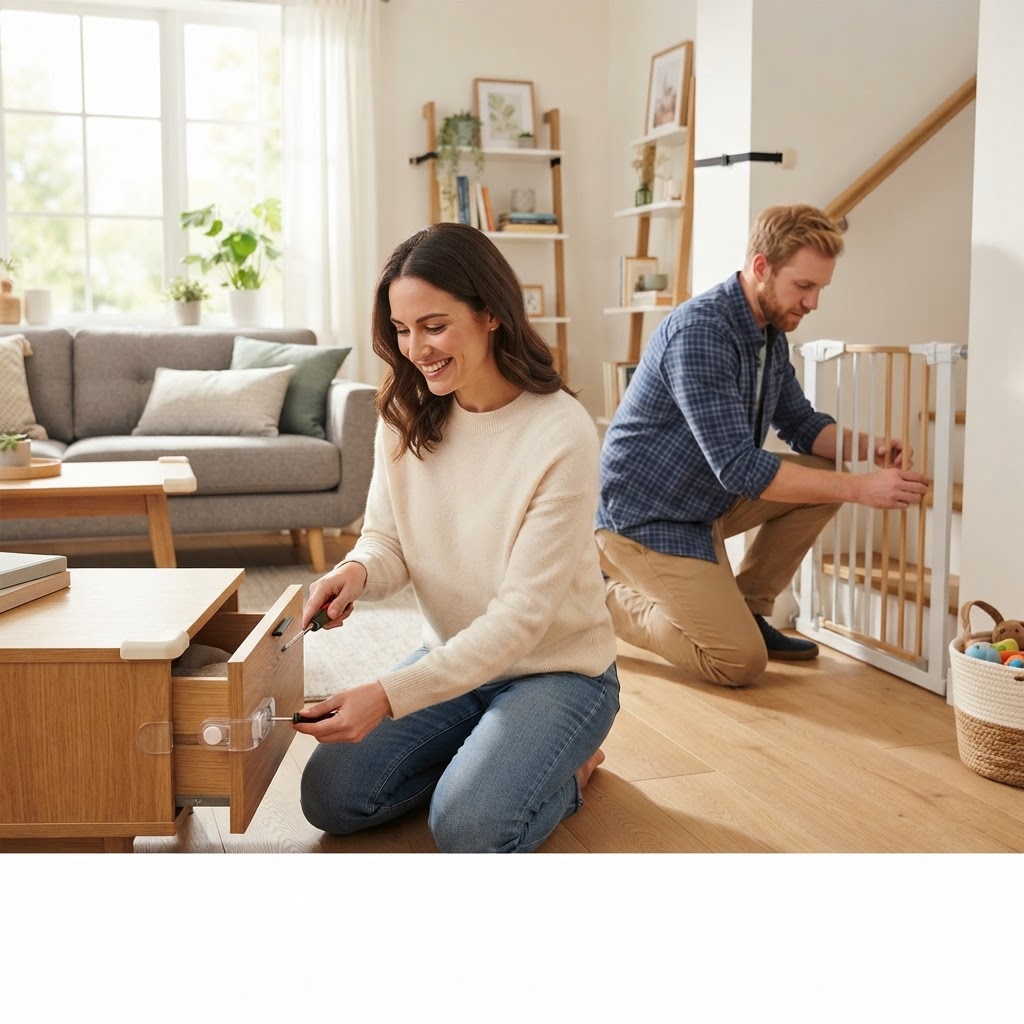
The moment a child begins to crawl, the perspective of a homeowner shifts dramatically. What was once a stylish coffee table becomes a collection of sharp corners; a bookshelf becomes a tempting ladder; and a simple electrical outlet looks like a fascinating puzzle. Childproofing your home isn't just about buying a bag of plastic plugs and calling it a day—it's a comprehensive strategy to create a 'yes' environment where your child can explore safely without constant restriction. In this guide, we draw on the experience of safety professionals to walk you through the essential steps of securing every room in your house, ensuring your peace of mind and your child's security.
The Mindset: Seeing Your Home from Two Feet Tall
Before you pick up a single latch or gate, you must change your perspective. Safety professionals often suggest the 'crawl test.' Get down on your hands and knees and move through every room in your home. From this vantage point, you will see things you never noticed while standing: the loose thread on a rug, the dust bunnies hiding near an outlet, or the wobbly leg of a side table.
Childproofing is a layered process. It begins with active supervision, moves into environmental modification (removing hazards), and ends with safety devices. Remember, no device is 100% 'child-proof'; they are 'child-resistant.' The goal is to delay a child long enough for an adult to intervene. As you plan your modifications, consider reading our essential home maintenance guide to ensure your home's structural elements are also up to par, as safety starts with a sound foundation.
The Kitchen: Securing the Heart of the Home
The kitchen is arguably the most dangerous room in the house due to the combination of heat, sharp objects, and toxic chemicals. To effectively secure this space, follow these actionable steps:
- Cabinet and Drawer Latches: Magnetic locks are the gold standard. They are invisible from the outside and require a magnetic 'key' to open, making them much harder for toddlers to bypass than traditional plastic latches. Focus these on drawers containing knives, heavy cookware, and cleaning supplies.
- The Cooking Zone: Use a stove guard to prevent little hands from touching hot burners. Whenever possible, cook on the back burners and turn pot handles inward toward the back of the stove. For gas stoves, removable knob covers are essential to prevent a toddler from accidentally turning on the gas.
- Appliance Safety: Dishwashers and ovens should be locked. Many modern appliances have built-in 'Control Lock' buttons—familiarize yourself with these. If yours doesn't, aftermarket adhesive straps work well.
- Chemical Storage: Under-sink storage is a high-risk area. If you must store cleaning supplies there, use a high-quality lock. However, the best practice is to move all chemicals to a high shelf or a locked cabinet in the garage or laundry room.
For high-risk areas like the kitchen, if you aren't confident in your DIY skills, you can use FIND-A-PRO to connect with a local handyman who specializes in safety installations.
Living Areas: Furniture Anchoring and Corner Protection
In the living room, the greatest risk is often hidden in plain sight: tip-over accidents. According to the U.S. Consumer Product Safety Commission (CPSC), a child is injured by tipping furniture or TVs every 24 minutes in the United States.
Furniture Anchoring: Any piece of furniture taller than 30 inches—or even shorter pieces with drawers that can be pulled out and used as steps—must be anchored to the wall. Use heavy-duty nylon straps or metal L-brackets. Ensure you are screwing into a wall stud, not just the drywall. If you are unsure how to locate studs or install these securely, it is worth hiring a professional. Check out our guide on how to hire a service professional to find someone who can secure your entire home in a single afternoon.
Corner and Edge Guards: Replace or cover sharp-edged furniture. Soft foam bumpers can be applied to coffee tables and hearths. While they might not fit your aesthetic, they are temporary and vital during the 'unsteady walker' phase.
Electrical Safety and Cord Management
Modern homes are filled with electronics, which means they are filled with cords and outlets. Childproofing these requires more than just the old-fashioned 'plug caps' which can actually become choking hazards if a child manages to pry them out.
- Box Outlets: Use sliding outlet covers that automatically close when a cord is unplugged. For outlets that are constantly in use, use 'box' covers that enclose the entire plug, preventing a child from pulling the cord out.
- Cord Shorteners: Long, dangling cords from lamps or electronics are strangulation hazards and can be used to pull heavy items down. Use cord winders or heat-shrink tubing to keep them out of reach.
- Window Blind Cords: These are among the most significant strangulation risks. The best solution is to replace corded blinds with cordless versions. If that isn't possible, use cord cleats mounted high on the wall to keep loops far out of reach.
Bathroom Safety: Preventing Drowning and Scalding
Bathrooms require a dual focus on water safety and medication security. A child can drown in as little as two inches of water, so never leave a child unattended in the tub for even a second.
Anti-Scald Devices: Set your water heater to no higher than 120 degrees Fahrenheit (48 degrees Celsius). You can also install anti-scald valves on showerheads and faucets. Toilet Locks: A curious toddler can easily fall head-first into a toilet. Simple latch locks prevent the lid from being opened. Medication Storage: All medications, including vitamins and over-the-counter pills, should be stored in a locked box, ideally in a cabinet high above the ground. Child-resistant caps are not 'child-proof.'
Professional vs. DIY Childproofing: Which is Right for You?
Many parents wonder if they should tackle childproofing themselves or hire a professional. DIY is cost-effective and suitable for basic tasks like installing plug covers or simple cabinet latches. However, professional childproofers bring a level of expertise and specialized hardware that isn't always available at big-box retailers.
A professional childproofer will perform a comprehensive safety audit, identifying risks you might have overlooked, such as toxic houseplants or unstable floor lamps. They also have the tools to properly install hardware-mounted gates in difficult areas, like stairways with wrought iron railings or angled walls. FIND-A-PRO makes it easy to find verified experts who can ensure your gates and anchors are installed to professional safety standards, saving you time and potential frustration.
Featured Snippet: Common Childproofing Questions
When should you start childproofing your home?
Ideally, you should begin the process at least three months before your baby starts crawling (usually around 6 months of age). Starting early allows you to get used to the new locks and latches and ensures the home is ready before your child becomes mobile.
What is the most important childproofing item?
While all measures matter, furniture anchors and high-quality safety gates at the top and bottom of stairs are considered the most critical for preventing life-altering injuries.
Do I need to childproof the whole house?
You should prioritize 'high-traffic' areas and rooms with significant hazards (kitchen, bathrooms, stairs). However, any room your child has access to should be vetted for basic safety like outlet covers and furniture anchoring.
Frequently Asked Questions (FAQ)
Q: Are pressure-mounted gates safe for stairs?
A: No. Pressure-mounted gates should only be used between two rooms at floor level. For the top of stairs, you must use a hardware-mounted gate that is screwed into the wall studs or banister posts. A pressure gate can fail if a child leans on it, leading to a dangerous fall.
Q: How do I childproof a fireplace?
A: The best way to childproof a fireplace is to install a hearth gate (a multi-panel gated enclosure) that completely blocks access to the fireplace and the hard edges of the hearth. If the fireplace is not in use, you can also use padded edge guards for the brickwork.
Q: My child can already open standard plastic latches. What should I do?
A: It is time to upgrade to magnetic locks. These require a specific magnetic key to disengage the lock from the outside, which is nearly impossible for a toddler to figure out. Alternatively, consider installing top-of-door locks for rooms you want to keep completely off-limits.
Key Takeaways
Childproofing is an ongoing journey that evolves as your child grows and gains new skills. By taking a proactive, room-by-room approach—focusing on furniture anchoring, kitchen security, and electrical safety—you create a sanctuary where your child can thrive. While the DIY route is possible for many, don't hesitate to seek expert help for complex installations like stair gates or securing heavy shelving. Using a platform like FIND-A-PRO ensures you can connect with verified local professionals who have the experience to get the job done right the first time, giving you the ultimate peace of mind. Start your safety checklist today; your future explorer will thank you for it.
