Carbon monoxide (CO) is often referred to as the 'silent killer' for a terrifyingly simple reason: you cannot see it, smell it, or taste it, but it can be lethal within minutes. Every year, hundreds of people in the United States die from accidental non-fire-related CO poisoning, and thousands more require emergency medical attention. As a homeowner, your priority is the safety of your family; as a service professional, your priority is the integrity of the systems you maintain. This comprehensive guide is designed to bridge the gap between basic awareness and professional-level prevention. We will dive deep into the science of CO, the maintenance of fuel-burning appliances, and the lifestyle habits that keep your indoor air safe. At FIND-A-PRO, we believe that education is the first line of defense, followed closely by the expert oversight of verified professionals who can ensure your home systems are running as they should.
Understanding the Silent Killer: What is Carbon Monoxide?
Carbon monoxide is a colorless, odorless, and tasteless gas produced by the incomplete combustion of carbon-containing fuels. These fuels include natural gas, propane, heating oil, kerosene, coal, charcoal, and wood. In a perfectly functioning environment, fuel-burning appliances vent these byproducts safely to the outside. However, when an appliance is malfunctioning, damaged, or improperly installed, carbon monoxide can leak into your living spaces, reaching toxic levels before anyone even realizes there is a problem.
The chemistry of CO poisoning is particularly dangerous because of how it interacts with the human body. When inhaled, carbon monoxide molecules bind to the hemoglobin in your red blood cells more effectively than oxygen does. This effectively displaces the oxygen in your bloodstream, starving your brain, heart, and vital organs. Understanding the mechanics of CO is the first step toward prevention. It is not just about 'bad air'; it is about a chemical reaction that prevents your body from functioning. For more foundational knowledge on home systems, you might want to explore our essential home maintenance guide which covers the broader scope of keeping your property safe and efficient.
Recognizing the Warning Signs of CO Poisoning
Identifying CO poisoning can be difficult because the initial symptoms often mimic the flu or a common cold—but without the fever. This leads many people to ignore the warning signs until it is too late. Common symptoms include a dull headache, weakness, dizziness, nausea or vomiting, shortness of breath, confusion, and blurred vision. If you find that these symptoms improve when you leave the house and return when you go back inside, or if everyone in the household (including pets) feels sick at the same time, you must suspect a carbon monoxide leak.
Question: What are the most common physical symptoms of carbon monoxide exposure?
Answer: The most common symptoms are often described as 'flu-like' and include headache, dizziness, nausea, and fatigue. At higher concentrations, victims may experience chest pain, confusion, and loss of consciousness. Because CO is undetectable by human senses, these symptoms are often the only physical warning you will receive.
It is important to note that pets often show signs of CO poisoning before humans. If your dog or cat suddenly becomes lethargic or uncoordinated for no apparent reason, check your CO detectors immediately. High-risk individuals, such as infants, the elderly, and those with chronic heart or lung disease, are more susceptible and may suffer severe effects at lower concentrations of the gas.
Strategic Placement and Maintenance of CO Detectors
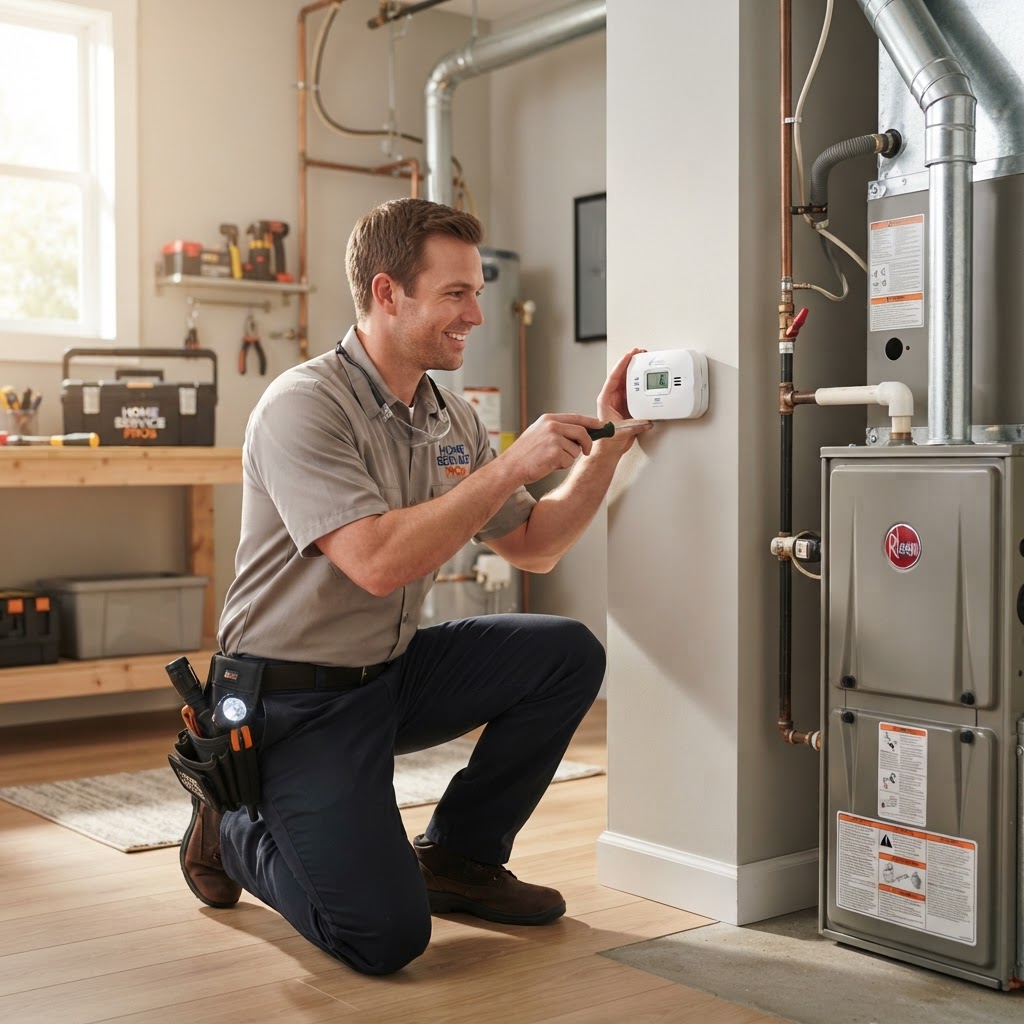
A carbon monoxide detector is the only reliable way to sense the presence of this gas in your home. However, simply buying one and sticking it in a drawer is not enough. To maximize safety, you need a detector on every level of your home, including the basement, and most importantly, outside every separate sleeping area. Since many CO incidents occur at night while residents are asleep, the alarm must be loud enough to wake everyone in the house.
When installing detectors, keep them at least 15 feet away from fuel-burning appliances to prevent 'nuisance alarms' caused by tiny, non-threatening amounts of CO that occur during startup. Unlike smoke, which rises, CO is roughly the same weight as air and distributes itself relatively evenly throughout a room. Therefore, you can place detectors on the wall or the ceiling. Maintenance is equally critical: test your alarms monthly, replace batteries every six months, and replace the entire unit every 5 to 7 years, as the sensors eventually degrade. Many modern units now come with 10-year sealed batteries, which simplify the process but still require regular testing. For detailed safety standards, the EPA provides extensive guidelines on maintaining indoor air quality and CO safety.
Preventive Maintenance for Fuel-Burning Appliances
Your home's heating system is the most common source of CO leaks. Whether you have a gas furnace, a boiler, or a wood-burning stove, regular professional inspections are mandatory. A cracked heat exchanger in a furnace is a primary culprit for CO leaks; these cracks are often microscopic and can only be detected by a trained eye using specialized tools like a combustion analyzer or a borescope camera.
Service professionals should look for physical indicators of trouble, such as soot buildup around the appliance, a pilot light that frequently goes out, or a flame that burns yellow or orange instead of a crisp, steady blue. Water heaters and clothes dryers also pose risks if their venting systems become blocked by lint, bird nests, or debris. If you are unsure of who to call for these inspections, FIND-A-PRO is a trusted resource for finding verified local professionals who specialize in HVAC and appliance safety. Our platform connects you with experts who can perform comprehensive checks of your flue pipes and chimney liners to ensure they are drafting correctly and have not corroded over time.
High-Risk Habits and Lifestyle Safety
Sometimes, the danger comes not from a broken appliance, but from how we use our equipment. One of the most dangerous habits is idling a car inside a garage, even if the garage door is open. CO levels can build up so rapidly that the gas seeps through the door into the living areas of the home before the car is even backed out. Similarly, never use a gas oven or stove to heat your home. These appliances are designed for cooking and do not have the venting capacity to handle the continuous output required for space heating.
Portable generators are another major risk factor, particularly during power outages. A generator should never be operated inside a home, garage, or crawlspace, nor should it be placed near windows, doors, or vents. The rule of thumb is to keep generators at least 20 feet away from the house with the exhaust pointing away from any openings. Likewise, using charcoal grills or camping stoves indoors is a strict 'no-go.' These devices produce massive amounts of CO and are intended exclusively for outdoor use. Education is key, and if you are teaching your family about home safety, reviewing our guide on how to hire a service professional can help you find someone to install permanent safety solutions, like hard-wired CO monitoring systems.
The Professional’s Perspective: Specialized CO Testing
For the service professionals reading this, CO safety is a matter of liability and ethics. A standard visual inspection is no longer the industry standard. Professionals should utilize calibrated CO meters to check ambient air during every service call. When testing a furnace, it is vital to check the 'steady state' CO levels in the flue. If the levels are rising or over 100 parts per million (ppm) as measured in the vent, the appliance needs immediate adjustment or repair.
Professionals should also be aware of 'backdrafting.' This occurs when exhaust gases are pulled back into the home instead of exiting through the flue, often caused by powerful exhaust fans (like kitchen hoods) or a tightly sealed 'green' home that lacks sufficient makeup air. Testing for backdrafting involves simulating 'worst-case' conditions by turning on all exhaust fans and checking if the furnace or water heater still vents correctly. Using a platform like FIND-A-PRO helps professionals showcase their commitment to these rigorous safety standards, connecting them with homeowners who value quality over the lowest price.
Emergency Response: What to Do If the Alarm Sounds
Question: What should I do if my carbon monoxide detector goes off?
Answer: Immediately move to a fresh air location outdoors or by an open window or door. Make sure everyone in the household is accounted for. Call 911 or your local fire department from your fresh air location. Do not re-enter the premises until emergency responders have arrived, aired out the building, and told you it is safe to return.
Never ignore a CO alarm, even if you feel fine. The alarm is designed to sound before you feel symptoms. If the alarm stops once you open the windows, it does not mean the danger is gone; it simply means the CO has been diluted temporarily. The source of the leak must still be identified and repaired by a qualified technician before you can safely inhabit the space again.
Frequently Asked Questions About CO Safety
Q: Does carbon monoxide rise or sink?
A: Carbon monoxide is slightly lighter than air, but it behaves very similarly to air. It does not pool on the floor like some heavier gases, nor does it immediately rush to the ceiling like smoke. It mixes fairly evenly with the air in a room, which is why detector placement is flexible in terms of height, as long as the device is not blocked by furniture or curtains.
Q: Can I use my gas fireplace if the CO detector is working?
A: Yes, but only if the fireplace has been recently inspected. Even with a detector, a malfunctioning fireplace can release CO into the room. Ensure the damper is fully open (for vented units) and the glass doors are in good condition.
Q: How often should I have my chimney cleaned?
A: You should have your chimney and flue inspected and cleaned at least once a year. Blockages from creosote, bird nests, or crumbling masonry can cause CO to back up into your home. A professional sweep can ensure that the path for exhaust is completely clear.
Key Takeaways
Carbon monoxide safety is a continuous commitment, not a one-time task. By combining high-quality detectors, responsible lifestyle habits, and annual professional inspections, you can virtually eliminate the risk of CO poisoning in your home. Remember that technology like CO alarms is your second line of defense; your first line of defense is preventive maintenance. Whether you are a homeowner looking to protect your family or a professional dedicated to your craft, staying informed is essential. For those ready to schedule their annual safety checkup, FIND-A-PRO is here to help you find the most qualified, highly-rated service professionals in your area. Don't wait for an alarm to sound—take proactive steps today to ensure your home remains a safe haven for everyone inside.
