For many homeowners, the house isn't just a financial asset; it’s a collection of memories, a sanctuary, and a source of independence. As we age, however, the very architecture that once felt comfortable can begin to present challenges. The steep stairs, the high-walled bathtub, and the dimly lit hallways can transform from minor inconveniences into significant safety hazards. This is where aging in place remodeling comes in. It is the proactive process of modifying a home to ensure that residents can live there safely, independently, and comfortably, regardless of age or mobility level. In this guide, we will walk you through the essential renovations, the philosophy of universal design, and how to strategically plan your home’s evolution so it serves you well for decades to come.
Understanding the Philosophy of Universal Design
Aging in place remodeling is rooted in the concept of Universal Design. Unlike traditional remodeling, which focuses primarily on aesthetics or current trends, Universal Design aims to create environments that are usable by all people, to the greatest extent possible, without the need for adaptation or specialized design later on.
Think of it as 'future-proofing' your home. When you install a curbless shower or wider doorways today, you aren't just preparing for old age; you are making the home easier to navigate for a guest with a stroller, a family member recovering from a temporary sports injury, or yourself after a long day. The goal is to blend functionality with style so that safety features don't look clinical, but rather like a high-end, thoughtful upgrade.
A successful aging-in-place project addresses three primary pillars: Safety (preventing falls), Accessibility (ensuring mobility), and Comfort (reducing physical strain). Before swinging a hammer, it is crucial to perform a thorough audit of your current living space. You can refer to the AARP HomeFit Guide for a detailed checklist of how your home stacks up against modern accessibility standards. By understanding these principles, you can ensure that every modification adds value to your life and your property.
The Bathroom: The Most Critical Room for Safety
Statistically, the bathroom is the most dangerous room in the house for seniors due to the combination of water, hard surfaces, and tight spaces. A comprehensive remodel here offers the highest return on investment for your safety and peace of mind.
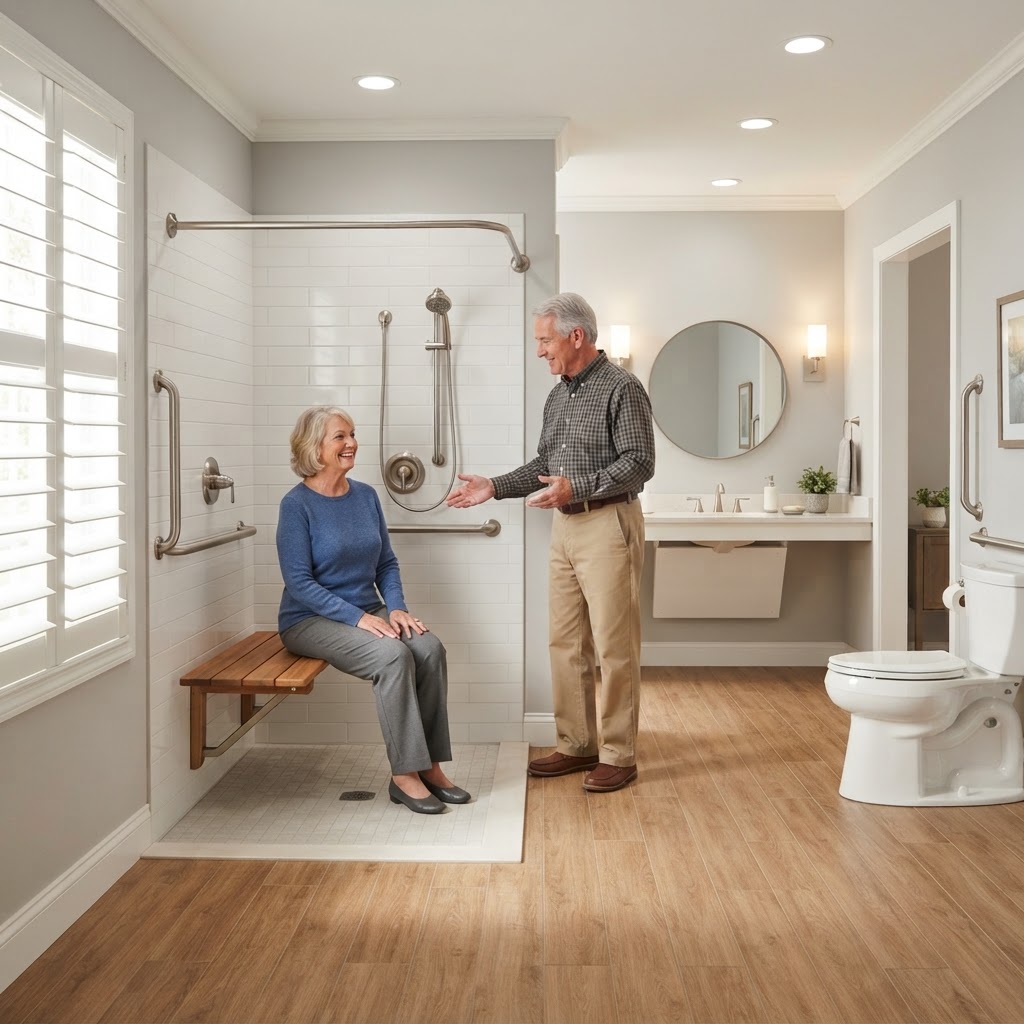
- Curbless Showers: Removing the 'trip hazard' of a bathtub or a high shower lip is the gold standard. A walk-in, curbless shower allows for easy entry and can even accommodate a wheelchair if necessary. This modification often involves sloping the floor toward the drain to ensure water stays contained without a physical barrier.
- Grab Bars: Forget the clinical-looking chrome bars of the past. Modern grab bars come in finishes like brushed gold or matte black and can double as towel racks or soap dishes. Ensure these are anchored into wall blocking (studs) to support at least 250 pounds.
- Comfort-Height Toilets: Standard toilets can be difficult to sit down on or stand up from. Installing a 'comfort height' toilet (about 17-19 inches high) reduces strain on the knees and back, making a daily necessity much easier to manage.
- Non-Slip Flooring: Look for tiles with a high Coefficient of Friction (COF) rating. Small mosaic tiles are excellent for shower floors because the increased grout lines provide natural traction, significantly reducing the risk of slips.
When planning these technical upgrades, it is often wise to consult with a specialist. Using a platform like FIND-A-PRO can help you connect with contractors who have specific experience in ADA-compliant bathroom renovations, ensuring the work is both beautiful and functional.
Kitchen Modifications for Ergonomic Living
The kitchen is the heart of the home, but it requires significant physical interaction—reaching, bending, and lifting. To make a kitchen age-friendly, we focus on reducing the range of motion required for daily tasks and improving ergonomics.
Smart Storage: Deep base cabinets are difficult to access. Replace them with deep drawers or pull-out shelves. This brings the contents of the cabinet to you, rather than requiring you to get down on your hands and knees to find a pot at the back. D-shaped pull handles are also easier to grasp than small round knobs, especially for those with arthritis or limited grip strength.
Varying Counter Heights: Having at least one section of the countertop lower (about 30 inches) allows a person to work while seated. This is a hallmark of universal design that makes the kitchen more inclusive for everyone, including children or those who prefer to sit while prepping meals.
Lighting and Appliances: Install task lighting under cabinets to illuminate work surfaces clearly. For appliances, consider a wall oven to avoid bending, and a microwave drawer located below the counter for easier access. Induction cooktops are also a safer choice as they remain cool to the touch, reducing the risk of accidental burns. For more tips on maintaining these systems, check out our essential home maintenance guide.
Navigating the Home: Flooring, Lighting, and Entryways
Mobility within the home is often hindered by subtle obstacles that we take for granted. A comprehensive aging-in-place plan looks at the transitions between rooms and the levels of light throughout the day to prevent accidents.
Flooring Transitions: Thick carpets can be a trip hazard and make it difficult to use a walker or wheelchair. Low-pile carpeting or hard surfaces like luxury vinyl plank (LVP) or hardwood are preferred. Ensure that transitions between different types of flooring are flush; even a half-inch threshold can cause a fall. Smooth transitions are essential for a truly accessible home.
Enhanced Lighting: Vision often declines with age, making shadows more dangerous. Increase the wattage of bulbs (within fixture limits) and add motion-activated nightlights in hallways and bathrooms. Smart lighting systems that can be controlled via voice or phone are excellent for ensuring you never have to walk into a dark room to find a switch, providing both safety and convenience.
Entryways: At least one entry to the home should be 'no-step.' This might involve regrading a walkway or installing a permanent ramp. Additionally, widening doorways to 32 or 36 inches ensures that the home remains navigable if mobility aids become necessary in the future. Lever-style door handles are also a simple but effective upgrade over traditional knobs.
The Role of Smart Home Technology
Technology has revolutionized aging in place. It’s no longer just about 'The Clapper.' Modern smart home integration provides a safety net that was previously impossible, allowing for greater independence. Smart doorbells with cameras allow residents to see who is at the door without getting up, while smart locks can be programmed to allow access to caregivers or family members via a code, eliminating the need for physical keys.
Voice-activated assistants (like Alexa or Google Home) can be used to set medication reminders, call for help, or adjust the thermostat without moving. These technologies aren't just gadgets; they are essential tools for maintaining autonomy. When installing these systems, ensure your home’s electrical system is up to the task. If you’re unsure, it’s best to hire a professional. You can read more about how to hire a service professional to ensure your tech is installed safely and correctly.
Budgeting for Your Remodel: What to Expect
The cost of aging-in-place remodeling varies wildly depending on the scope of the project. A simple 'refresh' involving grab bars, better lighting, and new faucet handles might cost $2,000–$5,000. However, a full-scale renovation including a curbless shower, widened doorways, and a kitchen overhaul can range from $20,000 to $75,000 or more depending on materials and labor.
While these numbers can seem daunting, compare them to the cost of assisted living facilities, which can average $4,000 to $7,000 per month. In many cases, a one-time investment in home modifications pays for itself in less than a year by delaying or eliminating the need for facility-based care. Additionally, some modifications may be tax-deductible if they are deemed medically necessary—consult a tax professional or the IRS website for guidance on medical expense deductions. Planning your budget early allows you to prioritize the most impactful changes first.
FAQ: Frequently Asked Questions About Aging in Place
Q: When is the best time to start aging-in-place remodeling?
A: The best time is before you need it. Many homeowners wait until a fall or surgery occurs, which leads to rushed decisions and high-stress environments. Integrating these features during a planned kitchen or bath remodel is the most cost-effective and least disruptive approach.
Q: Will these modifications hurt my home's resale value?
A: Not if they are done well. Modern universal design is sleek and desirable. Features like walk-in showers and open-concept kitchens are highly sought after by buyers of all ages. High-quality work performed by verified pros on FIND-A-PRO ensures the aesthetic remains high-end and appealing to future buyers.
Q: Can I DIY these modifications?
A: Small tasks like changing cabinet pulls or adding plug-in motion lights are great DIY projects. However, structural changes like widening doorways, installing curbless showers, or anchoring grab bars should be left to professionals to ensure they meet safety codes and weight-bearing requirements. Professional installation is key to ensuring the safety features actually work when needed.
Key Takeaways
Investing in aging in place remodeling is an investment in your future self. By addressing the 'pinch points' of your home now—specifically in the bathroom, kitchen, and entryways—you create a space that adapts to your needs rather than forcing you to adapt to its limitations. Whether you are planning a few minor safety updates or a total home transformation, the key is to work with qualified experts who understand the nuances of universal design. When you are ready to take the next step, use FIND-A-PRO to connect with local, verified remodeling professionals who can turn your vision of a safe, lifelong home into a reality.