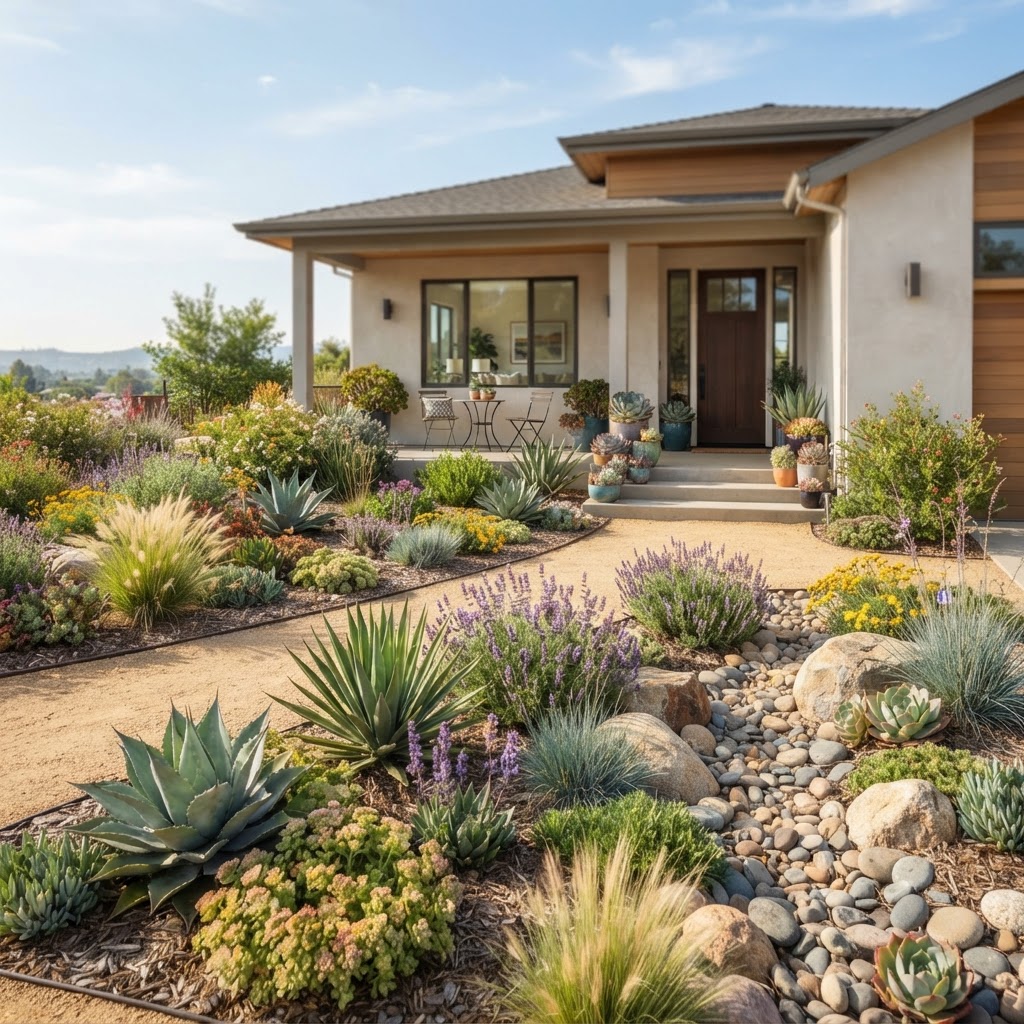
For many homeowners, the dream of a lush, emerald-green lawn often turns into a high-maintenance nightmare of skyrocketing water bills, constant mowing, and the relentless struggle against brown patches. But what if your outdoor space could be both breathtakingly beautiful and remarkably self-sufficient? Enter xeriscaping. Derived from the Greek word 'xeros' meaning dry, xeriscaping is far more than just a collection of rocks and cacti. It is a sophisticated, science-based approach to landscaping that harmonizes with your local climate rather than fighting against it. By prioritizing water conservation and utilizing native flora, xeriscaping offers a sustainable path to curb appeal that saves you time, money, and stress. Whether you are living in a drought-prone region or simply looking to reduce your environmental footprint, understanding the full scope of xeriscaping benefits will change the way you look at your backyard forever.
Understanding the Core Principles of Xeriscaping
Before diving into the specific advantages, it is essential to clear up a common misconception: xeriscaping is not 'zeroscaping.' It does not mean a yard devoid of life or color. In fact, a well-designed xeriscape can be more vibrant and diverse than a traditional turf lawn. The philosophy is built on seven foundational principles: comprehensive planning and design, soil analysis and improvement, appropriate plant selection, practical turf areas, efficient irrigation, use of mulches, and appropriate maintenance. By following these steps, you create an ecosystem that thrives on minimal supplemental water.
A professional xeriscape starts with a zoning plan. This involves grouping plants with similar water needs together, a practice known as hydrozoning. This ensures that you are not overwatering a desert willow just to keep a hydrangea happy. Furthermore, soil health is paramount. According to the EPA WaterSense program, outdoor water use accounts for nearly 30 percent of the average household's water consumption, and in some climates, that number can soar to 60 percent. Improving your soil with organic matter helps it retain the moisture that is available, reducing the need for the hose. When you start with a solid foundation, every other benefit of this landscaping style falls into place naturally.
Substantial Financial Savings and Water Conservation
The most immediate and quantifiable of the xeriscaping benefits is the reduction in your monthly utility bills. Traditional lawns are incredibly thirsty, often requiring an inch of water per week to stay green during the summer. In contrast, a mature xeriscape can reduce outdoor water use by 50% to 80%. Over the course of a year, these savings add up to hundreds, if not thousands, of dollars. As municipal water rates continue to rise across the country due to infrastructure costs and scarcity, a water-efficient yard serves as a powerful hedge against inflation.
Beyond the water bill, you will also save on 'hidden' costs. Think about the expenses associated with a standard lawn: expensive fertilizers, herbicides to kill weeds, pesticides to manage grubs, and the fuel or electricity required to power a mower and trimmer. Xeriscaping relies on native plants that are already adapted to local pests and soil conditions, meaning you can virtually eliminate the need for chemical interventions. For homeowners looking to manage their long-term property costs, this shift is a financial game-changer. If you are planning a complete overhaul, it is wise to consult a professional to ensure your irrigation system is retrofitted correctly; you can find verified experts through FIND-A-PRO to help navigate the transition from thirsty turf to water-wise beauty.
Drastic Reduction in Maintenance and Labor
Time is our most valuable non-renewable resource. The average American homeowner spends roughly 70 hours a year on lawn care. That is nearly two full work weeks dedicated to pushing a mower, edging sidewalks, and pulling weeds. One of the most celebrated xeriscaping benefits is the gift of time. Because xeriscapes minimize or eliminate traditional turf grass, the need for weekly mowing is removed. While no landscape is completely 'no-maintenance,' a xeriscape is decidedly 'low-maintenance.'
Instead of a grueling Saturday morning routine, your maintenance will consist of occasional weeding (which is minimized by heavy mulching), seasonal pruning, and checking your drip irrigation system once or twice a year. High-quality mulch, a staple of xeriscaping, suppresses weed growth by blocking sunlight and creates a barrier that prevents soil erosion. This allows you to enjoy your outdoor living space for relaxation and entertainment rather than treating it like a second job. If you find yourself overwhelmed with general home tasks, checking out our essential home maintenance guide can help you prioritize your time effectively alongside your new low-maintenance yard.
Environmental Stewardship and Biodiversity
Xeriscaping is a win for the planet. By reducing water consumption, you are helping to preserve local aquifers and reservoirs, which is critical during periods of drought. But the benefits go deeper than just water. Traditional lawns are often 'biological deserts'—they offer very little in the way of food or habitat for local wildlife. By incorporating a variety of native flowering plants, shrubs, and trees, your yard becomes a sanctuary for pollinators like bees, butterflies, and hummingbirds.
Furthermore, because xeriscaping drastically reduces the need for chemical fertilizers and pesticides, it prevents toxic runoff from entering the storm drains and eventually polluting local streams and oceans. The use of permeable materials in xeriscaping—such as gravel paths, pavers, and organic mulch—allows rainwater to soak into the ground rather than running off the surface. This recharges the groundwater and prevents soil erosion. By choosing this path, you are actively participating in the restoration of your local ecosystem, one plant at a time.
Increased Property Value and Curb Appeal
There is a lingering myth that xeriscaping hurts resale value. In reality, the opposite is increasingly true. Modern home buyers are more environmentally conscious than ever and are often wary of the high costs and labor associated with a large lawn. A professionally designed xeriscape offers a unique, high-end aesthetic that stands out in a neighborhood of identical green squares. With textures ranging from soft ornamental grasses to bold architectural succulents and colorful wildflowers, a xeriscape provides year-round visual interest that a flat lawn simply cannot match.
Landscaping experts often note that a well-maintained, sustainable yard can add significantly to a home's price tag. It demonstrates to potential buyers that the property is forward-thinking and cost-effective. To ensure you get the best return on investment, it is important to hire the right help. When you are ready to start your project, we recommend you read our guide on how to hire a service professional to ensure you are working with a contractor who understands local ecology. Using FIND-A-PRO allows you to connect with local landscapers who specialize in arid and semi-arid designs, ensuring your investment pays off both in beauty and equity.
Actionable Tips: How to Start Your Xeriscaping Journey
Ready to reap the xeriscaping benefits? You do not have to flip your entire yard overnight. Start small and follow these professional tips:
- Test Your Soil: Before planting, understand your soil's pH and drainage capabilities. Adding compost can improve water retention in sandy soils or drainage in clay-heavy soils.
- Choose the Right Mulch: Use wood chips, bark, or gravel to cover bare soil. Aim for a depth of 2-3 inches to effectively suppress weeds and keep roots cool.
- Limit Turf Areas: You do not have to go 100% grass-free. Keep a small, functional patch of grass for pets or children, and xeriscape the rest.
- Install Drip Irrigation: Unlike sprinklers that lose water to evaporation and wind, drip systems deliver water directly to the root zone where it is needed most.
- Select Native Species: Visit a local nursery and ask for plants native to your specific county. These will be the hardiest and most drought-tolerant options available.
Frequently Asked Questions (FAQ)
Q: Is xeriscaping only for desert climates like Arizona or Nevada?
A: Not at all! While it originated in the West, the principles of xeriscaping (water-wise plant selection and soil improvement) can be applied in any climate. In wetter regions, it simply means choosing plants that thrive on natural rainfall without needing supplemental irrigation during dry spells.
Q: Does xeriscaping cost more to install than a traditional lawn?
A: The initial cost of plants, mulch, and stones can be higher than a bag of grass seed. However, when you factor in the immediate water savings and the elimination of mowing and fertilizing equipment, most homeowners see a return on their investment within 3 to 5 years.
Q: Will my yard just be a bunch of rocks?
A: Only if you want it to be! A successful xeriscape uses a 'lush' design philosophy with diverse layers of groundcovers, perennials, shrubs, and trees. The goal is to cover the ground with life, using rocks and gravel only as accents or pathways.
Key Takeaways
Embracing xeriscaping is one of the most impactful decisions you can make as a homeowner. The benefits—ranging from significant water and cost savings to reduced maintenance and increased biodiversity—create a landscape that serves both you and the environment. By moving away from the high-demand 'industrial' lawn and toward a sustainable, native-focused design, you create a space that is resilient, beautiful, and deeply connected to your local climate. If you are ready to transform your yard into a water-wise sanctuary, FIND-A-PRO is here to help. We can connect you with experienced, local landscaping professionals who can turn these principles into a reality for your home. Start your journey toward a smarter, more sustainable landscape today.
