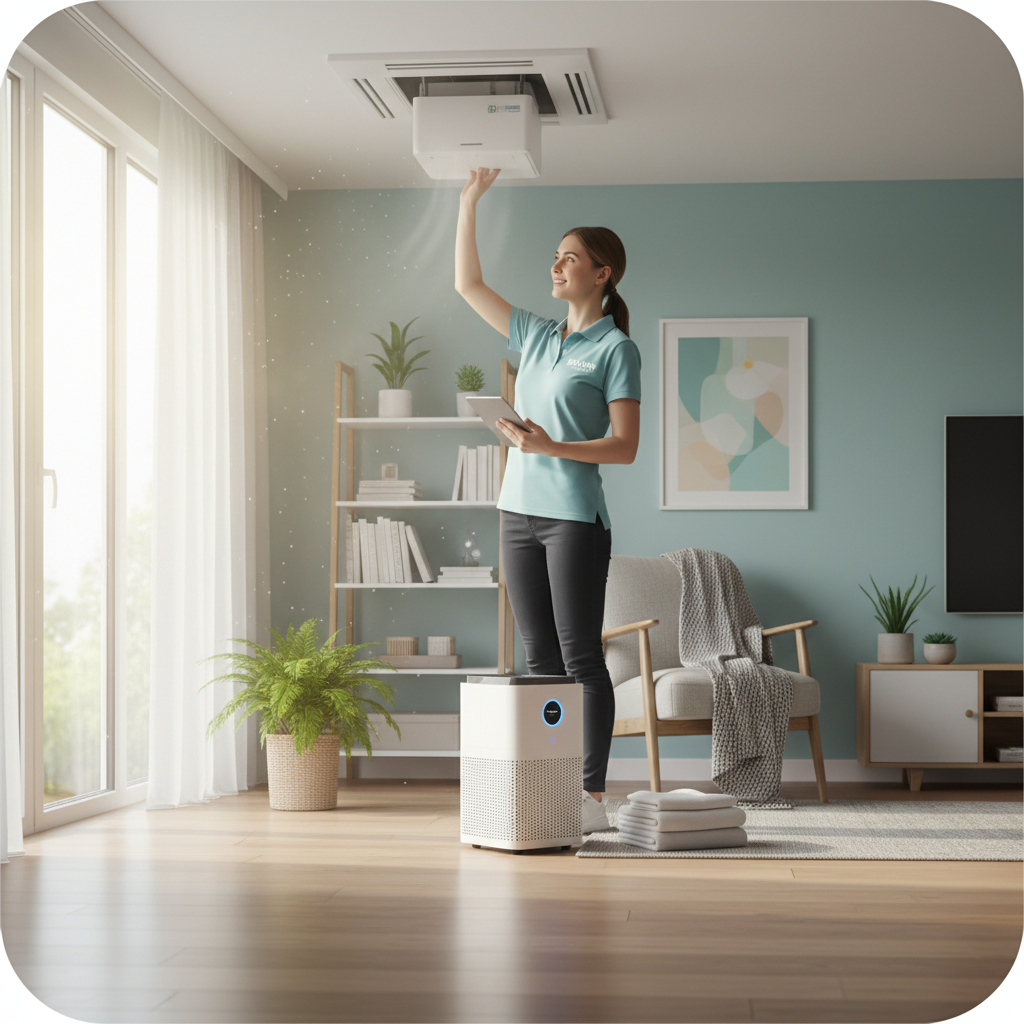
Did you know that the air inside the average American home can be two to five times more polluted than the air outside? For most of us, our homes are our sanctuaries, yet they often harbor a cocktail of invisible triggers—ranging from volatile organic compounds (VOCs) and pet dander to mold spores and microscopic dust mites. Improving your indoor air quality (IAQ) isn't just about comfort; it is a fundamental pillar of preventative health. Whether you suffer from seasonal allergies, asthma, or simply want to ensure your family is breathing the cleanest air possible, understanding the mechanics of home air flow and filtration is essential. In this comprehensive guide, we will explore actionable strategies to transform your living environment into a bastion of fresh air, combining simple lifestyle changes with advanced HVAC solutions.
Understanding the Fundamentals of Indoor Air Quality
Indoor air quality is defined by the concentrations of pollutants and the thermal conditions (temperature and humidity) that affect the health, comfort, and performance of a building's occupants. According to the Environmental Protection Agency (EPA), poor IAQ is ranked among the top five environmental risks to public health. Most people spend about 90% of their time indoors, making the quality of that air paramount.
The first step in any improvement plan is identification. Pollutants generally fall into three categories: biological (mold, pollen, bacteria), chemical (VOCs from cleaners, paints, and furniture), and combustion particles (smoke, carbon monoxide, and nitrogen dioxide). When these substances accumulate due to poor ventilation, they can cause immediate symptoms like headaches and fatigue, or long-term issues like respiratory disease. To keep your home running at peak performance, check out our essential home maintenance guide for a checklist of tasks that directly impact your home's health.
Strategy 1: Source Control is Your First Line of Defense
The most effective way to improve air quality is to eliminate individual sources of pollution or to reduce their emissions. This is known as source control. For example, many household products like air fresheners, scented candles, and harsh cleaning agents release VOCs that can irritate the lungs. Switching to 'green' or fragrance-free cleaning products is a simple yet high-impact change.
- Minimize Carpeting: Carpets are notorious for trapping allergens and dust. If possible, opt for hard flooring like wood or tile in high-traffic areas.
- Smoke Outside: Never allow smoking indoors, as secondhand smoke contains over 7,000 chemicals.
- Seal Your Storage: Ensure that paints, solvents, and pesticides are stored in a detached garage or shed rather than an attached basement or utility closet.
- Manage Pets: Frequent grooming and vacuuming with a HEPA-filtered vacuum can significantly reduce the amount of dander circulating in your home.
Strategy 2: Optimize Ventilation and Fresh Air Exchange
Modern homes are built to be airtight for energy efficiency, which is great for your utility bills but bad for air circulation. Without proper ventilation, pollutants become trapped and concentrated. The simplest way to ventilate is the 'natural' way: opening windows and doors when weather permits. However, for a more consistent solution, consider mechanical ventilation.
Exhaust fans in kitchens and bathrooms are critical. They should always be vented to the outdoors, not into an attic or crawlspace. For a more sophisticated approach, many homeowners are installing Heat Recovery Ventilators (HRVs) or Energy Recovery Ventilators (ERVs). These systems exchange stale indoor air for fresh outdoor air while pre-conditioning the incoming air to maintain energy efficiency. If you are unsure if your current system is providing enough exchange, FIND-A-PRO can help you connect with a certified HVAC technician who can perform a blower door test or ventilation audit.
Strategy 3: Upgrade Your HVAC Filtration Systems
Your HVAC system’s air filter is the gatekeeper of your home’s air. Many homeowners make the mistake of using the cheapest fiberglass filters available, which are designed only to protect the equipment from large dust bunnies, not to clean the air you breathe. To improve IAQ, you should look at the MERV (Minimum Efficiency Reporting Value) rating.
MERV ratings range from 1 to 16. For most residential systems, a filter with a MERV rating between 8 and 13 is the 'sweet spot.' A MERV 13 filter can capture particles as small as 0.3 microns, including bacteria and smoke. Caution: Do not simply buy the highest MERV filter without checking your system's specifications. High-efficiency filters are thicker and can restrict airflow if your blower motor isn't powerful enough, leading to system strain or failure. Before making a significant upgrade, it is wise to consult a professional. You can read our guide on how to hire a service professional to ensure you find a technician who understands static pressure and airflow requirements.
Strategy 4: Master Humidity Control
Humidity plays a massive role in indoor air quality. If your air is too humid (above 50%), it becomes a breeding ground for mold, mildew, and dust mites. If it is too dry (below 30%), it can cause respiratory irritation, dry skin, and make you more susceptible to viruses. The ideal range is between 30% and 50%.
In humid climates or during summer months, a whole-house dehumidifier integrated into your HVAC system is often the best solution. In winter, if your skin feels itchy and your throat is scratchy, a whole-house humidifier can add necessary moisture. Keeping these levels balanced prevents the structural damage caused by mold and keeps your mucous membranes—your body's first defense against illness—functioning correctly.
Strategy 5: Advanced Air Purification Technologies
While filters trap particles, air purifiers can actually neutralize or destroy them. There are several types of whole-house air purifiers that can be installed directly into your ductwork:
- UV Germicidal Lights: These use ultraviolet light to kill bacteria, viruses, and mold spores as they pass through the HVAC system. They are particularly effective when installed near the cooling coil where moisture accumulates.
- Electronic Air Cleaners: These use an electric charge to 'trap' particles like a magnet.
- PCO (Photocatalytic Oxidation) Cleaners: These use a combination of UV light and a catalyst to break down gaseous pollutants and odors at a molecular level.
Combining these technologies with high-quality filtration creates a multi-layered defense system for your home.
Common Questions About Indoor Air Quality (FAQ)
Q: Can houseplants really clean the air in my home?
A: While houseplants are beautiful and can remove trace amounts of toxins, a famous NASA study is often misinterpreted. To achieve a significant reduction in pollutants in a standard-sized home, you would need hundreds of plants. Use plants for aesthetics and mood, but rely on filtration and ventilation for air cleaning.
Q: How often should I really change my air filters?
A: For standard 1-inch filters, every 30 to 90 days. If you have pets or smokers in the house, every 30 days is best. For 4-inch or 5-inch media filters, you can often go 6 to 12 months, but you should check them every quarter.
Q: Is duct cleaning worth the money for air quality?
A: According to the EPA, duct cleaning hasn't been conclusively proven to prevent health problems. However, if there is visible mold growth, an infestation of rodents or insects, or if the ducts are clogged with excessive amounts of dust and debris that are being released into the home, professional cleaning is highly recommended.
Key Takeaways
Improving your indoor air quality is a journey, not a one-time task. By combining source control, proper ventilation, high-quality filtration, and humidity management, you can create a home environment that actively supports your well-being. Remember that your HVAC system is the 'lungs' of your home, and keeping it well-maintained is the most important step you can take. When you are ready to upgrade your filtration or install a whole-house purification system, use <strong>FIND-A-PRO</strong> to connect with verified, local HVAC experts who can provide a customized solution for your specific needs. Clean air isn't just a luxury—it's a foundation for a healthier life.
